Delivering a 25-minute keynote speech for the ‘Future Ready Ports’ symposium at the conference, Alicia shared how the WWMSP is one of Australia’s largest and most collaborative marine science programs to date. Led by the Western Australian Marine Science Institution (WAMSI), the four-year program united more than 150 researchers, industry leaders, and government agencies to deliver 32 projects across nine themes. Its conclusion marks the completion of one of Australia’s most comprehensive understandings of a coastal ecosystem.
The primary objective was to generate independent, peer-reviewed scientific evidence to inform the design and development of Western Australia’s future Kwinana container port, ensuring environmental considerations were embedded in planning from the outset while also providing the scientific evidence required to support future environmental assessment and informed decision-making.
In a major win for the environment, key port design decisions have already been altered due to WWMSP research, including:
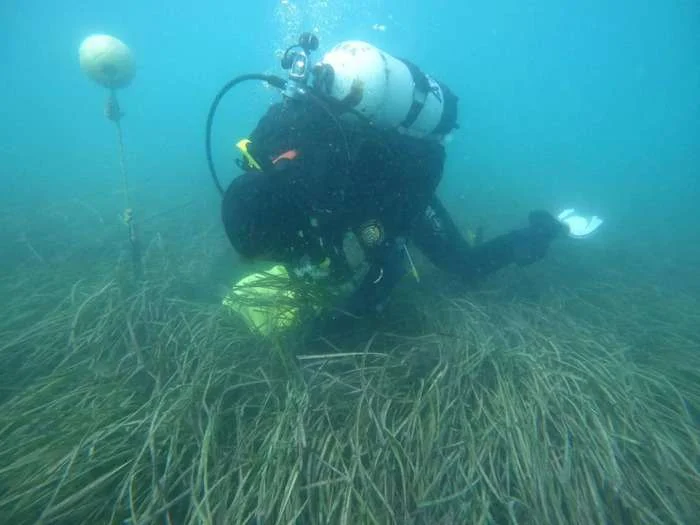
- Relocating the footprint: Moving the entire proposed port footprint 1 kilometer to the south to avoid critical seagrass beds mapped during the program
- Preserving currents: Reorienting the breakwater to minimize impacts.
The research has also enabled Westport to undertake proactive restoration and resilience actions, with the data driving Westport’s plans for major seagrass restoration initiatives in Cockburn Sound.
For Alicia, the program also yielded interesting ecological findings, including the resilience of some seagrass populations to extreme marine heatwaves and the identification of 21 distinct syngnathid species (seahorses, pipefishes, and seadragons) within the relatively small area of Cockburn Sound.
Reflecting on the wider wrap-up of the program, Alicia highlighted three pillars that contributed to its success and lasting impact:
- Integrated data: Creating linkages that allowed data to be shared and used across multiple project themes
- Transparency: Holding annual workshops and a symposium to share preliminary findings
- Upskilling the new generation: The invaluable learning opportunities created for students and post-doctoral marine scientists.
The broader value of the framework is already being recognized beyond Western Australia. The Northern Territory government is currently adopting a similar approach for its Middle Arm Precinct port infrastructure redevelopment, embedding environmental research earlier in the project lifecycle to inform planning and decision-making from the outset.
Research Findings Create a Vital Resource for the Future
While the primary focus of the WWMSP was to guide the design and development of a new port, Alicia explained it is the depth of knowledge and insights created by WWMSP that will drive better outcomes in Cockburn Sound for decades.
“Cockburn Sound is one of WA’s most heavily used marine environments, highly valued by Traditional Owners, recreational users and industry,” explained Alicia. “Building on historical studies, the WWMSP has significantly improved our knowledge base of the Cockburn Sound ecosystem, providing a vital resource that current and future users can rely on.”
The development of the Cockburn Sound Integrated Ecosystem Model (CSIEM), delivered through the Shared Environmental Analytics Facility (SEAF), stands as a major scientific milestone for the WWMSP. The CSIEM is a state-of-the-art predictive tool that combines over 50 years of data with new research into a single integrated model. Accessible through SEAF, it allows industry, researchers, and government to simulate and analyze the environmental impacts of major projects before development even begins.
Managing a Massive Data Legacy
Ensuring this mountain of science created by WWMSP became a usable asset fell directly to the program’s data management team, a space where Alicia worked extensively.
“Early on in the project, we spoke to over 30 project leads to find out exactly what data would be collected, what format and what size, so that we could prepare storage locations and a comprehensive data management plan,” Alicia explained.
A joint data team composed of WAMSI and Westport staff was formed to standardize the incoming data to Westport’s technical requirements. Data transparency is a key priority for WAMSI, and the team has been uploading the data to Data WAa free, public state government database.
“A key role of data management was to make sure this valuable science is made usable and visible,” noted Alicia. “Raising awareness of the freely available data can help to make sure other science projects and developments aren’t taking place without knowing about this rich resource.”
The information sharing and connections that occurred at AMSA 2026 were symbolic of the collaboration that went into delivering WWMSP on such a grand scale.
Over 600 delegates attended the conference, including WAMSI partners The University of Western Australia, Murdoch University, Edith Cowan University, Curtin University, Department of Biodiversity, Conservation and Attractions (DBCA), Department of Primary Industries and Regional Development (DPIRD), Western Australian Museum, CSIRO, and Australian Institute of Marine Science (AIMS).
Reflecting on the AMSA 2026 conference, Alicia said, “It was fantastic to share our WWMSP findings with such a large network of marine scientists and knowledge holders across Australia. The conference was also a great opportunity to learn about other research happening across the country, and how Indigenous knowledge and Western science knowledge systems are sitting side by side to address important questions and challenges.”
Ultimately, the WWMSP leaves behind a transformative, enduring asset for Western Australia.
This extraordinary body of work will be vital for assessing the environmental impact of the Westport container port and ensuring the long-term management of Cockburn Sound.
“I walk along Cockburn Sound every week and always see marine life, from fishes and crabs to dolphins and sometimes little penguins,” Alicia shared. “For a heavily used system, there is an incredible amount of biodiversity in there. You can find everything from the smallest critters up to whales and a range of benthic habitats.”
Discover all the research findings from the WAMSI Westport Marine Science Program here.
Source: ecomagazine.com