



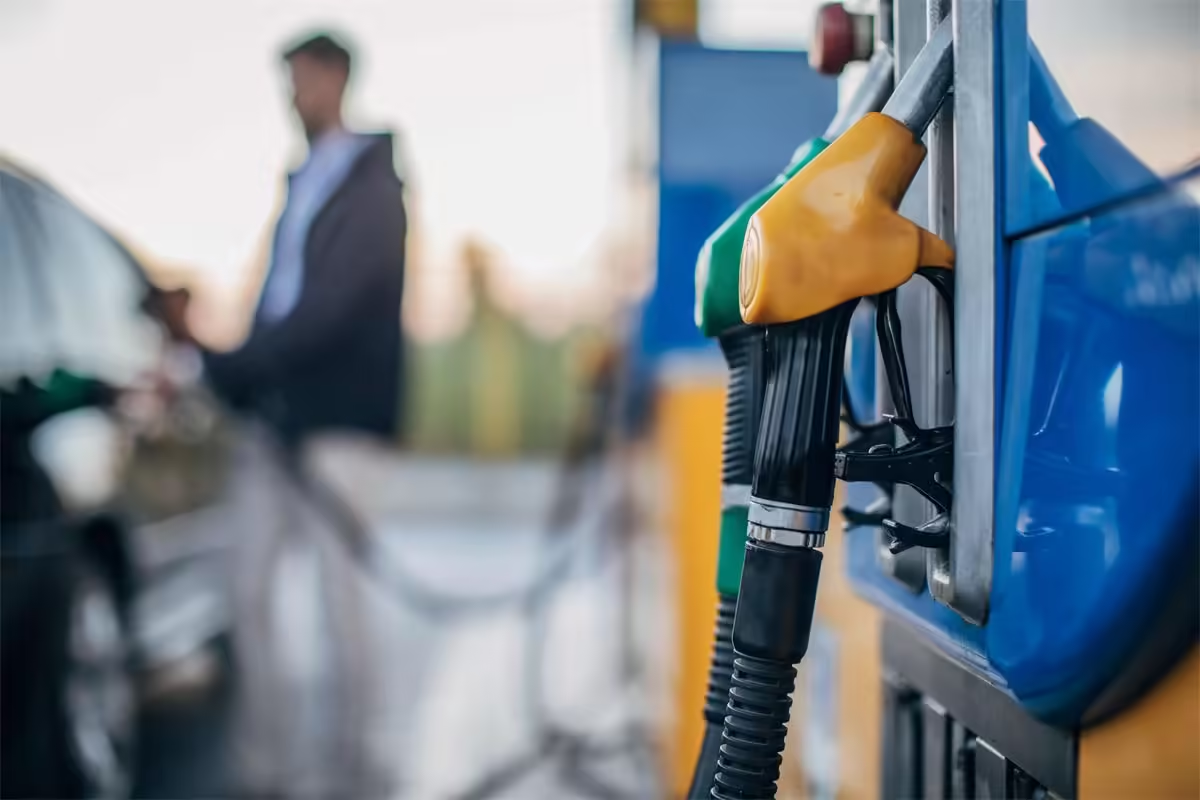

Europe is already in the grip of an energy crisis. Disruption through the Strait of Hormuz has driven up oil, gas and fuel prices, while Europe heads into winter with gas storage near record lows and diesel inventories under pressure.
This is the moment to maximise resilience and keep supply options open. Instead, in little more than two months, the EU risks adding fuel to the fire with a self-inflicted regulatory failure.
Energy importers face an absurd dilemma
From 1 January 2028, the EU Methane Regulation’s importer requirements will apply. Our industry supports its objective and has long invested in methane detection, measurement and reduction.
But the immediate problem is not methane-reduction performance. Companies are being required to comply with an administrative framework that is still unfinished. Importers must prove compliance with monitoring, reporting and verification requirements across global value chains, yet critical systems remain incomplete.
The deadline may be 1 January, but its impact is already being felt. Contracts for future imports are being negotiated today, with regulatory uncertainty shaping terms, risk allocation and the volumes companies are willing to contract.
Non-binding guidance cannot provide legal certainty, and suspending penalties does not suspend the obligation to comply
Importers therefore face an absurd dilemma: secure the volumes Europe needs and risk non-compliance, or hold back and deepen the EU’s supply crunch?
The Commission’s Recommendations acknowledged the problem but did not fix it. Non-binding guidance cannot provide legal certainty, and suspending penalties does not suspend the obligation to comply.
A Regulation with severe consequences
Wood Mackenzie found that, under strict implementation, up to 43% of gas imports and 87% of crude imports could be deterred from the EU market. Refinery throughput could fall by 50%, with up to 40 refineries closing or suspending operations1.
Today’s energy crisis has raised the stakes further.
Hoping for the best is not an energy-security strategy Europe can afford
European wholesale diesel was around €1.60/litre before the crisis. It is now around €2.30/litre. Applied illustratively to today’s level, the Regulation could push diesel towards €2.70/litre from 2027.
Gas prices have more than doubled over the past year. Even if we applied Wood Mackenzie’s best-case “adaptive” scenario to current prices, EU Methane Regulation (EUMR)-related restrictions could push TTF towards €107/MWh, close to 2022 crisis levels.
Europe could emerge from winter with gas storage below 20%, creating a major refill challenge in 2027. Any further import restrictions would make that task significantly harder and more expensive.
No model can predict the future. But “hoping for the best” is not an energy-security strategy Europe can afford.
The time to act is now
Europe cannot reopen Hormuz. But Brussels can fix a regulation of its own making.

A growing majority of Member States are calling for legislative action, backed by more than 75 companies and associations across European industry.
Importers face an absurd dilemma: secure the volumes Europe needs, or hold back and deepen the EU’s supply crunch
The Commission has finally recognised that the initially set January 2027 deadline is not workable and is proposing a one-year delay. But one year only postpones the problem. Three years are needed to make the rules workable.
With only weeks remaining, Parliament and Council must now ensure the Commission’s proposal goes far enough: a three-year postponement of the importer requirements, adopted through a fast-track procedure before 1 January.
EU institutions have acted quickly before when the stakes demanded it. They must do so again. One year delays the problem. Three years can fix it.
Sign up to The Parliament’s weekly newsletter
Every Friday our editorial team goes behind the headlines to offer insight and analysis on the key stories driving the EU agenda. Subscribe for free here.
Source: www.theparliamentmagazine.eu