




This report features research from Center on Policy Initiatives, East Bay Alliance for a Sustainable Economy, Los Angeles Alliance for a New Economy, Working Partnerships USA, PowerSwitch Action, UC Berkeley Labor Centerand UCLA Labor Center.
1. Executive Summary
As policymakers debate how artificial intelligence could impact jobs and workers in the future, a profound transformation of the Californian workplace is already underway. Employers are increasingly using digital technologies to monitor workers, measure their performance, assign tasks and schedules, set the pace of work, and inform decisions about pay, discipline, and termination. These technologies—collectively known as “bossware”—combine electronic monitoring with algorithmic management. Taken together, the concern is that these tools tilt the balance of power further toward employers, who can use bossware to tighten control, intensify work, and extract more value from workers, even at the expense of safety and workplace dignity.
Bossware can include algorithmic performance evaluation systems, location and activity tracking, productivity software, digital scheduling tools, biometric timekeeping, wearable devices and sensors, always-on cameras, and even AI-generated predictive analytics that measure emotion or sentiment. Although employers often present these tools as ways to improve efficiency, fairness, or safety, their use remains largely unregulated and—as we detail in the report—can lead to an array of harms to workers. Most employers do not disclose to workers what data is being collected about them, how it’s being used, or whether an algorithm produced a decision affecting their livelihood. Workers are rarely able to review or correct inaccurate data, challenge an automated decision, or prevent their information from being shared with third parties.
This report draws on a large body of existing social science and legal research, as well as 25 in-depth interviews with Californian workers in industries including hospitality, health care, warehousing, sanitation, transportation, security and janitorial services, delivery, and software engineering. The evidence presented makes clear that the risks of unchecked bossware are not merely speculative, but already reshaping working conditions, undercutting established labor protections, and shifting power toward employers—often without workers’ knowledge or consent.
Key Findings
- Bossware adoption is widespread and accelerating. A number of employer surveys put current rates of worker monitoring at 60% to 80%, with a recent large-scale report finding that of those employers that use digital tracking tools, a significant share are using biometric data collection like fingerprints and facial recognition (67%) and AI-driven productivity analytics (61%). Researchers have identified more than 500 companies operating in the commercial bossware market, while industry analysts project continued market growth of approximately 8% to 18% per year.
- Bossware is often implemented without sufficient disclosure to workers. Worker-reported adoption rates tend to be lower than employer-reported sources, indicating a clear knowledge gap around workplace technology implementation: 41% of workers received no communication from their employer about workplace data collection or AI use, according to recent research. Workers interviewed for this report discovered that their employers were monitoring them only through rumors from colleagues, mistaken app notifications, or chance encounters with hidden software features.
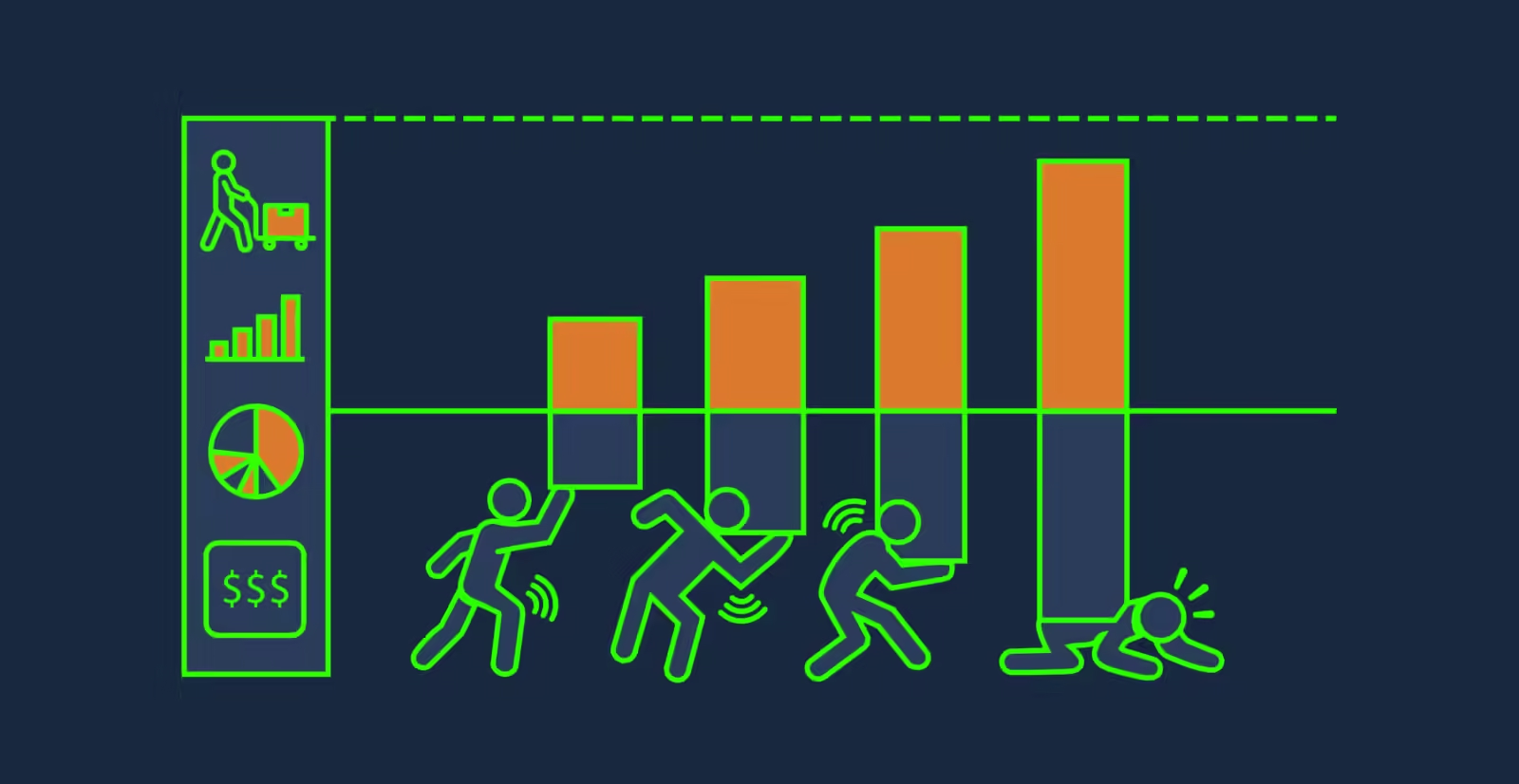
- Bossware can intensify work and exacerbate health and safety risks. Employers can use electronic monitoring and algorithmic management tools to push workers to unsafe speeds, leading to physical harm and mental anguish. Workers’ accounts illustrate how these pressures manifest in their daily work. A San Diego warehouse worker called his digitally-directed workload “an infinite amount of work” with “no breathing room.” Delivery drivers reported being pressured to run between stops and forgo bathroom breaks. Bus drivers and sanitation workers explained that computerized schedules failed to account for traffic, speed limits, and rest periods. Hotel workers described losing control over how they organized their work as devices repeatedly redirected them across large properties.
- Bossware can deepen existing workplace inequities. Algorithmic management systems reduce complex work processes to rankings, notifications, and productivity scores, providing employers with a veneer of objectivity even as they continue to treat workers unfairly. These measurements can be incomplete, inaccurate, or stripped of context, yet employers sometimes treat them as more credible than workers’ own accounts. Workers described being disciplined for alerts they never received, package-scanning errors, disputed driving infractions, and delays beyond their control. Low-wage workers, workers of color, immigrant workers, workers with disabilities, and workers with limited English proficiency are especially likely to face intensive surveillance or barriers created by poorly-designed systems.
- Bossware can give employers unchecked control and erode worker power. These same systems can facilitate wage theft through unaccountable and opaque timekeeping processes, can mask employer retaliation after workers speak up or attempt to organize, and can automate the process of discipline or termination. Workers find disputes with management over shifts, wages, and job expectations more common as their work is increasingly mediated through apps. Freight drivers in Los Angeles, for example, were terminated through an automated notification system after being evaluated using a poorly-designed algorithmic ranking system.
These outcomes are not inevitable consequences of technology. Workplace technology can improve safety, job quality, and productivity when its design and implementation are worker-centered and worker-informed. The harms documented in this report result from choices about who controls the technology, what goals it serves, and whether workers have enforceable rights over technology adoption and implementation in their workplaces.
Source: laborcenter.berkeley.edu