
Abidjan, Côte d’Ivoire, 05 October 2026 (ECA) – As Africa undergoes an unprecedented demographic transformation, countries’ ability to fully harness the potential of their populations, particularly young people, will largely depend on their capacity to produce and use reliable data to inform public policies and measure progress.
It is against this backdrop that the United Nations Economic Commission for Africa (ECA), through its Subregional Office for West Africa, and the United Nations Population Fund (UNFPA), in collaboration with Côte d’Ivoire’s Ministry of Planning and Development, through the National Population Office (ONP), launched on 7 September in Abidjan a technical workshop to validate and operationalize the Digital Platform for Monitoring the Implementation of the African Union Roadmap on Harnessing the Demographic Dividend.
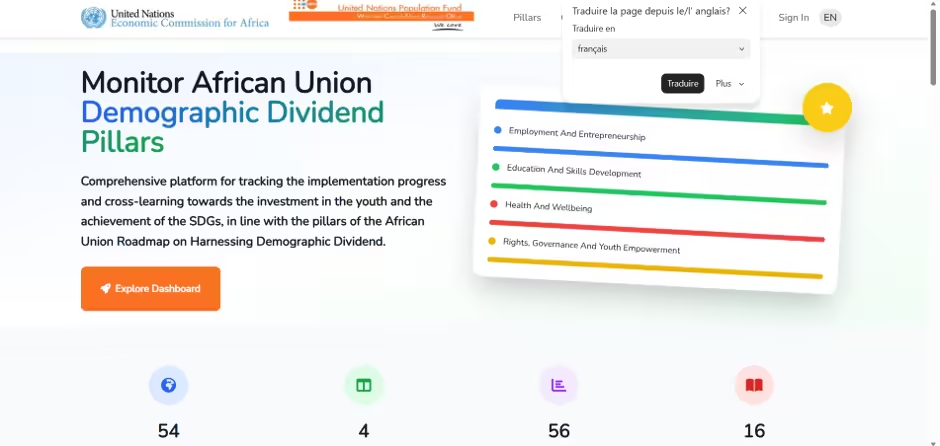
Held from 7 to 9 September 2026, the meeting marked a major milestone in finalizing the pilot phase of the platform jointly developed by ECA and UNFPA. The platform aims to provide Member States with a common tool to track progress, identify gaps, strengthen accountability and support evidence-based decision-making.
Launched by the African Union in 2017, the Roadmap on Harnessing the Demographic Dividend through Investments in Youth is built around four pillars: health and well-being; education and skills development; employment and entrepreneurship; and governance and youth empowerment.
The digital platform covers these four dimensions and provides countries with a harmonized framework for tracking indicators related to the implementation of the Roadmap.
The opening ceremony brought together Mr. Souleymane Diarrassouba, Minister of Planning and Development of Côte d’Ivoire; Ms. Ngone Diop, Director of ECA’s Subregional Office for West Africa; Mr. Saidou Kabore, UNFPA Resident Representative; the Heads of United Nations agencies in Côte d’Ivoire; as well as representatives of the eight pilot countries: Benin, Burkina Faso, Côte d’Ivoire, Guinea, Mali, Niger, Senegal and Togo.
Over the three days of discussions, participants tested the platform’s functionalities, strengthened their technical capacities and made recommendations to finalize its updated version and prepare for its wider deployment.
For the pilot countries, the platform’s added value lies particularly in its ability to link data, public policies and investment decisions.
In Côte d’Ivoire, Mr. Kouakou Koko Angelo Kunibouo highlighted the complementarity between the regional platform and national mechanisms for monitoring the demographic dividend:
“This platform is particularly relevant for Côte d’Ivoire, as it strengthens our national demographic dividend monitoring system. The proposed indicators will help strengthen the technical capacities of national experts and improve the monitoring of progress, while also identifying gaps that can help guide investments in health, education, employment and, more broadly, human capital development.”
In Niger, Ms. Douramane Mariama, Director of Population at the Ministry of Population, Social Action and National Solidarity, highlighted the challenges related to data availability, reporting and preservation:
“Among the challenges countries face are understanding the concept of the demographic dividend, integrating it into public policies, as well as accessing, transmitting and preserving data. The digital platform offers significant advantages, including better traceability of indicators, easier reporting and enhanced monitoring of results.”
For Benin, Mr. Houemenou Dominique considers that the platform addresses a long-standing need:
“If this tool did not exist, it would have to be invented. Since African Heads of State and Government made harnessing the demographic dividend a priority, we have needed such a tool.”
According to him, the platform will enable Benin to better monitor and document actions implemented across the various sectors contributing to the realization of the demographic dividend.
The pilot phase launched in Abidjan therefore represents an important step towards establishing a stronger regional mechanism for monitoring the implementation of the African Union Roadmap and, ultimately, strengthening countries’ capacity to transform demographic change into investments, opportunities and tangible development outcomes for the benefit of African populations.
Issued by:
Communications Section
Economic Commission for Africa
PO Box 3001
Addis Ababa
Ethiopia
Tel: +251 11 551 5826
E-mail: [email protected]
Source: www.uneca.org