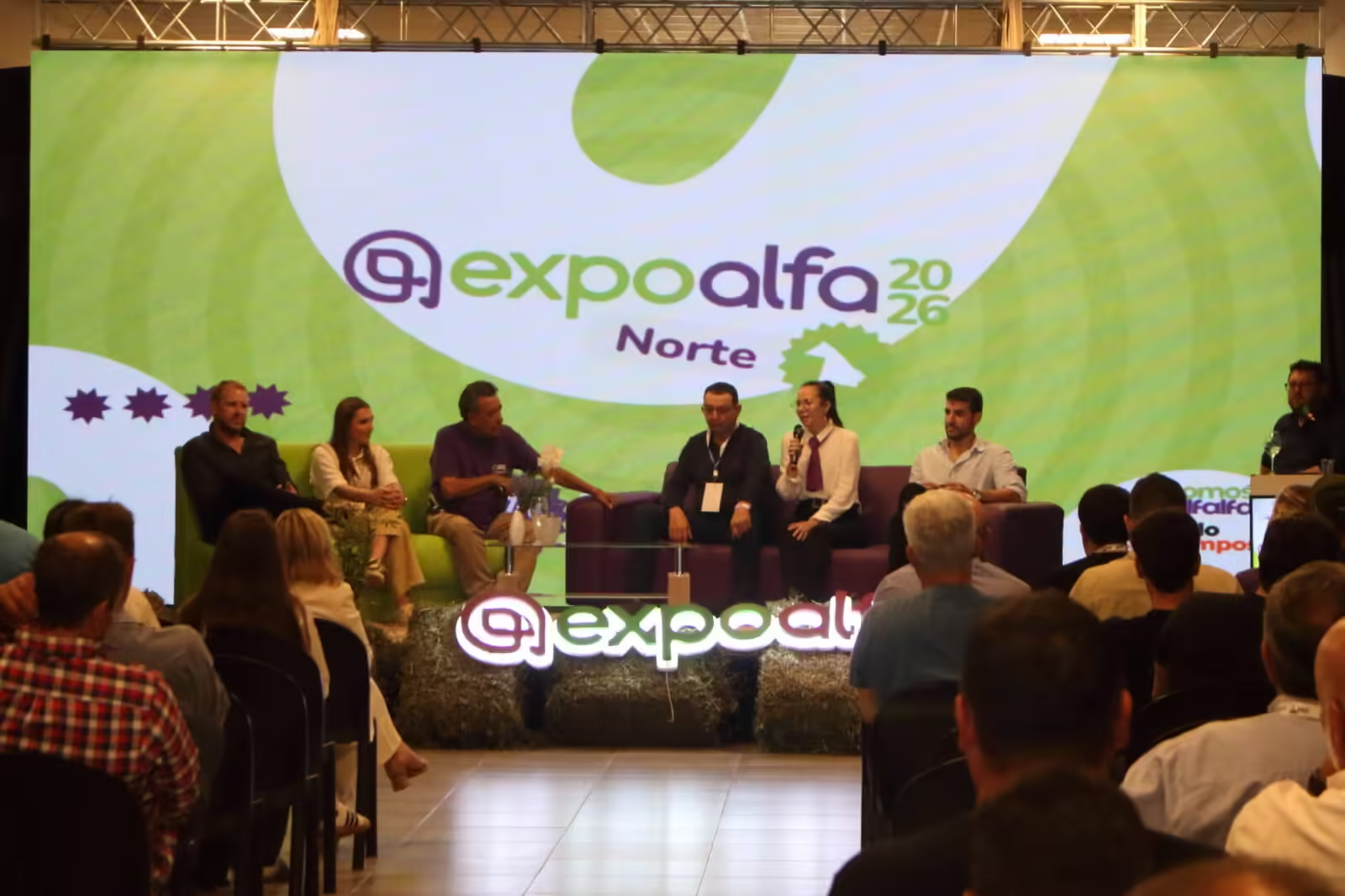

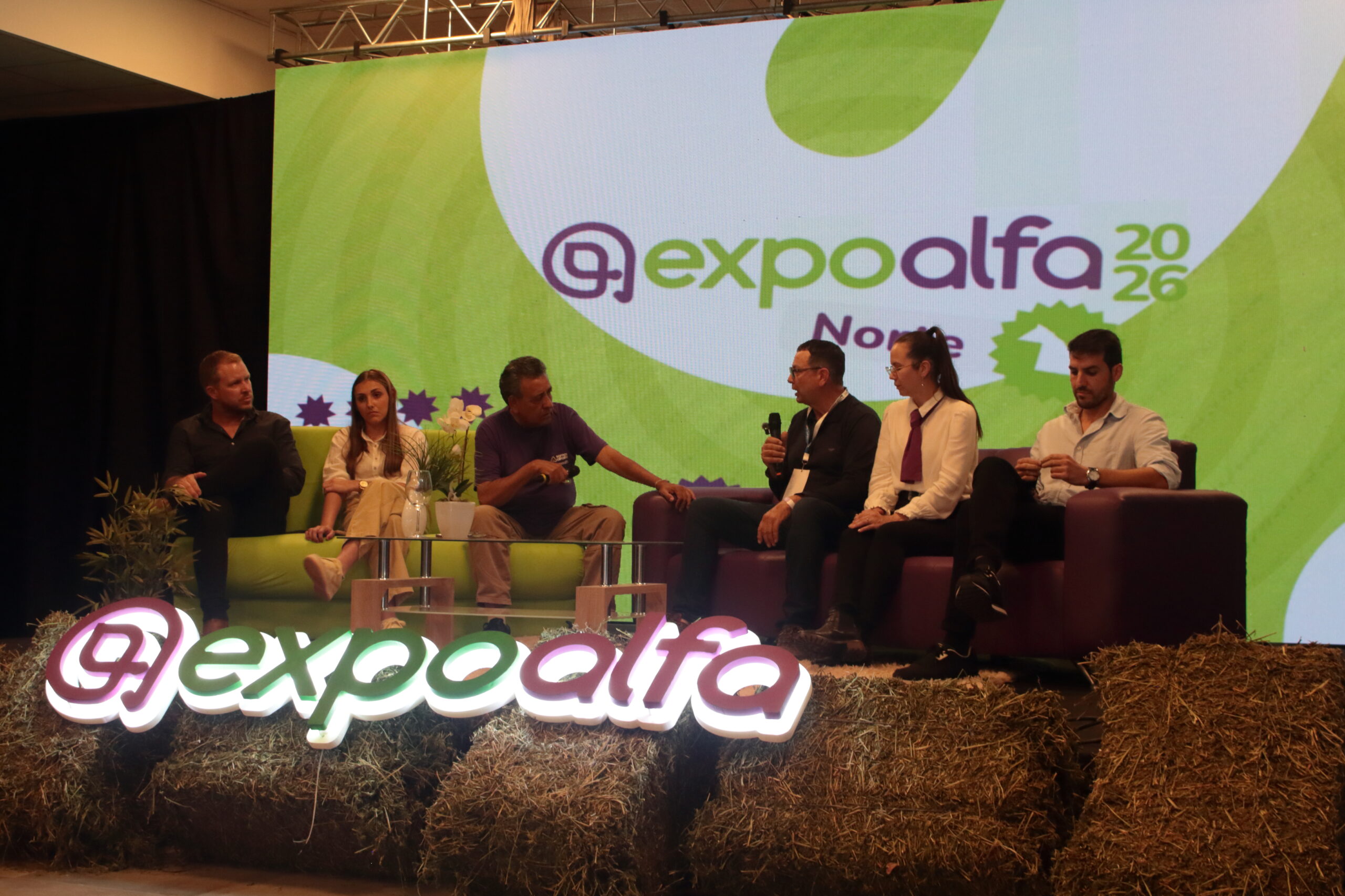
Led by Antonio Lozano, who acted as mediator to carry out a talk between producers (and friends) who told how they started, the current situation and the future expectations that “the queen of forage crops” offer them, the panel “success stories” was held at ExpoAlfa Norte where they talked about “the reality of the future of alfalfa.”
An opportune moment to learn motivating stories that drive other producers or identify them, depending on each one’s story. The truth is that for just over half an hour the audience listened attentively as if from Chaco, and starting with “little and nothing”, they managed to become leaders in the region, overcoming technical and climatic adversities.
The proposal brought together the visions of Fabian Tannfeld, Candela Onuk, Emiliano Ilari and the duo of Gustavo and Romina Curutchetwho agreed that the future of the activity involves professionalization and value addition
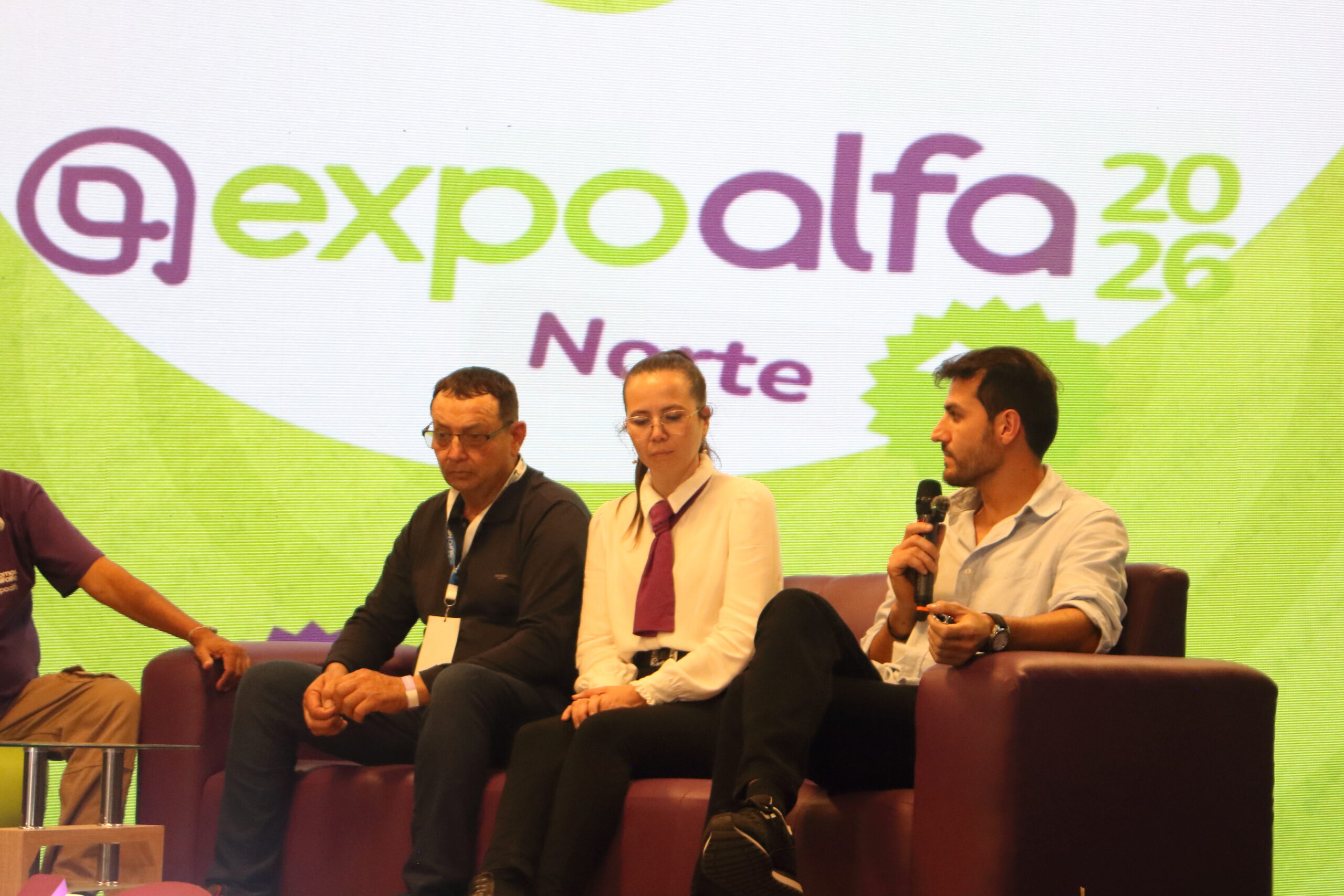
Gustavo Curutchet (Alfalfa Mesón de Fierro) recalled how it started in 2000 after the death of his father:
«I started with 20 hectares, very few. It was really bad for me because those were very bad times (…), but from there we began to venture (…) today we have 500 hectares».
For its part, Emiliano Ilari (Ilari Forrajes) recounted the family origins in the south of Santa Fe and the subsequent settlement in Chaco in the late 70s:
«My old man starts as a contractor with a propeller cutter. Since I didn’t have a tractor, I made arrangements with the settlers (…) At that time my mother managed misery (…); Over time it went from providing services to vertical integration (…) Today we are at 700 hectares».
Candela Onuk (Establishment Del Campo) also highlighted how the impact of adverse climate events prompted them to look for alternatives:
«We were making soybeans, a terrible drought came and there was nothing left and we had 15 hectares that we had planted to feed our cows. We saw the power that making alfalfa had (…) We started from the bottom, we had nothing (…) Today we are exporting, we were able to buy a compactor and a pellet machine».
In addition, Fabian Tannfeld (Raza Argentina Alfalfas) highlighted how alfalfa went from being a subsistence option for a feedlot to becoming the central axis of their company:
«The alfalfa arrived almost by accident (…) We planted a lot of corn and we ended up setting up a feedlot and planting some alfalfa, 5 hectares were (…) Today my parents plant 200 hectares and with the Raza Argentina company we plant 500 hectares».
The climate challenge and the focus on industrialization
When analyzing the biggest setbacks facing open field production, producers unanimously pointed to climate variability and humidity.
«The biggest problem is the weather. You cut an alfalfa and you need 4 or 5 days (…) You have to maintain a name and quality. “What one would need is to incorporate a drying plant at some point.” — Gustavo Curutchet.
«This particular winter was very wet. You took a bale out of the field, it seemed dry and two days later in the shed it was humid, but it was the humidity of the environment. “We are researching and trying to come up with drying technologies.” — Candela Onuk.
Faced with this situation, Fabian Tannfeld He emphasized the urgency of making a qualitative leap towards the processing of raw materials:
«The world requires alfalfa, but it requires quality alfalfa (…) We cannot export with humidity because you are exporting water and you run the risk of it arriving in bad conditions (…) The biggest link missing in the Chaco is industrialization».
In that same line, Romina Curutchet detailed the strategic analysis process to open international markets such as Paraguay and Brazil:
«We began to see what was happening in Paraguay, what the soils were like there and why they demanded alfalfa from here. We did market research to see if exporting was viable and profitable, and if we could maintain continuity. That’s where I joined the company.”.
Keys and tips for new producers
To conclude the panel, the protagonists left key recommendations for those considering starting out in cultivation:
- Focus on comprehensive quality: Emiliano Ilari he stressed that «Having a place for storage is just as important as having a good machine or making a good bale. All the details add up».
- Do things right from the beginning: Gustavo Curutchet warned that “There are many producers who started planting alfalfa without knowing how to do it and what they do is hinder the market because they produce poor quality and sell for free”.
- Dare to start: Candela Onuk advised that “You don’t need to start big, but you do need to be encouraged to start (…) In our case we started very low and today seeing ourselves as we are is really satisfying”
Source: somosalfalfa.com.ar