




In recent years, the Gulf’s secondaries market has started transitioning from a niche area of finance to an increasingly important allocation channel for capital.
With traditional exit pathways, such as IPOs, seeing a notable slowdown, secondaries have become an increasingly appealing route to liquidity for investors in the region amid tougher fundraising conditions and slower exits.
Secondaries refer to the buying and selling of pre-existing investor commitments and ownership stakes in private equity and VC funds, which makes it harder to obtain data on them.
However, Gulf secondary-market turnover on Bloomberg’s electronic markets platform almost doubled from $22 billion in 2022 to $40 billion in 2025, while issuance increased from $246 billion to $452 billion over the same period. Average electronic trade sizes grew from around $500,000 to $900,000.
“Secondary transactions have been happening in the region for several years, but many of them have not been publicly captured,” Kholoud Alharbi, partnership lead at Endeavor Saudi Arabia, which provides growth-stage equity to Saudi entrepreneurs, told me.
“As companies raise larger rounds, there are often opportunities for existing investors, founders, or employees to sell part of their holdings to incoming investors. Those are real liquidity events, but because they are private transactions, they do not necessarily appear in traditional exit data in the same way an acquisition or IPO would.”
The region’s startups raised $3.8 billion across 688 deals in 2025, a 74% year-on-year increase, according to a report by VC and private equity intelligence platform Magnitt. As VC investment across the Middle East has accelerated, liquidity mechanisms have struggled to keep pace.
The average active operational exit horizon for VC and private equity firms in the Middle East and North Africa (MENA) stood at six years in 2025, reflecting a maturing market that requires more patient capital.
M&A remains the primary pathway to liquidity—there were 46 M&A deals across MENA last year—while technology IPOs are rare given stringent profitability requirements in localized markets such as the UAE. There were just two MENA IPOs last year.
The regional liquidity gap is helping to catalyze the development of dedicated secondary funds designed to provide earlier liquidity and help shorten longer exit horizons.
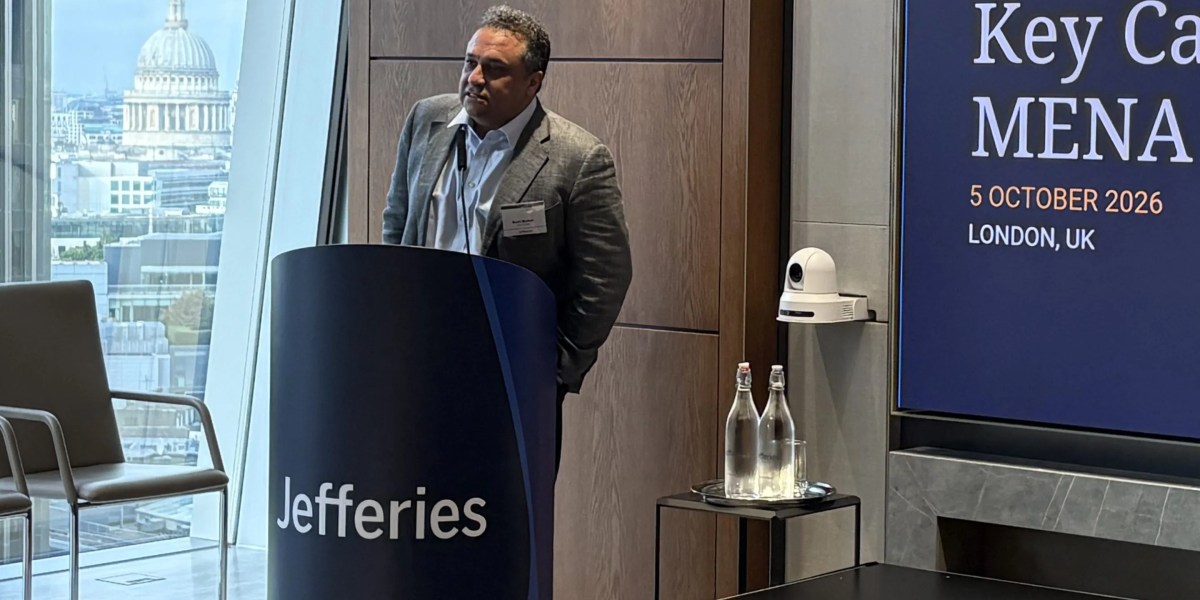
“As someone who has worked in VC investing for a long time, I started to become very aware of the liquidity struggle,” Basil Moftah, co-founder and managing partner of Key Capital, an Abu Dhabi-based VC secondaries asset manager, told me last week on the sidelines of Key Trek—a weeklong program he designed to connect MENA tech founders with international capital.
“While M&A deals continue to take place, they are relatively scarce compared with the number of companies and potential opportunities available.”
Moftah, who has worked in the VC sector and across the GCC for 20 years, believes the conditions that drove the growth of the U.S. secondaries market after 2008 are now emerging in the Gulf. He estimates the regional secondaries market at around $1 billion. Meanwhile, global secondaries transaction volumes reached a record $240 billion in 2025.
Moftah launched Key Capital last year alongside his co-founder, Leena Khalil, to cater fully to the nascent market by providing direct and structured liquidity solutions for founders, employees, early investors, and fund managers in high-growth technology companies.
In May this year, Key Capital entered into a strategic partnership with SHUAA Capital, which specializes in investment banking and asset management, to support the development of the VC secondaries market across MENA and EMEA.
Their Key Fund I is targeting a $50 million fund size and will invest in high-growth technology companies by buying secondary stakes directly from existing shareholders, without appearing on the company’s capitalization table (a document that outlines a company’s equity ownership structure.)
According to Moftah, Key Capital has seen interest from companies across most of the GCC, North Africa, and the Levant in sectors including e-commerce, edtech, proptech, fintech, insuretech, SaaS, and AI.
Demand for liquidity has spanned the entire private-company lifecycle—from as early as Series A all the way through to the latest-stage private companies.
However, Moftah says the company’s focus today is on the UAE and Saudi Arabia, with fintech being the leading sector of interest, and on companies at Series B stage or later.
“Saudi Arabia and the UAE represent some of the strongest opportunities across the region,” he says.
“They’re deeper and bigger markets in terms of GDP, consumption and all of the things that you would want to look for. Being first means we’re seeing a lot of great opportunities across the market and that we can set our own criteria of where and how we execute.”
These criteria include companies that are already producing over $25 million in revenue, possibly up to $100 million, and are growing at 30% to 50% plus year-on-year.
“As you buy into illiquid assets, you want to also get upside,” says Moftah. “The companies we’re looking at are probably not profitable yet, but are reaching or looking to reach profitability soon, and they tend to be the number one or number two leader in the sector or particular sub-sector that they’re operating in.”
He adds that Key Capital is benefiting from meaningful purchase discounts to net asset value (NAV) that average between 35% to 45%. That compares with average discounts of 5-15% to NAV for high-quality buyout fund interests in the U.S.
“There are lots of lucrative deals on the table,” says Moftah. “But being first also means that there’s an educational element whereby we are spending time with limited partners and investors to help them understand why the secondary opportunity is meaningful.”
However, he says, Key Capital is also seeing growing interest in its fund from Gulf sovereigns, institutional investors, and family offices.
“Many of them have already invested in secondaries in the U.S. so they’re familiar with and comfortable with them,” he says.
Saudi family office Al Muhaidib Group, for example, has increased its allocations to LP-led secondary funds over the past two years, viewing them as a way to provide diversified exposure, faster cash flows and less blind-pool risk as global private equity distributions dry up.
Moftah says Key Capital has also received interest from companies in the U.K. and across Europe that are seeking liquidity and haven’t found it in their home markets. “My long-term ambition is for us to be a player in all markets outside the US,” he notes.
For now, the Gulf secondaries market remains in its early stages, but the combination of longer exit horizons, limited IPO activity, scarce M&A opportunities and significant discounts to NAV is creating a distinctive opportunity for investors who are able to embrace the illiquidity of the asset class.
As the region’s private markets mature, secondaries look set to become not just an alternative exit mechanism, but an important component of how capital is recycled through the Gulf’s growing investment ecosystem.
Source: fortune.com