




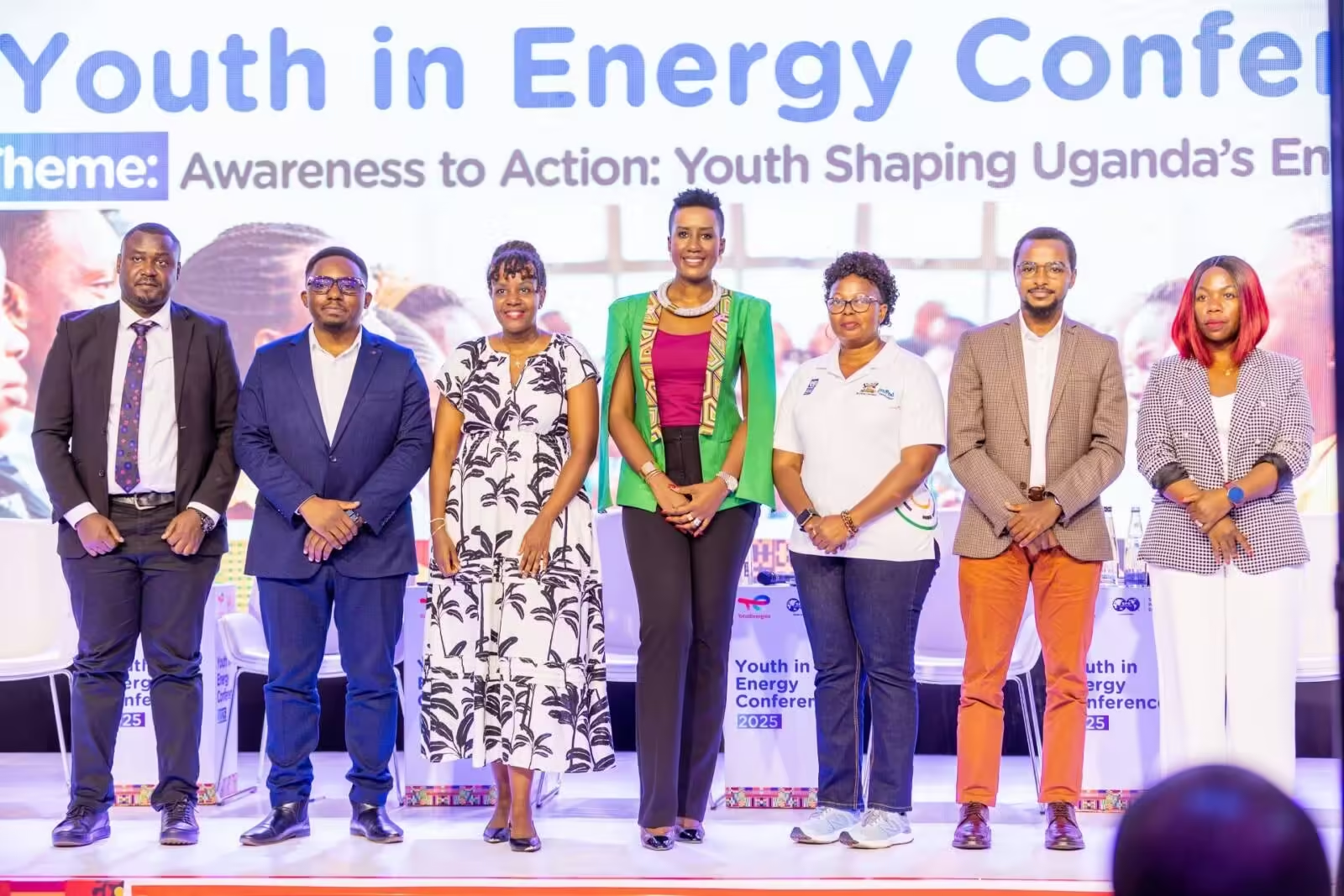

From Kampala to Arusha, TotalEnergies is expanding its engagement with students, young professionals and entrepreneurs, making skills development and youth participation an increasingly visible part of its East African energy footprint.
By Ajong Mbapndah L & Adonis Byemelwa*
As East Africa attracts major investments in oil, gas, electricity and renewable energy, TotalEnergies is making a parallel push to bring young people closer to the opportunities emerging from the sector.
The company’s engagement has been particularly visible in Uganda and Tanzania, where students and young professionals have been brought into discussions on careers, skills, entrepreneurship, local content and the wider energy transition. For Marième-Sav Sow, Vice President for Engagement & Advocacy at TotalEnergies, young Africans cannot remain spectators in decisions that will shape their countries for decades.
“We cannot let the future be designed by those who won’t live in it,” Sow told young Ugandans at the second Youth in Energy Conference in Kampala. “Your voice, your energy, and your seat at the table are absolutely essential.”
The conference brought together more than 300 students, young professionals and energy experts at the Sheraton Kampala Hotel, while nearly 500 others participated online. Organised by TotalEnergies EP Uganda in partnership with the Society of Petroleum Engineers Uganda Chapter, it provided a platform for young Ugandans to interact directly with government officials and industry leaders.
With more than three-quarters of Uganda’s population under the age of 30, Sow sees youth participation as an economic necessity. The country will need engineers, technicians, entrepreneurs, lawyers, environmental specialists and other professionals capable of taking advantage of investments being made today.
“The energy transition presents a generational opportunity for Africa’s youth to redefine development through innovation, resilience, and action,” Sow said. She urged young people to seek internships, training, volunteering opportunities and industry exposure, while calling on companies to provide the mentorship and openings needed to bring new talent into the sector.
TotalEnergies points to its training programmes in Uganda as part of that effort. The Tilenga Academy Training Program has trained nearly 200 Ugandans in advanced production operations, with participants receiving training at the Uganda Petroleum Institute in Kigumba and at international centres in Oman, Malaysia and France.
Nearly 3,000 young Ugandans have also benefited from education and empowerment initiatives that include STEM scholarships, vocational internships and innovation partnerships. For TotalEnergies, these programmes are intended to build a pool of Ugandan skills alongside the physical infrastructure being developed.
Sow said what stood out during visits to company operations in Hoima, Buliisa, Nwoya and Kakumiro was the growing confidence of young Ugandans working around the projects.
“What moved me most was not the size of the machinery, but the spirit of the young Ugandans I met,” she said. “They are mastering new skills and speaking with confidence about their work. They are the pioneers of Uganda’s progress.”
The youth conversation is also being linked to the wider debate over how African countries should approach the energy transition. TotalEnergies has highlighted investments in areas including solar power, hydropower, cleaner cooking and electric mobility alongside its oil and gas activities in Uganda.
For Sow, Africa should not have to choose between development and sustainability.
“Africa must have the right to use its natural resources to develop,” she said. “That is not a rejection of sustainability—it is the very definition of climate justice.”
Other Ugandan energy officials have echoed the need to give young people a meaningful role. Gloria Sebikari, Corporate Affairs Manager at the Petroleum Authority of Uganda, has stressed the importance of informed and productive youth participation, while Uganda National Oil Company General Counsel Peter Muliisa has argued that the country’s transition must address energy poverty as well as economic poverty.
Sow has been particularly vocal about opportunities for young women, challenging the perception that technical careers in energy should remain dominated by men.
“You might be told this field is not for you. That is a lie,” she told young women in Kampala. “The energy sector needs your intellect, resilience, and unique perspective.”
Her message was for young women to pursue technical excellence, find mentors and refuse to place artificial limits on their ambitions. With East Africa’s energy industry expanding, increasing the number of women entering technical and leadership positions remains one of the region’s major workforce challenges.

From Kampala to Arusha
The conversation moved to Tanzania in May 2026 when more than 200 students, energy professionals, policymakers and development stakeholders gathered in Arusha for the fourth Youth in the Energy Sector Students’ Conference.
Organised by EACOP and TotalEnergies in partnership with Ubuntu Impact Limited, the conference brought students from leading institutions face-to-face with industry executives and government representatives. Under the theme “From Resource to Prosperity: How Tanzania Turns Energy into Development,” discussions focused on how the country can turn its energy resources into jobs, skills, businesses and broader economic opportunities.
Delivering the keynote address on African youth and the right to develop, Kenneth Mutaonga urged participants not to limit their understanding of the sector to conventional technical jobs. Major energy projects create extensive supply chains, he argued, opening opportunities for entrepreneurs and service companies alongside engineers and technicians.
Sow used the Arusha platform to return to a point she has repeatedly made in engagements across Africa: natural resources alone will not transform economies. Countries also need skilled people and strong institutions capable of converting resources and investment into lasting economic gains.
A career exhibition hosted by EACOP Tanzania and TotalEnergies Marketing Tanzania gave students an opportunity to interact with company representatives, learn about graduate and trainee opportunities and hear from young professionals already working in the industry. For many participants, it offered a practical look at the qualifications, skills and career paths required to enter the sector.
The East African engagements fit into Sow’s broader argument that Africa’s energy debate needs to move beyond promises and focus more sharply on results. At the Invest in African Energy Forum in Paris in April 2026, she took aim at a word that has followed Africa through decades of investment conferences.
“I hate the word potential,” Sow said. “We’ve been talking about Africa’s energy potential for decades. What Africa deserves is a winning story.”
That winning story, in her view, must be measured by what projects actually deliver. For East Africa, the test will not simply be the number of barrels produced, kilometres of pipeline constructed or megawatts added to national grids. It will also be seen in the number of local professionals trained, businesses entering supply chains, young people finding meaningful employment and communities gaining lasting economic opportunities.

Sow has also used international platforms to draw attention to younger professionals already making their mark. At the Paris forum, she highlighted colleague Victoria Bertola as an example of emerging talent, praising the confidence and professionalism she had demonstrated early in her career.
For young East Africans, the stakes are considerable. The region is entering a period in which major energy investments could influence economies and employment patterns for decades. Whether young people secure a meaningful share of those opportunities will depend on training, access, government policy, private-sector commitment and their own willingness to compete.
Sow left Uganda’s young people with a challenge that sums up much of her engagement with the next generation.
“If your dreams do not scare you, they are not big enough,” she said. “Let us move together—from awareness to action, from ambition to achievement.”
Across Uganda and Tanzania, TotalEnergies is betting that bringing young people into the energy conversation early will help build the workforce, entrepreneurs and leaders needed for the industry taking shape around them. The bigger measure of success will be whether those conversations translate into jobs, businesses, skills and a stronger East African presence across the energy value chain.
*Culled from October Edition of PAV Magazine. Visit www.AECWeek.com for more information about registration.
Source: panafricanvisions.com

