




U.S. envoys met with Ukrainian President Volodymyr Zelenskyy in Norway on Tuesday as Kyiv scrambled to respond to an American pressure campaign that has been allied with moves aimed at courting the Kremlin.
President Donald Trump’s negotiators, son-in-law Jared Kushner and special envoy Steve Witkoff, have had little success finding a diplomatic solution to the war. Washington’s backing is in doubt as Kyiv accused the U.S. of withdrawing support crucial to its defense against Russia — a suggestion that Secretary of State Marco Rubio called “scandalous.”
Witkoff met with Zelenskyy in Oslo, and Kushner joined the talks remotely. Zelenskyy also held talks with Norwegian Prime Minister Jonas Gahr Støre and Finnish President Alexander Stubb before he met the U.S. delegation.
Officials from the U.S. and Ukraine had been expected to meet in Norway this week for another round of negotiations, sources familiar with the matter told NBC News, as a series of recent actions by Trump in favor of Russia left both Congress and U.S. allies questioning U.S. mediation efforts.
A U.S. official told NBC News that the meetings among Witkoff, Kushner, Zelenskyy and the other officials were “very productive and constructive.”
“Ukraine brought forward new ideas and proposals, which were discussed in detail. The parties made meaningful progress in aligning on a coordinated approach to engaging Russia and advancing the diplomatic process,” the official said.
“There is now strong alignment at the working level among the United States, Ukraine, and Europe on the next steps. The teams are working exceptionally well together, with a shared commitment to finding practical solutions to end the war,” the official added.
A comprehensive peace framework, including long-term security guarantees for Ukraine, were discussed, according to the official, along with a postwar economic plan and a broader European security architecture designed to create lasting stability.
Kremlin spokesman Dmitry Peskov told reporters he hoped it would be possible for Trump’s envoys to hold a meeting in Russia “in the near future,” though he gave no firm indication of what that might be.
Witkoff will meet with Russian President Vladimir Putin tomorrow, with Kushner participating virtually, according to the U.S. official. The goal is to build on the progress made with Ukraine and Europe, discuss the proposals with Russia and create a pathway toward direct trilateral and broader multilateral negotiations, the official said.
Trump has waived sanctions and agreed on a diesel deal with Russia, apparently in a bid to lower fuel prices ahead of the midterm elections. He called Monday for Zelenskyy to “get somebody else to negotiate” in his latest rebuke.
Trump also appeared to downplay the impact of Russian attacks on Ukraine, a near-daily reality for the last 4 ½ years, that have killed scores of civilians and flattened towns.
“Russia, frankly, has been fine on Ukraine,” Trump told reporters Monday. “They haven’t been doing much.”
It was the latest public sign of his shift away from Ukraine.
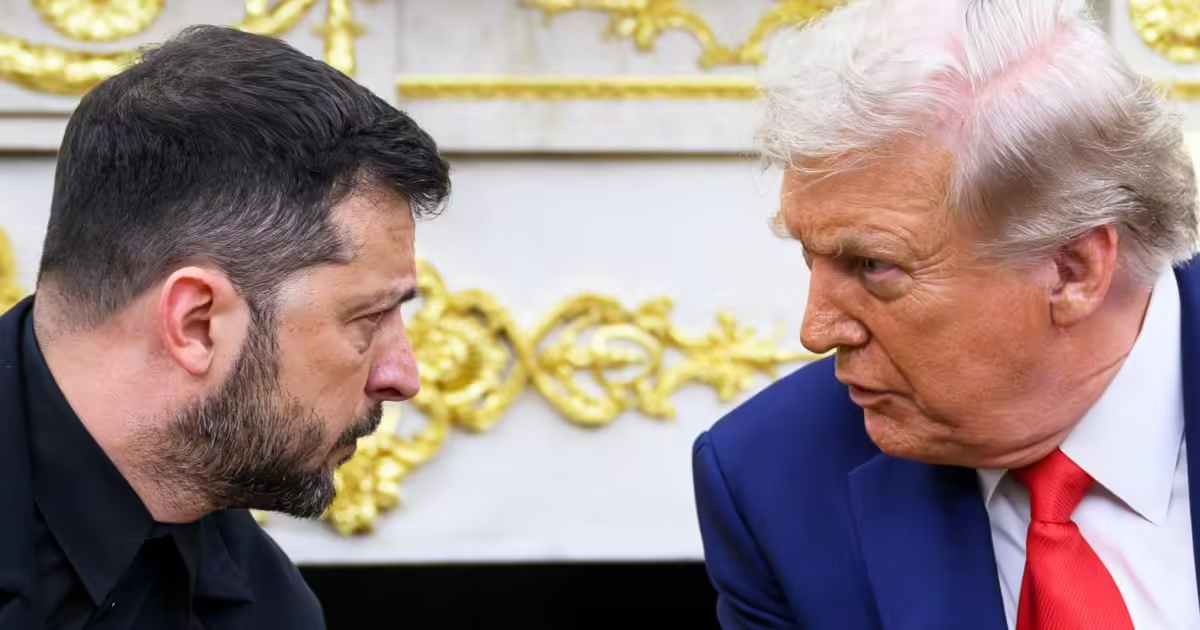
Trump told reporters at the White House on Tuesday: “We want Zelenskyy to make a deal. He can make a deal. He could have made a deal two years ago when we had our little chat in the Oval Office.”
Kyiv said it had once again received no early warning from the U.S. before the capital came under attack by Russian ballistic missiles Sunday for the third time in recent days.
In addition to the withholding of intelligence, Ukraine said it was still facing speed restrictions on Starshield, the military version of the Starlink service, with no explanation from the American side.
“All of this suggests that some political decision has been made to slow down support for us,” Zelenskyy said Monday in a virtual address to a bipartisan congressional delegation. He also said the U.S. was delaying the delivery of crucial ballistic missile interceptors and that Ukraine has nearly run out of its supplies.
Zelenskyy said early Tuesday that he held “a substantive conversation” with Rubio, focusing on missile interceptors, early warnings of ballistic attacks and Starshield restrictions. He thanked Rubio and “everyone in America who supports fair approaches.”
Zelenskyy said later Tuesday that Kyiv is once again receiving early warnings from its partners following recent Russian missile attacks that he said occurred without enough notice. The change happened after talks with his American counterparts, including the phone call with Rubio earlier in the day, he said.
Rubio told reporters that he told Zelenskyy in the 45-minute call that nothing in U.S. support for Ukraine had changed.
“There’s nothing being deliberately denied to Ukraine,” he said at the start of a trip to India.
When it comes to missile interceptors, Rubio said, the U.S. has to strike a delicate balance between its obligations to other partners and its own requirements when it comes to what he called “the most in-demand product” in the defense industry right now.
“When a country doesn’t get interceptors from the United States, it’s not because we are denying,” he said. “We have our own needs, too.”
Ukrainian officials, including Zelenskyy, have made it clear that they accuse the U.S. of imposing restrictions that have disrupted military operations and hampered Ukraine’s ability to intercept Russian missiles, making the attacks deadlier.
“That’s scandalous. That’s outrageous. That’s just simply not true. That’s not accurate,” Rubio said Tuesday.
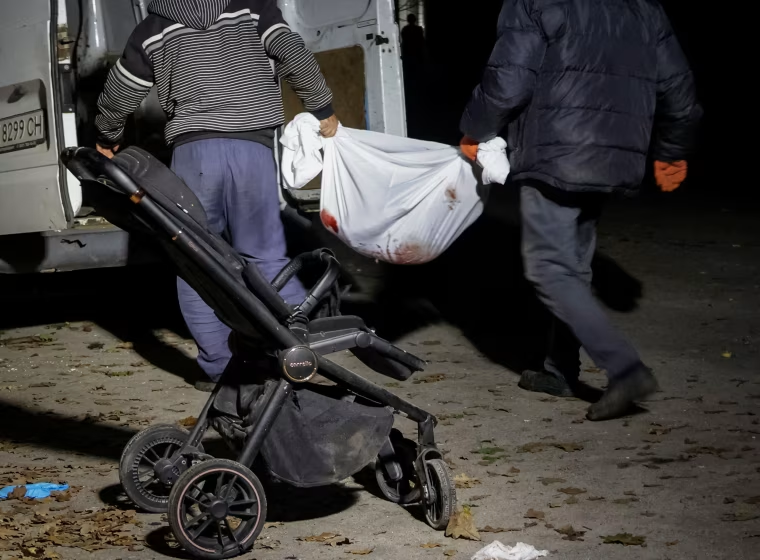
Officials in the eastern Kharkiv region shared images Monday of a dead child in a stroller — a 1-year-old girl who they said was killed alongside her mother in a Russian attack on a public park in the region.
“The world has enough strength to stop the war. That strength must finally be used — against the murderers,” Zelenskyy said in a post decrying the strike.
Source: www.nbcnews.com

