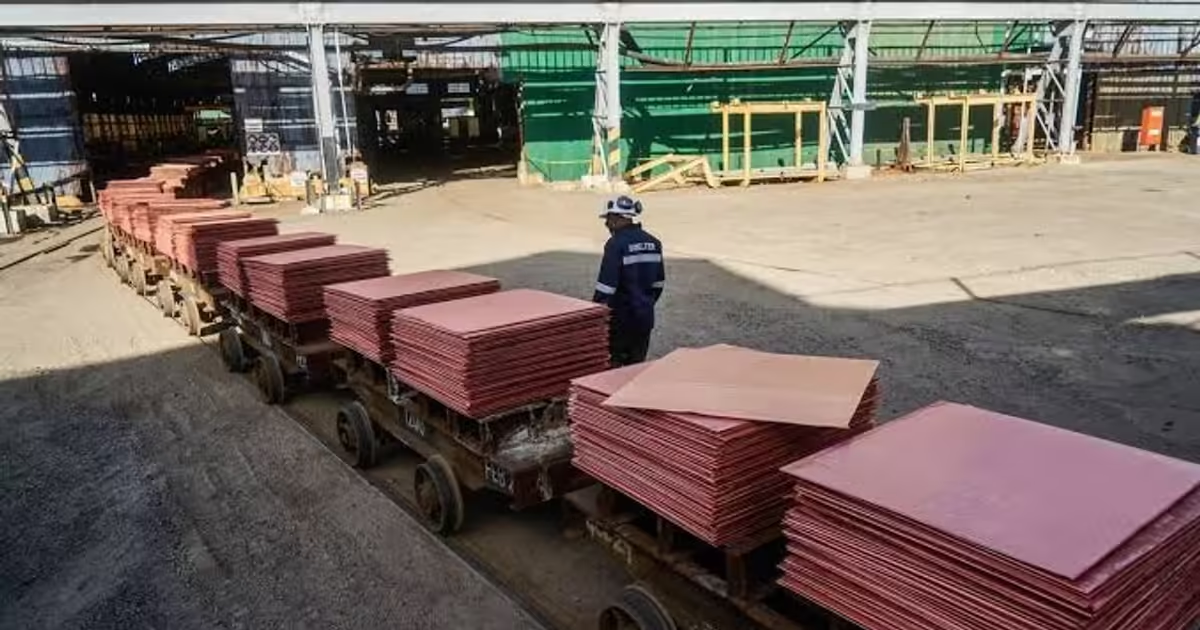

Denny Kalyalya, governor of the Bank of Zambia, said Chinese buyers would begin paying for some copper purchases in renminbi, the official name for China’s currency.
The initial phase will involve Chinese producers, who already pay taxes in yuan in the southern African country.
The move comes as China expands the international use of its currency, particularly in energy, minerals and other commodity transactions.
Zambia deepens its financial ties with China
Allowing Chinese buyers to settle some purchases in yuan could reduce the need to convert payments into dollars, potentially lowering transaction costs and limiting exposure to exchange-rate fluctuations.
In January, Business Insider Africa reported that Zambia had held preliminary talks with China over a potential currency swap arrangement that could help reduce exchange-rate risks in transactions with its largest bilateral creditor.
The development also reflects China’s growing role in African commodity markets, where demand for minerals has strengthened commercial and financial links between the two sides.
China pushes the yuan beyond its borders
China has been expanding the currency’s role in international trade. In March, China National Offshore Oil Corporation completed a liquefied natural gas purchase from TotalEnergies using cross-border yuan settlement through the Shanghai Petroleum and Natural Gas Exchange.
The transaction demonstrated how the currency is gaining ground in energy trade, although the US dollar remains the dominant currency for pricing global commodities.
China’s efforts to internationalise the yuan have produced gains, according to the People’s Bank of China’s 2026 RMB Internationalisation Report. The currency ranks second globally in trade financing, third in payments and fifth in foreign exchange trading.
However, Zambia’s planned arrangement does not signal an immediate end to dollar-based commodity trading. Instead, it points to a gradual diversification of payment options as African countries explore ways to manage currency risks and strengthen trade ties with China.
Source: africa.businessinsider.com