
The National Women’s Soccer League (NWSL) has steadily grown for years, expanding its schedule to include about 200 matches per season and adding several new franchises that bring its team count to 16.
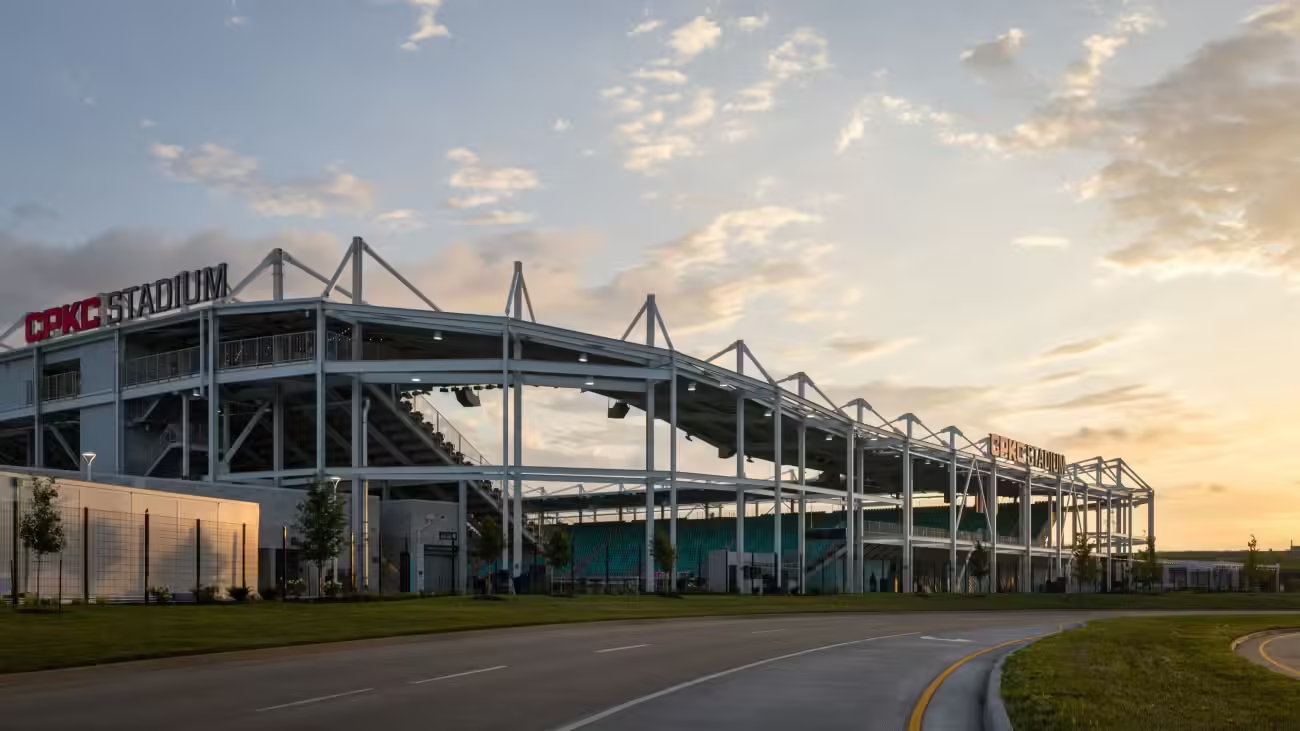
But most of those teams play in stadiums built for men’s teams. The Kansas City Current is different. The team’s arena—CPKC Stadium—stands on the banks of the Berkley Riverfront in Kansas City, Mo., as the first purpose-built stadium for any women’s professional sports team in the world. The venue opened two and a half years ago, and since then, KC Current has sold out every match in their 11,500-seat home.
Much like CPKC Stadium itself, the design process was quite unique, according to Christina Franklin, who is the director of interior design at Generator Studio (the stadium’s architect of record). Franklin shared the following insights.
1. From day one, the stadium was designed around women athletes and their fans
Unlike the stadiums many women’s teams play in, CPKC Stadium wasn’t retrofitted or designed to be shared among men’s and women’s squads. It was conceived by KC Current owners Angie and Chris Long as a new, custom venue specifically for KC Current’s players, fans, and gameday routines. The team suite includes a 24-player locker room, dedicated coaches’ areas, and spaces for hydrotherapy, medical training, warmups, and flexible nutrition—all purpose-built for women athletes.
“We were treating these female athletes like professional athletes and considering their needs from day one,” Franklin said.
After years of playing on other teams, often in facilities poorly adapted to club brand identities and logistical needs, KC Current’s top-tier athletes finally entered a venue made just for them in March 2024.
“For many of these athletes, it was the first time in their careers they had walked into a space and recognized that it had been designed specifically with them in mind—not adapted for them, not borrowed from someone else, but truly theirs,” Franklin reflected.
Generator Studio also carefully considered circulation, restroom counts, lighting, and wayfinding to create a safer, more comfortable environment for a fanbase that includes a large share of women and families. The stadium’s amenities and design features are all intended to make the venue feel welcoming and intuitive.
“The owners really took into consideration that every fan [should] be able to have a great experience,” Franklin said, underscoring the collaboration between the ownership team and design team.
2. The design evolved alongside the club’s identity in real time
Founded in 2020, KC Current was still defining itself as an organization while the stadium was taking shape, and that evolving identity became a central part of the design process. Generator Studio also worked on the club’s training facility at the same time, which offered space to test ideas, respond to feedback quickly, and understand how the club wanted to operate. That early collaboration established trust between the client and design team and created a shared rhythm that carried directly into the stadium.
Designing two projects at once also gave Generator Studio confidence in the direction they were taking. The training facility opened first, allowing the team to refine their approach and be even more intentional and ambitious with decisions for the stadium. The dual project relationship became the foundation for how CPKC Stadium ultimately found its form.
“Because we were designing the projects in tandem, there was this constant feedback loop between them. We could see how an idea was being received in one space, learn from it almost immediately, and carry those lessons into decisions we were making on the other. The projects were really informing and strengthening each other in real time,” Franklin said.
3. The stadium’s architectural form is inspired by the Missouri River and rooted in Kansas City
From the earliest design conversations, Generator Studio knew the stadium needed to feel deeply tied to Kansas City. The owners and designers alike wanted to avoid a generic venue that could be dropped into any market. Its riverfront location meant that the Missouri River was natural design anchor, and the club’s name, KC Current, reinforces that connection. The stadium’s sculptural roofline mirrors the flow of the river and the dynamism of the Current’s brand.
“We wanted to mimic some of those water components, so the roofline dips down and is kind of flowing like a current,” Franklin explained.
Source: www.aia.org