



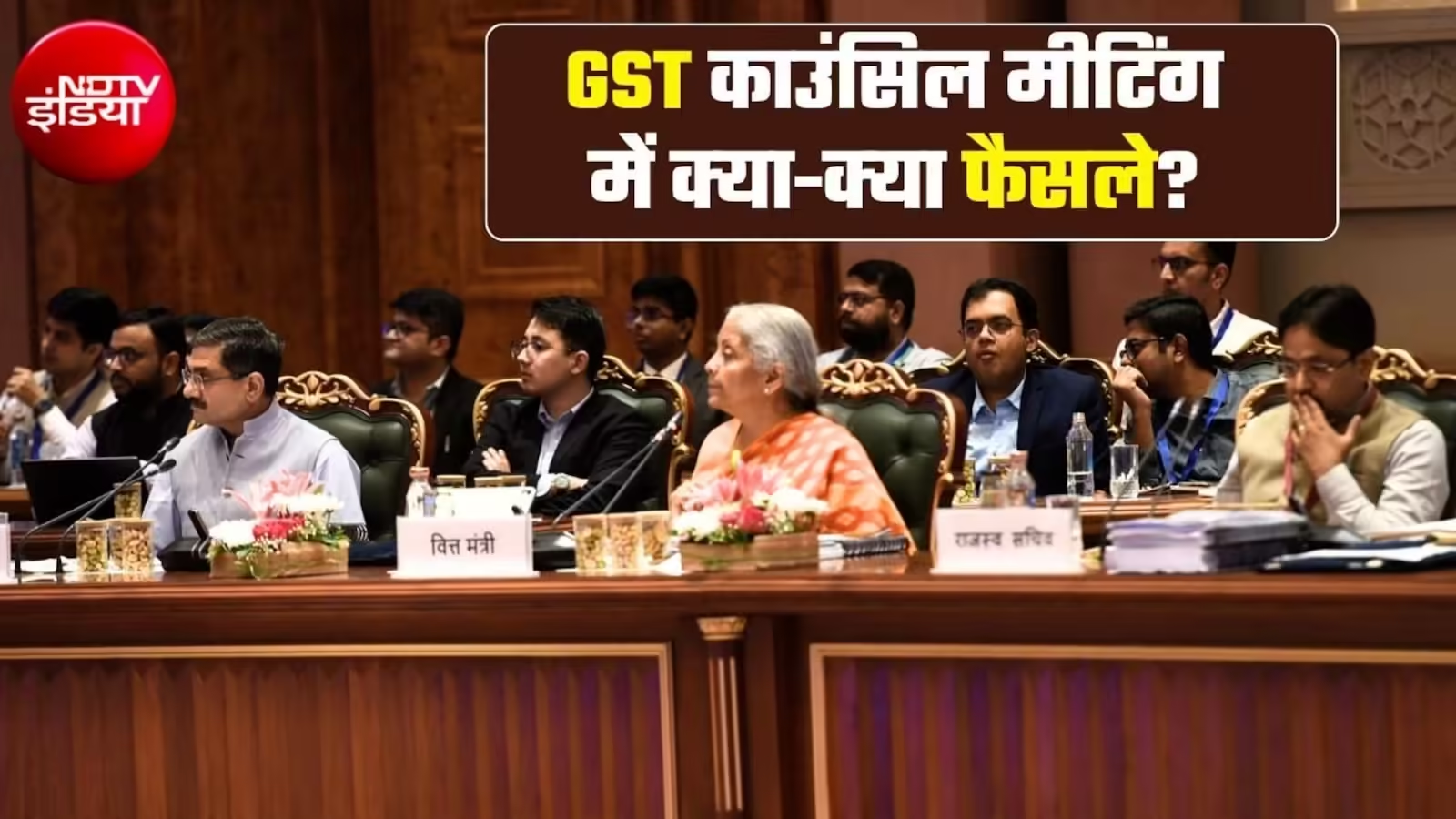

Many major decisions have been taken in the 57th meeting of the GST Council held on Thursday in the capital Delhi, which will benefit businessmen and taxpayers. This benefit will reach the common people also. In the meeting, many rules have been simplified, from abolishing the arrest powers of GST officers to not giving notice on demands of less than Rs 10,000.
At the same time, the way for ITC on employee health and life insurance, telecom tower, pipeline, free samples and expired stock has been cleared. The process of return, registration and refund will also be easy for small businessmen. However, no major change has been made in the GST rates in this meeting.
Big decisions of GST Council meeting
1. Impact of one year of GST 2.0
- The taxable supply of GST increased from Rs 40.19 lakh crore per month to Rs 50.58 lakh crore.
- That means it increased by 25.8%.
- The growth of taxable supplies was more than 25% in FY 2025-26, while it was 13% in FY 2024-25.
- The supplies made to customers increased from Rs 5.98 lakh crore per month to Rs 7.58 lakh crore.
- Gross tax liability increased from Rs 5.85 lakh crore to Rs 6.64 lakh crore per month.
- The effective GST rate on domestic supplies reduced from 14.55% to 13.13%.
- GST revenue has increased by 11% in FY 2026-27.
2. Now the focus in GST is on process improvements rather than rates.
- The structure of GST rates has been decided, hence now the emphasis is on simplifying the everyday process.
- Registration, returns, refunds and ITC will be made easier and automated.
- The system now matches the invoices of the seller and the buyer.
- This will help in detecting fake ITC at an early stage.
3. GST registration will become easier
- Registration of low-risk businessmen is being done in 3 working days without any interference from officials.
- Currently 61% registrations are being done through this automated method.
- The registration form will now ask the businessman only for that information which is necessary for him.
- Between November 2025 and September 2026, 16.73 lakh applications for change in registration were received.
- Of these, 65.45% applications were related to name, director/partner or address of additional place of business. These will also get automatic approval.
4. Relief on minor mistakes in returns
- Every year around 95 thousand system generated notices are issued regarding difference in returns.
- In these the recovery is only about 0.08% of the amount.
- The seller will be able to correct his previously reported shortfall in sales directly in the sales statement.
- If the wrong GST number of the buyer is entered, it can also be corrected.
- ITC will be calculated through invoice management system.
5. Refunds are faster and more automated
- The time limit for acceptance of refund applications will be reduced from 15 days to 10 days.
- If the memo of acceptance or deficiency is not received within 10 days, the application will be considered accepted.
- 90% refund will be sanctioned by the system itself depending on the risk.
- After approval, the order will be issued in 3 working days.
- Refund of excess balance lying in the cash ledger will be completely automatic.
6. No notice on demand less than Rs 10,000
- GST notice will not be issued for amounts less than Rs 10,000.
- Uniform rules will be made for issuing notice and hearing process.
7. Big step on ITC of honest buyer
- A committee of officers will be formed to provide security to such buyers who:
- Have received the correct invoice,
- Have received the goods,
- Full payment has been made to the supplier.
- The committee will submit its report in 3 months.
- After this the proposal will be brought in the next GST Council meeting.
8. ITC on Employees Insurance
- ITC will be available on health and life insurance taken for employees.
9. Relief to telecom and pipeline sectors
- ITC will be available on telecom tower.
- ITC will also be available on pipelines laid outside the factory.
10. ITC on free samples and expired goods
- Companies will get ITC on free samples given.
- ITC will also be available on goods which are destroyed under law after the shelf life is over.
- Pharma and FMCG sectors will especially benefit from this.
11. No tax on same service twice
- Tax will not be charged twice on buying and selling services in the same chain of business.
- Services like hotel room up to Rs 7,500, restaurant/catering and passenger transportation will benefit from this.
- The path of ITC will be cleared in the tax chain of these services.
12. Scope of refund increased in inverted duty structure
- Now you can get refund not only on goods but also on GST paid on input services.
- This facility will be applicable on ITC taken on or after November 1, 2026.
- Tax paid on plant and machinery will also be brought under the ambit of refund.
- This facility will be applicable on ITC taken on or after April 1, 2027.
- With this, the money of companies setting up new manufacturing lines will not remain stuck in ITC.
13. It will be easier to close the business
- The process of cancellation of GST registration will be automatic in a phased manner.
- It will start with small taxpayers.
- The final return will be made a part of the closure application itself.
- After rectification of the registration suspended due to non-submission of returns or bank details, the system will be able to restore it.
14. Returns once a year for small businessmen
- An alternative arrangement has been approved for traders with turnover up to Rs 5 crore and selling goods only to consumers.
- There will be an option to return once a year and pay tax every quarter.
- Detailed rules will come in the next GST Council meeting.
15. There will be less checking of goods in transit
- Special intelligence will be necessary to stop a vehicle.
- Approval for stopping will have to be taken from an officer of at least the level of Joint Commissioner.
- Not every state falling on the way will have the right to stop and examine the goods.
- Investigation will be done mainly in the sending state and the destination state.
- This means that trucks passing through five states will not have to face investigation in every state.
16. Power of arrest abolished in GST
- The arrest power of GST officers is being removed.
- The limit for prosecution will be increased from Rs 1 crore to Rs 5 crore.
- The provision of minimum punishment will be removed.
- The decision on punishment will be based on judicial discretion.
- The maximum limit of general fine will be reduced from Rs 25,000 to Rs 10,000.
17. Promotion of service exports
- If an Indian company provides service to a foreign customer through its foreign branch, it will get export benefits.
- Testing, repair, certification, research or processing of goods of a foreign customer in India will also be considered as service export, even if the goods do not go out of India.
- There will be a uniform system for export payment based on RBI rules.
18. Relief to small sellers on e-commerce
- Small sellers will be able to declare the warehouse of an e-commerce company in another state as their principal place of business.
- For this, consent of the e-commerce operator will be required, which will be given automatically through the system.
- There will be a system of one registration on one PAN in one state.
- With this, small sellers will be able to easily reach customers from other states.
19. Same GST on different e-commerce platforms
- Due to the business models of different platforms, there will be no different taxes on the same delivery.
- Tax will be decided on the basis of which service is actually provided.
- That means the same GST will be charged on similar deliveries.
20. No major change in GST rates in this meeting
No major changes have been made in GST rates in the 57th GST Council meeting. The rates will now be reviewed in a separate meeting to be held once a year. The main focus in this meeting was on simplifying the process, ITC, refund, registration and compliance.
Source: ndtv.in