



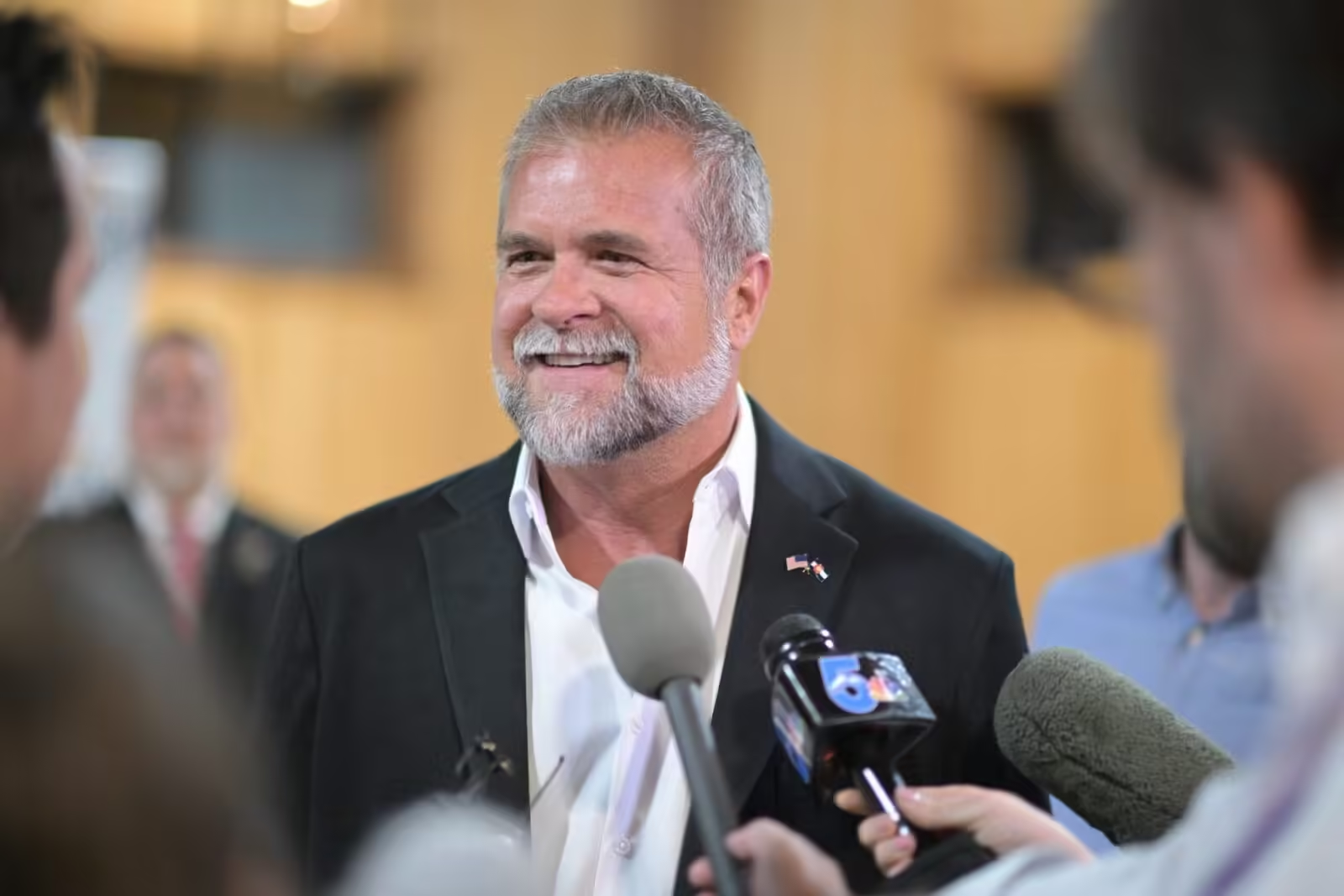

A state hearing officer recommended Friday that Victor Marx’s campaign pay more than $57,000 in fines for “a pattern of knowing indifference” to Colorado campaign finance rules.
The case stems from donations accepted by the Republican gubernatorial nominee’s campaign during the earlier primary race. The fine is one of the largest requested in at least the past eight years, a spokeswoman for the state said.
The hearing officer, Macon Cowles, issued his initial finding Friday afternoon, more than two weeks after a two-day hearing during which the Marx campaign conceded that it had accepted 200 individual contributions that exceeded the $1,450 limit under state law. The campaign attributed it to innocent mistakes made by a first-time political candidate.
The illegal donations — which totaled more than $87,000 — began coming in shortly after Marx entered the race last October and ended in July, more than two months after the campaign first received a complaint that it was violating campaign finance law. A former Colorado GOP official, Darcy Schoening, began filing complaints in May alleging Marx had accepted excess contributions.
Marx, a former nonprofit ministry leader, defeated two Republicans in the June 30 primary and now faces Democratic Attorney General Phil Weiser and other candidates in the Nov. 3 election.
On Friday, Cowles assessed a $100 fine for each of the excess contributions and then doubled the fine, citing the case’s aggravating factors. That went above the request from the Colorado Secretary of State’s Office, which had sought a 75% multiplier.
Cowles also recommended a $1,104.50 fine for 10 cash contributions that exceeded the legal limit, for a total fine of $57,647.16.
The Marx campaign, which did not return a message seeking comment by late Friday afternoon, can next submit “exceptions” to the deputy secretary of state, agency spokeswoman China Scroggins said. The deputy will then issue a final order, and Marx can appeal that decision to a state judge.
“This would be one of the largest fines ever requested in this context in Secretary (Jena) Griswold’s tenure, if not ever in Colorado,” Scroggins said.
Cowles’ ruling called the scale of the Marx campaign’s violations “without precedent.”
Paul Teske, a professor at the University of Colorado Denver’s School of Public Affairs and a longtime observer of state politics, said he didn’t recall fines on that level against state candidates in the past. It’s more typical to see one-off mistakes than a recurring pattern of ignoring the rules, he said.
In Teske’s view, candidates for Colorado’s four major state offices, including governor, “need to show voters their competence in dealing with legal and fiscal rules.”
“You can hire accountants and lawyers with expertise in campaign finance compliance even if your campaign staff don’t have that expertise,” he said.
The hearing officer noted that Marx, in a July podcast interview, had played down the violations and claimed the campaign was aware of them before the complaints began to mount.
“Candidate Victor Marx, who twice certified familiarity with (state campaign finance law), told the public in July that ‘we didn’t even know’ the limit, that ‘we refunded everybody,’ and that the complaints were ‘a nothing burger,’ ” Cowles wrote. “None of those statements were accurate.”
During the hearing last month, campaign attorney Chris Murray asked for a fine of $9,718.67. He said the campaign had reported all of the money accurately — which is why the overages were detected — and had begun to refund people.
“The campaign has not behaved as a scofflaw,” Murray said in September. “The Marx campaign has behaved in the way that you would expect a first-time candidate and first-time campaign to behave, which is to say they got out over their skis a little bit and they had difficulty complying with, frankly, a very technical and very difficult set of campaign finance regulations for a first-time candidate.”
But Cowles was unmoved by that plea for mercy.
He noted that the financial reporting system will alert campaigns when they’ve reported excess contributions and that the campaign continued accepting the improper donations even after it was aware of them. What’s more, he said, even after the campaign began trying to address the problem, it had not refunded all of the contributions or properly reattributed them to another donor.
As Marx had repeatedly touted, he raised nearly $3 million during the primary campaign, far more than his GOP primary opponents. But instead of hiring an experienced operative to handle its financial reporting, the campaign relied on another political candidate who, Cowles noted, was simultaneously running for office, overseeing Marx’s campaign compliance and working as a math teacher.
“The record shows a pattern of knowing indifference to constitutional prohibitions,” Cowles wrote. He later added: “The person charged with compliance did not know what he was doing, and no one above him made sure that he did. Why an experienced professional was not hired when the Marx Campaign carried a balance of ‘hundreds of thousands of dollars’ in its bank account was not explained by (the campaign).”
The excess contributions are not the only campaign finance complaints the Marx campaign faces.
He has also been accused of improperly running an online merchandise shop; in July, Marx directed supporters to visit the shop as a means to support his campaign, even if they had already donated the maximum amount.
The campaign later said the shop was run by a third-party limited liability company, although campaign finance reports subsequently identified Marx as the owner of the company.
Marx called that report a “silly mistake” and said he was not affiliated with the LLC. A complaint about the merchandise shop remains pending.
Stay up-to-date with Colorado Politics by signing up for our weekly newsletter, The Spot.
Source: www.denverpost.com