



00:00 Speaker A
Looking at this number, just give me your first blush reaction when you see a 29,000 print.
00:07 Speaker B
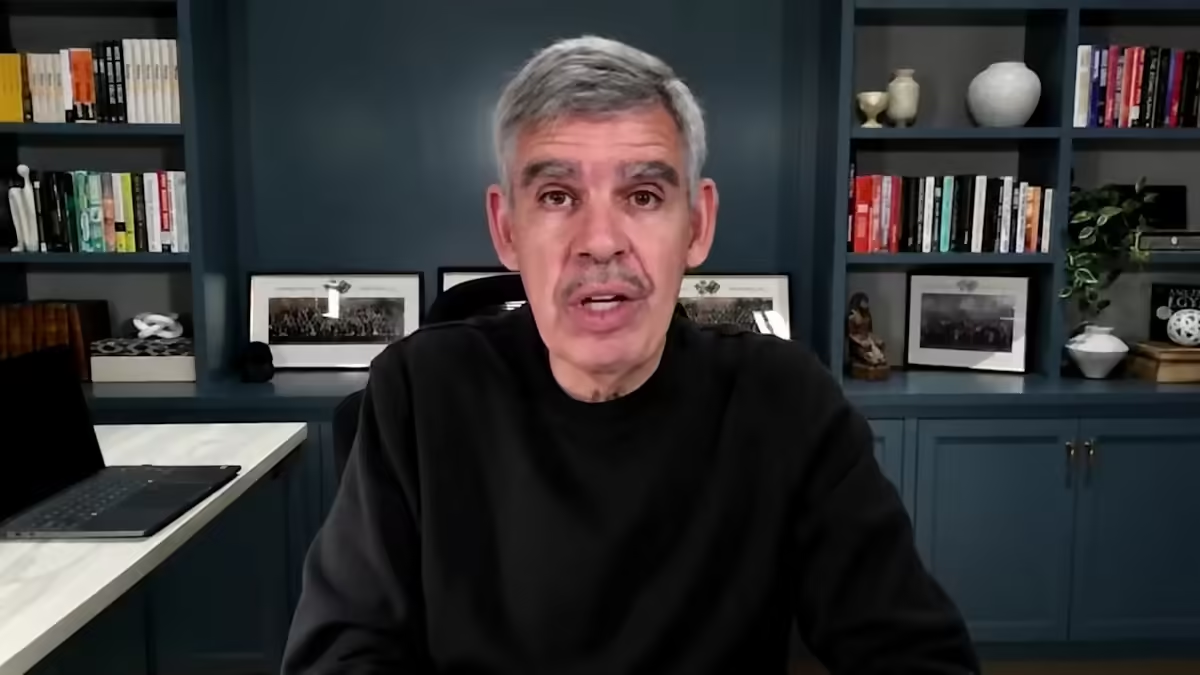
So weak across the board when it comes to the demand for labor. Um, you said the 29,000 print on job creation that’s well below the 90,000. Um, the downward revisions of almost 60,000 to prior months. Earnings growth of only 0.1. So the demand side is flashing yellow. The supply side of the labor market is encouraging. We had a pop in labor force participation, something that we’ve been worried about for quite a long time. And that went up surprisingly to 60 from 61.6 to 61.8. So, good on the supply side, but we’ve got to now keep an eye on the demand side. And and this is going to just not just lower yields as you said, but it’s also going to put the Fed definitely on hold for October.
01:21 Speaker C
One of the things we saw kind of bubble up in commentary around the hike we got in September was the idea that the Fed doesn’t typically hike or cut in singles. And typically you’re you’re going to set off a cycle where you see two or three or four moves. The market is pricing in several hikes to come through 2027 even if we don’t get it in October. Is that the right approach for the Fed to be taking right now? Is policy too loose?
01:46 Speaker B
Let me try to distinguish between what should happen and what’s likely to happen. What should happen is monetary policy should not be the only game in town. This is a role for fiscal policy. And fiscal policy needs to act for two reasons. One, it’s ridiculous that we’re running a 6% of GDP deficit with unemployment at 4.2. That deficit should be much lower. Second, we need to make room in the bond market for the hyper scalers. And who’s the main borrower from the bond market is the government. So the argument is for fiscal policy. That that’s what should happen. What’s likely to happen is a small repeat of the early ’80s where fiscal doesn’t move, doesn’t adjust, monetary carries too much of the burden, and you end up with two things. One is you overly sacrifice the housing market and the car loan market, which impacts of course the lower income households. And the second thing that ends up is you end up with a strong dollar. So I I worry that we’re going to get too much monetary, too many hikes, too few fiscal policy measures, and then we’re going to have to deal with this very uneven economy and an even more pronounced K. That’s the risk right now in the macro policy mix.
Source: finance.yahoo.com