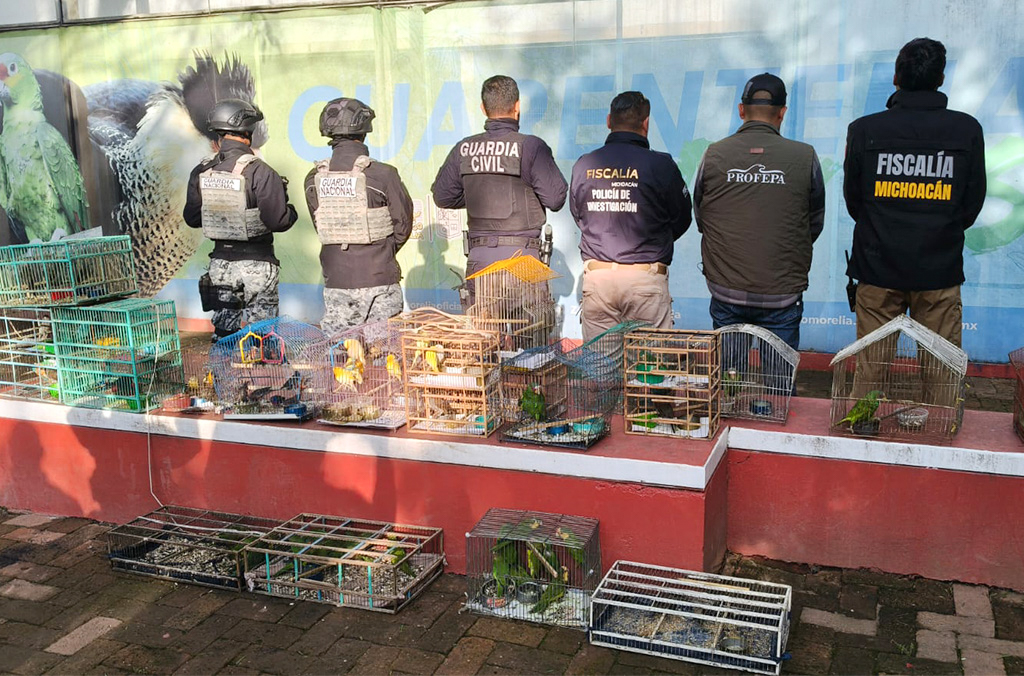

SAN SALVADOR – The rich diversity of flora and fauna in Central America, a gift from nature, is also its curse: illegal trafficking networks of exotic animals and wood have dedicated themselves for years to plundering it and enriching themselves using a porous institutional framework, riddled with corruption.
“These countries have a high biodiversity…and so it is a corridor that lends itself due to its own natural, biological and ecological characteristics so that the element or object of the crime is there, which is wildlife,” said a Costa Rican lawyer and environmental activist. Wild Flora and Fauna Preservation Association (Apreflofas).
The expert, who asked to keep his name confidential, spoke to IPS from San José, Costa Rica.
“Companies only see profit in the short term, because if they saw it in the long term, the economic and the ecological can coincide”: Ricardo Navarro.
This illegal industry involves people, criminal groups and companies that enrich themselves at the expense of the region’s natural resources, in a context where the threshold of what is legal and what is not is easily blurred, and where environmental activists risk their lives to defend the territories and livelihoods of the communities.
The networks operating
On October 7, the International Criminal Police Organization, the Interpolpublished the results of an investigation into the illicit trade of flora and fauna species in nine countries in Latin America and the Caribbean, including six of the seven in Central America. He report It made evident how far the tentacles of that industry penetrate the region.
Operation Mother Earth VIII identified 60,000 illegally deforested hectares and rescued more than 1,000 live animals. The investigation was carried out from June 1 to July 31, 2026, under the coordination of the Interpol Regional Office in Central Americabased in San Salvador.
Six Central American countries participated in the operation: Costa Rica, El Salvador, Guatemala, Honduras, Nicaragua and Panama, as well as Colombia, Mexico and the Dominican Republic. Together, they reported more than 330 cases, 313 seizures and 312 people identified as suspects.
Central America, made up of seven countries – including the English-speaking Belize – and with some 54 million inhabitants in 2026, faces persistent problems of poverty, inequality and access to opportunities, with profound differences between countries and territories.
As Interpol, “what we do is support the member countries of the organization in such a way that isolated information is connected,” so that the authorities of each country have more elements to contribute to their judicial procedures, Adrián Sánchez Romero, senior coordinator of Operations, specialized in environmental crimes, told IPS.
In a telephone interview from the French city of Lyon, Interpol’s headquarters, Sánchez pointed out that one of the main challenges in this type of crime is that the legal frameworks are different in the countries, which does not usually occur in other criminal areas.
According to Interpol, the exchange of information between countries made it possible to establish financial and business links to investigate those who organize and benefit from timber and wildlife trafficking, detected on an industrial scale in the corridor between Central America and South America.
Wildlife trafficking routes to Europe and Asia were also identified. In Mexico, large cats were rescued on routes used to transport drugs and other illicit products, while in Nicaragua, protected parrots and macaws were recovered.
Among the rescued animals, reptiles, insects and birds predominated. Additionally, about 165 kilograms of dried shark fins, valued at $280,000, were seized.
Legal-illegal permissions
Networks dedicated to wood trafficking take advantage of legally constituted companies and the usual channels of international trade to introduce products of illicit origin, Sánchez explained.
For example, “shipments of wood of illicit origin are hidden or laundered mixed with shipments of legal wood,” he noted.
These operations can involve several companies along the chain, from extraction and transportation to the sawmills to the export and import of the product, he said.
Fraud can also take two forms.
For example, fraud in permits can begin in the very institution that grants them, when due to corruption an exploitation is authorized that does not meet the legal conditions, the official explained.
But there is another modality that, as he pointed out, occurs more frequently: the permit is issued in accordance with the law, but the company uses it to extract more resources than those authorized.
“By relying on the issuance of that permit, you obtain that amount plus an additional amount,” he stressed.
Greed for profits
For Salvadoran environmentalist Ricardo Navarro, the fight against environmental crimes has a limit: laws can authorize activities that also destroy ecosystems, while the restrictions on these activities can be modified over time.
“The law acts based on what a group of people say: this is legal or this is illegal,” Navarro said in a conversation with IPS, and that can change over time due to the economic interests of business groups. He recognized that Interpol has to act within that framework and prosecute illegal activities.
Navarro recalled that years ago there was a maximum limit for building on the slopes of the San Salvador volcano, but that limit was expanded.
“Over time that limit was always raised, it went from being illegal to legal,” he stated.
Navarro linked environmental deterioration with an economic model that privileges immediate profits and leaves the costs of destroying ecosystems in the background.
“Companies only see profit in the short term, because if they saw it in the long term, the economic and the ecological can coincide,” he noted.
For his part, the Costa Rican lawyer stated that the results of Operation Mother Earth VIII show the magnitude of the problem and the resources necessary to confront it, although he clarified that the figures of the operation, by themselves, do not allow us to conclude that controls in the region have improved.
In Costa Rica, he mentioned the trafficking of frogs, birds and their eggs, reptiles, felines, sloths and monkeys as the most traded species.
To combat these networks, he proposed strengthening budgets, operational capacity and traceability, as well as connecting the information systems of the institutions in charge of environmental oversight.
“There has to be a budget,” he insisted. Vehicles, equipment, personnel and initial response capacity require resources that are often not available.
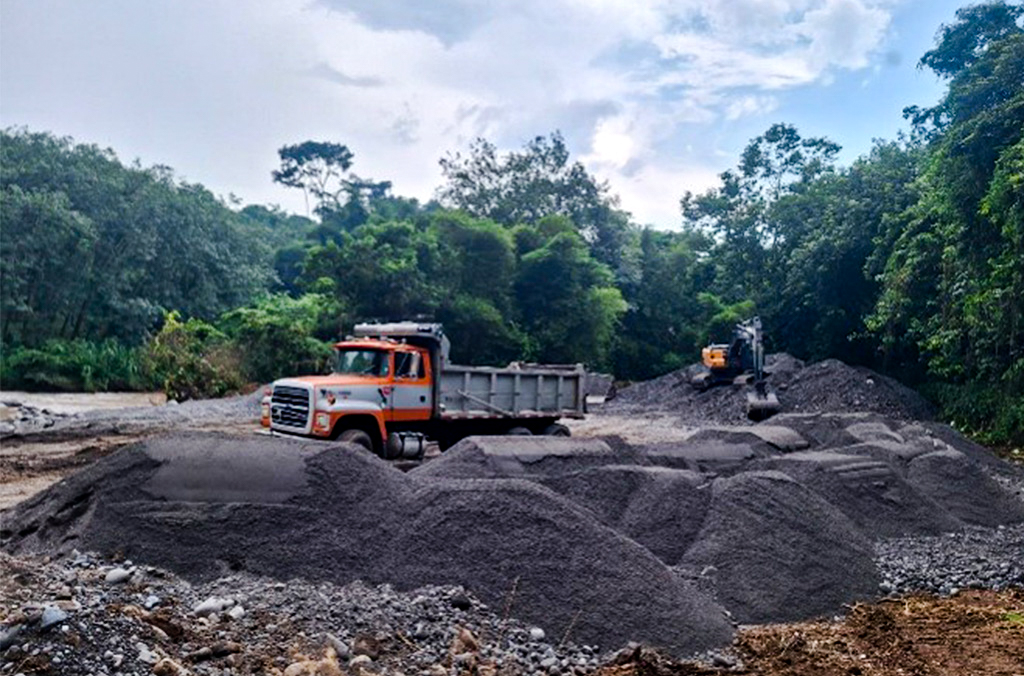
Illegal mining in Costa Rica
The Interpol investigation established that in Costa Rica, authorities intensified actions against illegal mining and seized approximately 4.6 tons of cyanide and 11 containers of mercury, substances commonly used in the illicit extraction of gold.
The operation revealed the magnitude of the use of polluting chemicals in illicit mining and its serious consequences for people and the environment, particularly for waterways, biodiversity and communities in the affected areas.
In this regard, the Costa Rican lawyer pointed out the weaknesses in the control of illegal mining and in the traceability of gold, in a market where authorized and illicit activities coexist.
He highlighted the focus of illegal extraction in Crucitas, near the border with Nicaragua, and mentioned another in the vicinity of the Corcovado National Park, in the southwest of the country, and in Abangares, in the province of Guanacaste, in the northwest.
A violent context
The business and financial networks that Interpol has investigated for environmental crimes operate in a region where defending forests, water and territories can cost one’s life.
In Central America, the persecution of these illicit activities has as a backdrop the threats and murders of those who denounce the destruction of ecosystems and oppose the dispossession of their communities.
Honduras and Guatemala recorded at least 20 murders of land and environmental defenders during 2025: 12 in the first country and eight in the second, according to the report by the international organization Global Witness. published on September 16. Both are among the countries with the most documented cases in the world.
Globally, land conflicts were associated with more than half of the 124 murders recorded in 2025, while more than a third were related to organized crime or hitmen.
Global Witness warns that difficulties in reporting and verifying cases mean the figures likely underestimate the true extent of the violence.
For Rafael Herrarte, from Alliance Escazú Guatemalainvestigating environmental crimes requires also examining the mechanisms through which companies and consortiums acquire land and extractive activities are authorized, actions that generate conflicts in communities.
He Regional Agreement on Access to Information, Public Participation and Access to Justice in Environmental Matters in Latin America and the Caribbeanknown as the Escazú Agreement, due to its adoption in that Costa Rican city in 2018, is a pioneering intergovernmental treaty in a region of the world.
It is also the first in the world to include specific provisions to protect those who defend human rights in environmental matters.
Herrarte maintained that the analysis of environmental crimes must cover the entire chain of decisions, including judicial resolutions that allow exploitation, whose legality can also be questioned.
“We will have to see if the judge’s resolution is also illegal,” he told IPS from Guatemala City, the country’s capital.
Herrarte linked the environmental deterioration in Guatemala with the concentration of land and the expansion of hydroelectric, mining, livestock and monoculture activities, in territories where there are also conflicts with indigenous communities.
According to their analysis, organized crime participates in this dynamic through the acquisition of properties and the establishment of businesses to launder resources, at the cost of dispossession and displacement of communities.
In this context, he warned, those who defend the territories can become obstacles for economic interests and face violence or criminalization, favored by fragile security institutions.
The response, he stated, requires strengthening the justice system and communities’ access to environmental justice, one of the axes that he highlighted when referring to the Escazú Agreement.
ED: EG
Source: ipsnoticias.net