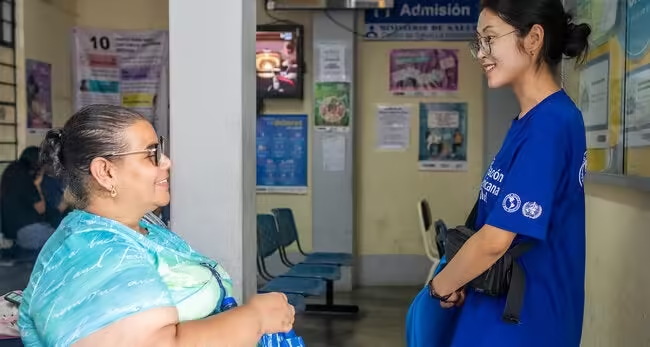

In 2024, while Sorelys was visiting La Huayrona Health Center in the San Juan de Lurigancho district of metropolitan Lima for another medical condition, a laboratory test revealed something unexpected: she had diabetes.
“I didn’t take it very well,” she recalls. “It’s a disease that marks you. So I had to learn to live with the condition and change my habits.”
One important factor was that Sorelys already had her foreign resident identification card, which allowed her to enroll in Peru’s Comprehensive Health Insurance (SIS) program and receive services covered by the program free of charge. With guidance from health workers, she began receiving regular care at La Huayrona’s dedicated clinic for noncommunicable diseases.
In Peru, everyone has the right to emergency medical care, regardless of nationality, immigration status, or insurance coverage. However, foreign nationals must meet enrollment requirements to receive services covered by SIS free of charge, with exceptions for certain vulnerable populations. Those without insurance can access public health services at subsidized rates, which, although they do not eliminate financial barriers, help reduce them.
Since 2023, the Ministry of Health and PAHO/WHO, with support from the Korea International Cooperation Agency (KOICA), have been implementing the project Improving Social Inclusion and Access to Health Care for Migrants and Refugees in Peru in Tumbes, La Libertad, metropolitan Lima, Callao, and Tacna. The initiative seeks to improve access to essential services, strengthen health workers’ skills, and incorporate the needs of migrants and refugees into health planning and information systems.
As part of these efforts, 175 health professionals have been trained to improve the management of diabetes, hypertension, and chronic kidney disease at the primary care level. More than 1,300 glucometers have also been delivered to health facilities, while over 2,500 migrants and refugees have received kits containing educational materials and resources for self-care.
Health workers at La Huayrona Health Center use one of these glucometers to monitor Sorelys’s blood glucose levels each month.
“The glucometer is a crucial piece of equipment. All patients fast before coming in for their checkups, and we measure their blood glucose levels here to determine whether their diabetes is under control,” explains César Jean Paul Silva, a physician at La Huayrona Health Center.
Regular follow-up care has also led Sorelys to make changes in her daily life.
“The change has made me more aware of the need to give up habits that are not appropriate for someone with diabetes,” she says.
Source: www.paho.org