



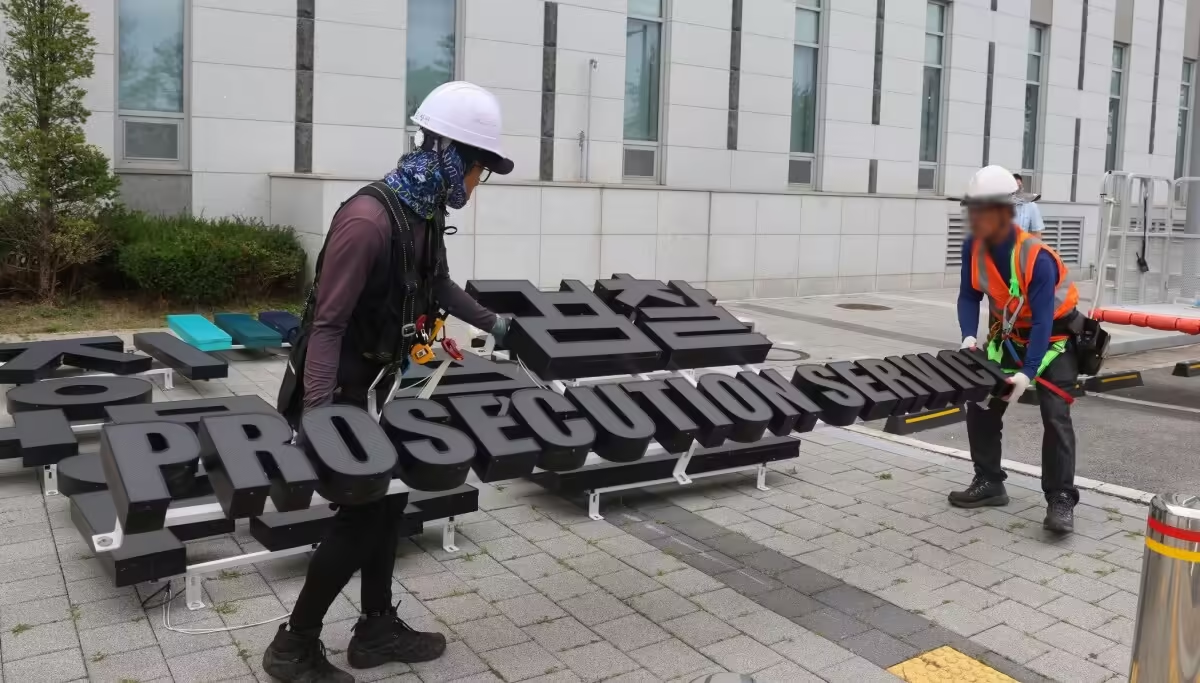

No chiefs, no rule books and nowhere near enough staff. The Public Prosecution Service (PPS) and Serious Crimes Investigation Agency (SCIA) will launch on Friday without permanent chiefs helming either organization.
The PPS and SCIA are supposed to take over core functions of the criminal justice system — bringing and handling prosecutions and investigating serious crimes, respectively — but neither the prosecutor general, who will lead the PPS, nor the chief of the SCIA has been appointed. Both agencies are, therefore, set for what amounts to a half-ready launch.
The same problem exists at the working level. Staff shortages remain unresolved, and subordinate regulations and operating systems are incomplete.
The overhaul dismantles a prosecution system that stood for 78 years and restructures a criminal procedure framework that was in place for 72 years. It is nothing short of major surgery on a structure that has stood for the past seven decades — but the reform was rushed through at an unprecedented speed and without sufficient deliberation.
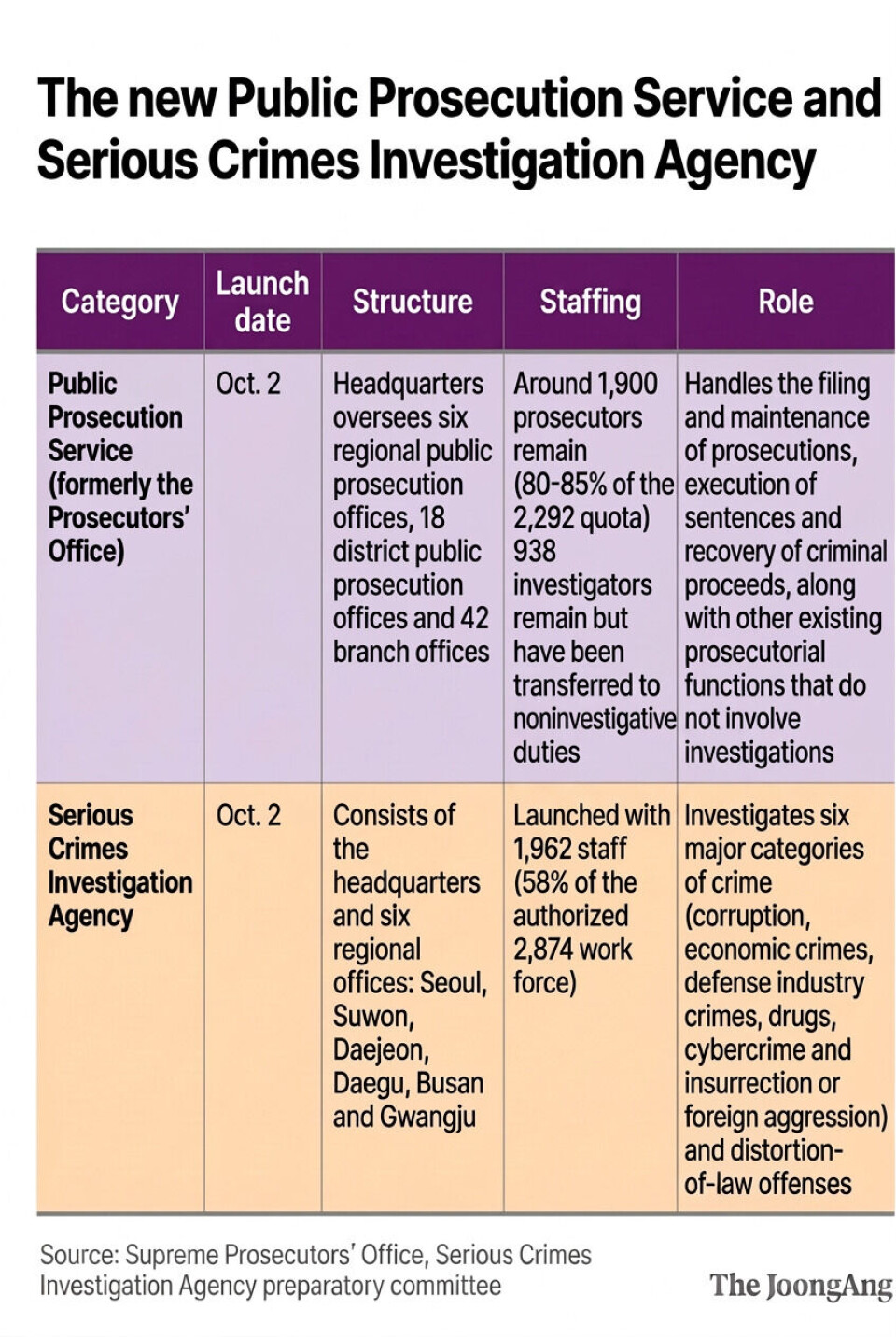
Following the launch of the PPS, the existing Supreme Prosecutors’ Office will disappear. The current prosecutors’ offices will lose their investigative functions and turn into branches of the PPS focused exclusively on bringing and maintaining prosecutions. The SCIA will take over most of the criminal investigations previously handled by prosecutors.
The reform discussions and decisions were completed at breakneck speed — in just one year — after an amendment to the Government Organization Act, which abolished the prosecutors’ offices, took effect last October.
Half-ready launch without chiefs or enough staff
The revision came while the prosecutor general’s post remained vacant. Former Prosecutor General Shim Woo-jung stepped down in July last year, but no successor was appointed.
The leadership vacuum left prosecutors effectively shut out of the legislative process for prosecutorial reform, as they had no channel to voice their concerns about the practical problems and unintended consequences of losing their investigative powers.
One of the most contentious issues was the abolition of prosecutors’ supplementary investigative authority, regarded as a final safeguard for checking and controlling police investigations. Former Deputy Prosecutor General Koo Ja-hyeon submitted his resignation in protest in July and pleaded with lawmakers to “please take one more final look,” but nothing changed.
The Prosecution Service Act states that the prosecutor general will head the PPS, meaning that the new agency is set to launch without a chief and could remain without permanent leadership even after full operations begin.
Only one day remains before the PPS launches on Friday. But while the Criminal Procedure Act has been amended to eliminate prosecutors’ investigative powers, the related subordinate regulations and rules have yet to be fully revised.
Even the organizational plan for the PPS was completed only about 10 days before the launch. A total of 137 subordinate regulations need to be revised or created in connection with the amended Criminal Procedure Act, according to the Ministry of Justice. Another 61 related laws under the ministry’s jurisdiction also need revision, especially the Criminal Act, Civil Procedure Act and other individual laws governing sexual violence and stalking.
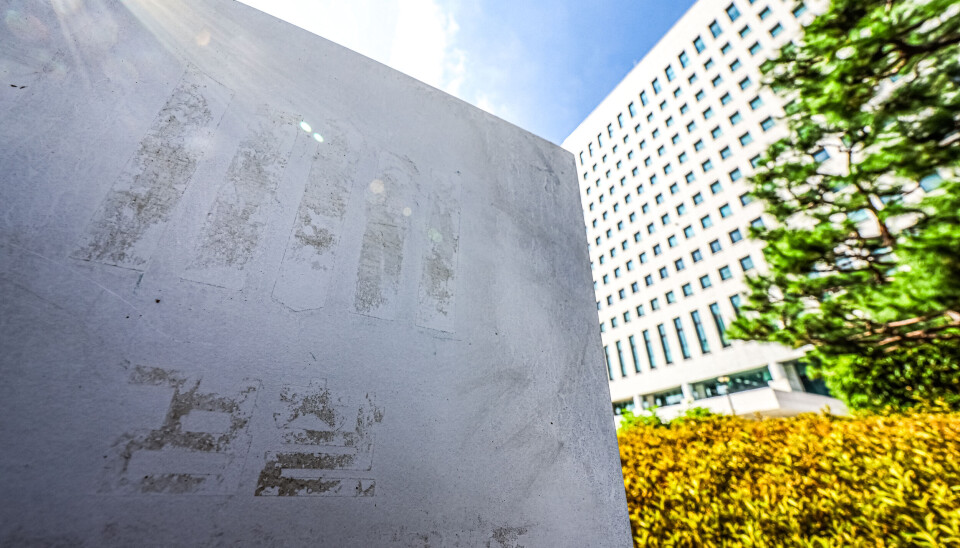
“Prosecution” disappears as concerns grow over side effects
The disappearance of the term “prosecution” in Korean also requires revisions to 50 presidential decrees with the word. Various investigative guidelines that specify prosecutors’ investigative powers must also be amended.
The rules on prosecution case affairs alone contain more than 300 provisions, and the Ministry of Government Legislation’s review of them has taken considerable time.
“The Criminal Procedure Act, which governs criminal proceedings, was amended for the political purpose of dispersing power and passed before it had been sufficiently refined, so various side effects […] are likely to emerge for some time,” Prof. Lee Keun-woo of Gachon University’s College of Law said. “It will be difficult to avoid major confusion after [prosecutors’] investigative authority, a core function through which [they] played an important role in the criminal justice system, was completely abolished without a clear alternative.”
The biggest concern is that gaps in prosecution investigations could leave holes in the protection of and aid available to crime victims.
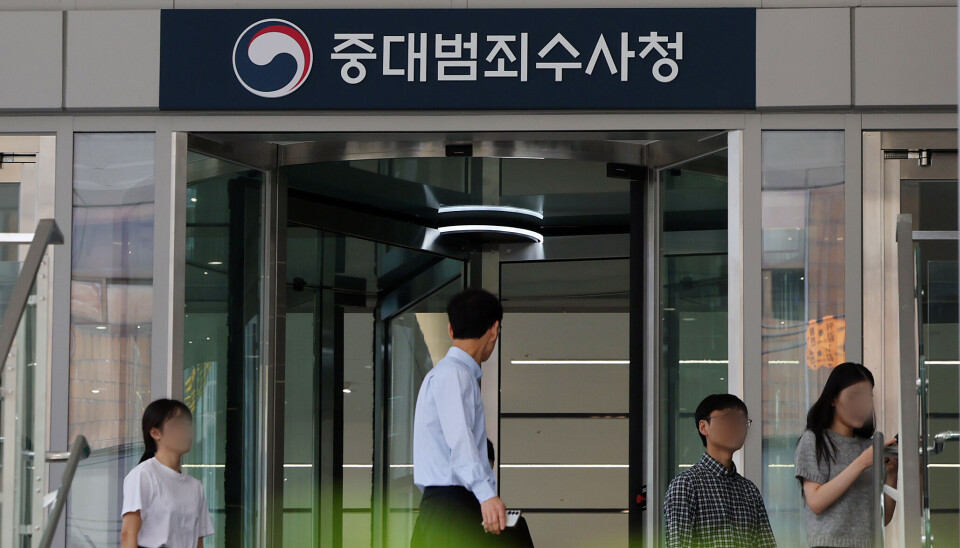
The situation at the SCIA is even more serious
The SCIA will replace prosecutors in investigations of six major categories of crimes such as corruption, economic crimes, drugs and cybercrime and other offenses involving distortion of the law.
However, the agency will launch without a chief or enough investigators.
The former chief of the criminal affairs department at the Supreme Prosecutors’ Office, Kim Ji-yong, was recommended for appointment as SCIA chief on Sept. 7 after earning approval from the agency’s candidate recommendation committee. However, hard-line lawmakers from the ruling Democratic Party (DP) strongly opposed the nomination.
“Kim is a pro-Yoon [Suk Yeol] prosecutor and a leading opponent of prosecution reform,” Rep. Kim Yong-min of the DP said.
The Blue House subsequently had Kim undergo additional vetting and delayed the appointment process.
If the absence of a chief raises questions about who will set the agency’s direction in its early stages, the shortage of investigators could leave holes in its core mission of investigating serious crimes.
The SCIA accepted two rounds of special appointment applications from prosecutors and investigators at the existing prosecutors’ offices. But only 1,962 people applied — about 68 percent of the authorized work force of 2,874. Only around 100 applicants were prosecutors.
The shortage was even more severe among senior investigators who would be expected to help the new organization settle and set the direction of investigations. Just 212 applicants were at Grade 5 or higher — 33.7 percent of the 629 positions at those levels.
Reform goes beyond the president’s original maximum
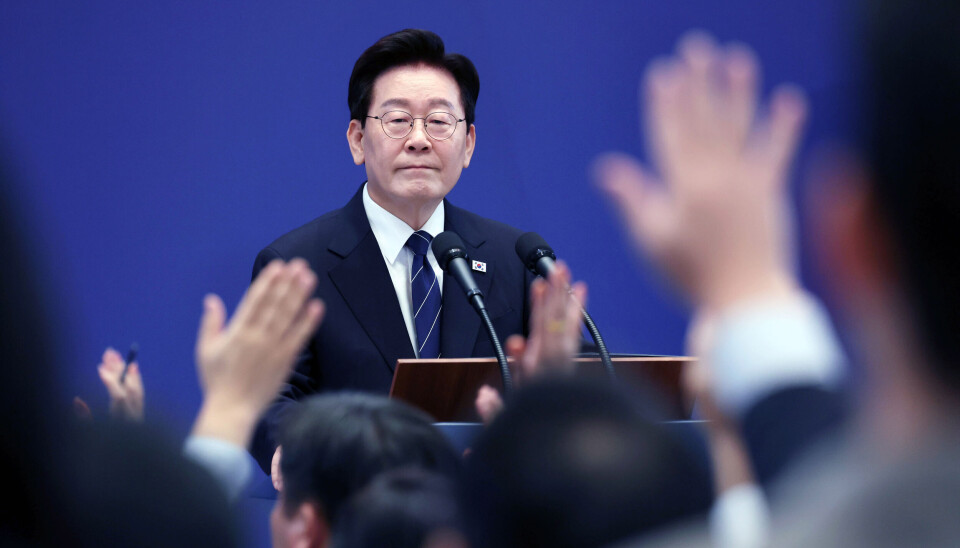
“The original goal of prosecution reform was to separate prosecutors who conduct investigations from prosecutors responsible for indictments and prosecutions and to divide the investigative and prosecution bodies within the Justice Ministry,” President Lee Jae Myung said during a press conference on Sept. 18.
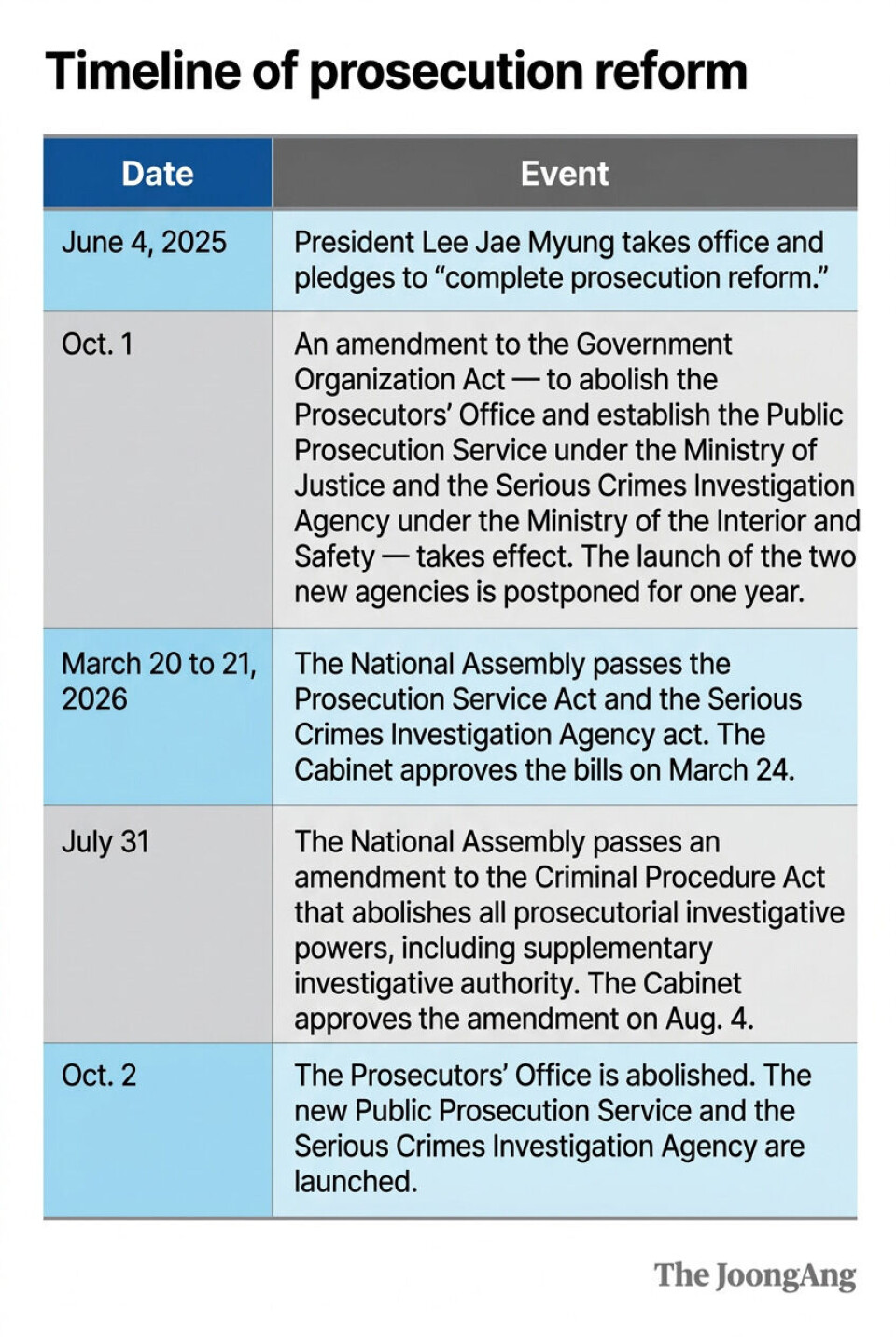
The plan called for splitting the existing Supreme Prosecutors’ Office into two organizations under the Justice Ministry. Prosecutors would likewise be divided between investigative work and prosecution duties.
Compared to that initial plan, the current prosecution reform goes beyond what the president described as the maximum and is closer to an extreme version of the overhaul.
Unlike Lee Jae Myung’s original proposal, the SCIA will be established under the Ministry of the Interior and Safety, not the Justice Ministry. The agency’s placement is part of the government’s new structure.
Former Justice Minister Jung Sung-ho warned during the discussions that placing the SCIA under the Interior Ministry could “concentrate too much power in the Interior Ministry” but was silenced by DP.
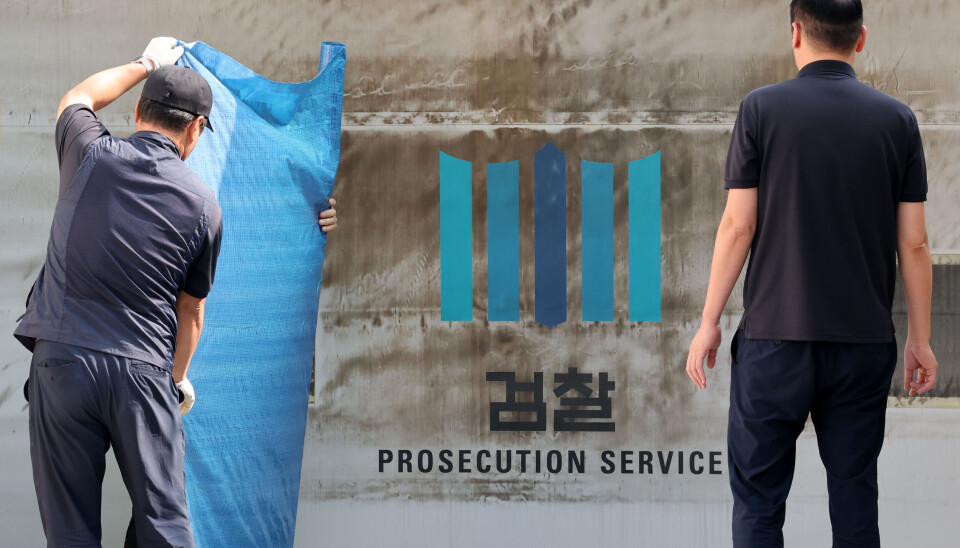
The prosecutors’ responsibilities were also not divided between investigative and prosecution duties. Instead, prosecutors will be barred from conducting investigations altogether. The revised Criminal Procedure Act strips prosecutors of both independent and supplementary investigative authority.
A plan to preserve national investigative capacity by transferring many prosecutors with strong investigative skills to the SCIA fell through as well.
The government’s original proposal would have appointed prosecutors who transferred to the agency as “investigative judicial officers.” The DP opposed the plan by arguing that the SCIA would become “the prosecutors’ office all over again under a different name.”
The abolition of prosecutors’ supplementary investigative authority remained contentious until the final step. Most experts agreed that eliminating the power would make it harder to check and control police investigations and that practical confusion would be unavoidable, given the police’s current staffing levels and heavy workload.
Opposition to abolishing prosecutors’ supplementary investigative authority also grew within the DP. But pressure from hard-line members of the party ultimately killed the power without a proper debate.
BY Jeong Jin-woo, Jeong Jin-ho, Kim Seong-jin [[email protected]]
This article was originally written in Korean and translated by a bilingual reporter with the help of generative AI tools. It was then edited by a native English-speaking editor. All AI-assisted translations are reviewed and refined by our newsroom.
Source: www.koreajoongangdaily.com