





South Fayette students learning science through cooking
1 / 4
Teachers Bryan Seybert and Joe Winans helped design the new course – Science of Food – that is very popular at South Fayette High School.
2 / 4
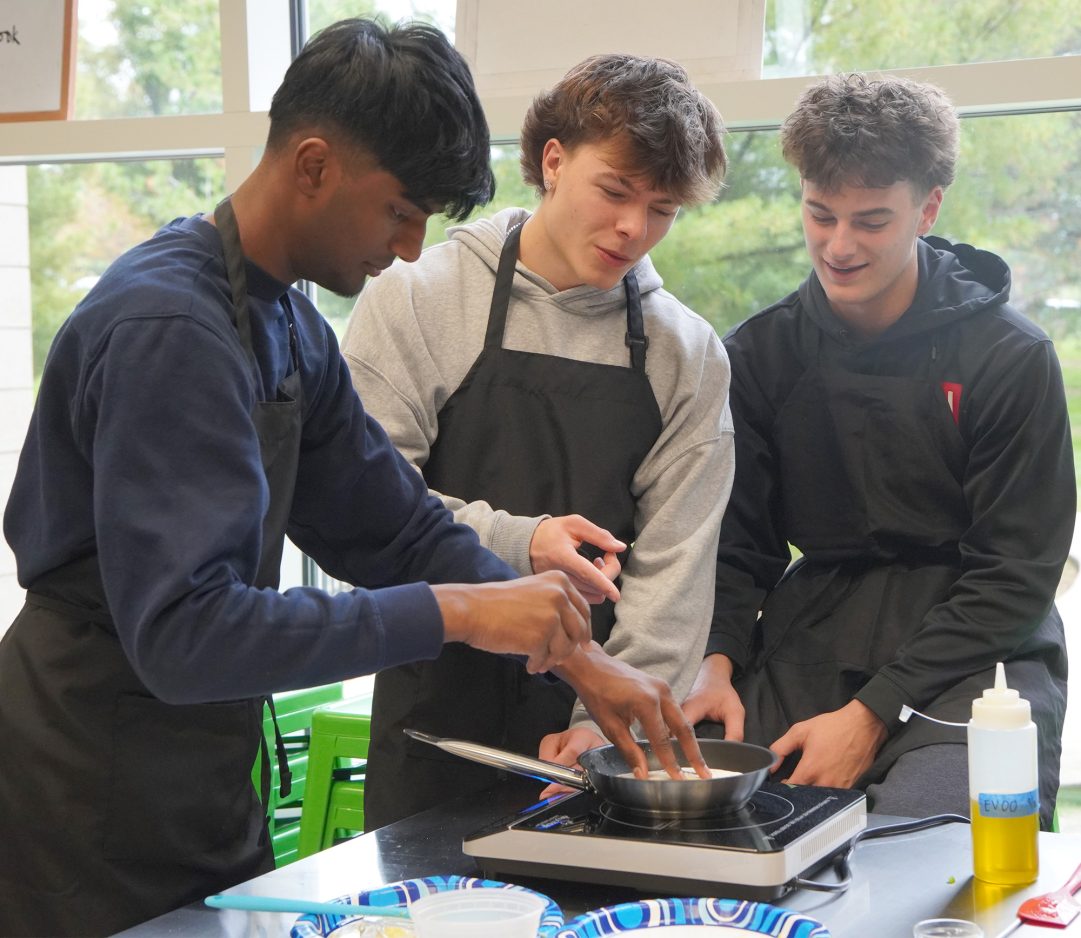
Vignesh Manivannan, Brayden Duff, and Owen Keener work on their lab project.
3 / 4
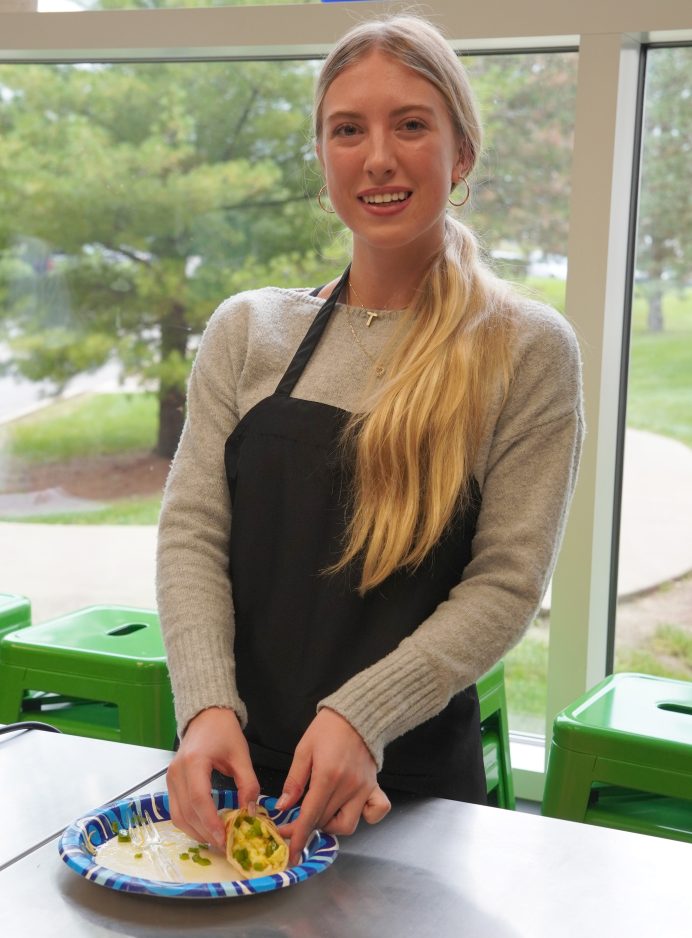
Taylor Cernicky enjoys the breakfast burrito she made.
4 / 4
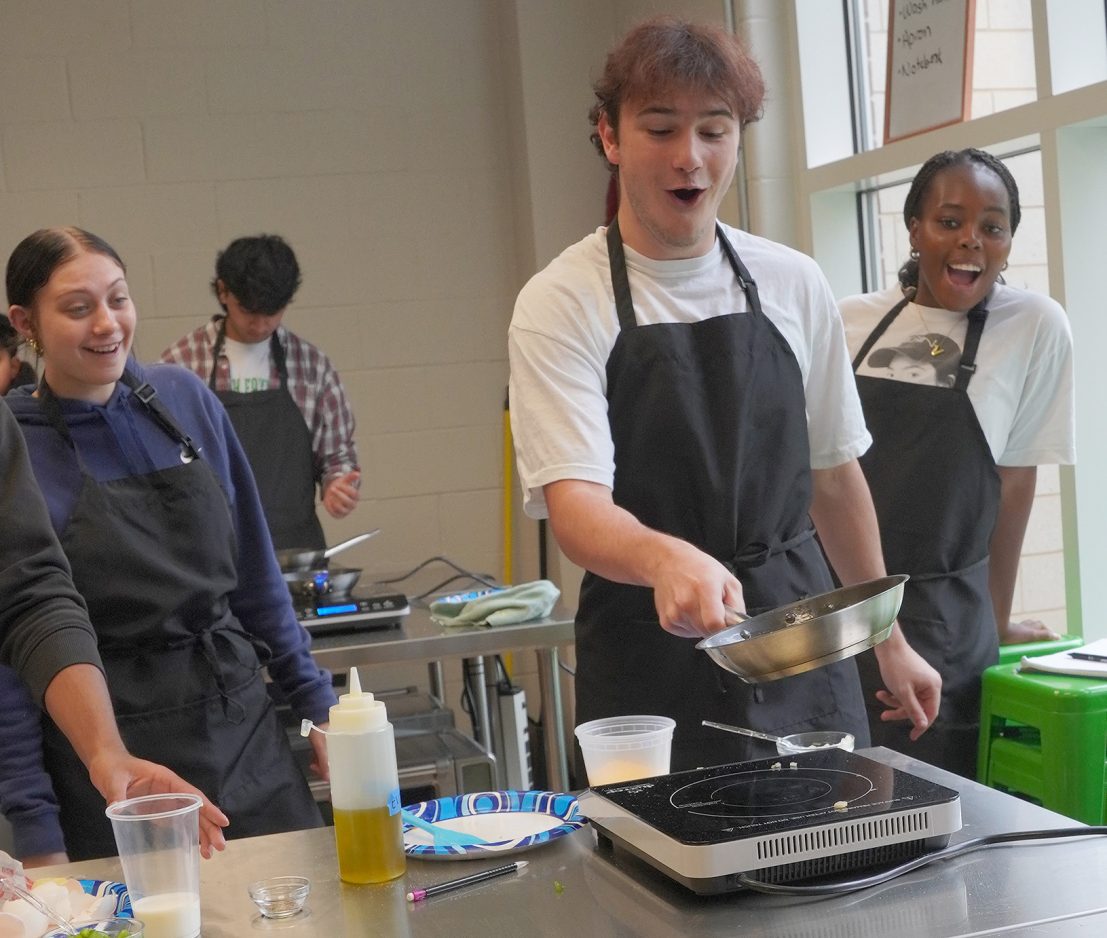
Ethan Head completes his first omelette flip while being observed by Kaylie Hollis and Vomero Omodior.
What happens when a science class is disguised as a cooking class?
At South Fayette High School, it means 45 students quickly signed up for an innovative new course that satisfies their graduation requirements and fills their stomachs.
South Fayette Township School District’s new Science of Food course is giving juniors and seniors a hands-on way to explore chemistry, biology, physics, and nutrition through something they already know and love: food. Students earn a required science credit while investigating the science behind everyday cooking, and actually eating the results.
“I don’t think of it as a science class at all,” said senior Dylan Marx. “It’s more of an enjoyable class.”
Kayla Leyh described it another way. “It’s mainly food with a side of science,” said the junior.
Their teachers might put the emphasis in a different place.
“Over the last three or four days, we’ve been learning about R-groups, intermolecular forces, denaturation and coagulation. There’s a lot of science that went into this lab,” said Bryan Seybert while his class was busy cooking eggs. A chemistry teacher, Seybert is one of the course’s developers,
That science comes to life in a dedicated food science laboratory where students conduct experiments involving temperature, pH, enzymes, and molecular interactions. They investigate questions such as why bread rises, how proteins change when heated, what makes foods brown, and how ingredients create different textures and flavors.
“What excites me most about Science of Food is that it makes science tangible,” said Joe Winans. An honors chemistry teacher, Winans co-created the course with Seybert. “Students can actually see proteins denature, yeast ferment, starches thicken, and browning reactions occur right before their eyes.”
The idea for the course began with a conversation between Superintendent Dr. Michelle Miller and the two chemistry teachers, who are self-described “foodies.” The concept grew through South Fayette’s participation in the League of Innovative Schools and a grant-funded collaboration with Desert Sands Unified School District in California. Educators from both districts spent the past year developing a curriculum that connects science standards with culinary applications and real-world problem solving.
“We created the Science of Food so that students who may not desire traditional science coursework can still learn about science in a meaningful way that will extend their learning and have a continued impact on their lives,” Miller said.
For students, the benefits extend beyond the classroom.
Taylor Cernicky enrolled because she wanted to learn how to cook before graduating.
After making tacos in class, the senior went home and made them for her family.
More than half of the students enrolled in the course also plan to pursue ServSafe certification, gaining knowledge about food safety, allergens, cross-contamination and proper food preparation. Certification can benefit them in part-time jobs they hold as students as well as future career opportunities.
District administrators, teachers, and maintenance staff worked together this past summer to transform an existing high school space into the food science laboratory where students can safely conduct cooking-based scientific investigations.
And for Seybert, the connection between cooking and science is exactly the point.
“When you experiment with a recipe, whether it’s tweaking an ingredient, changing a technique, seeing what works and what doesn’t, you’re doing science. That kind of hands-on, curiosity-driven thinking is exactly how we want students to approach scientific design.” he said.
Source: www.observer-reporter.com