




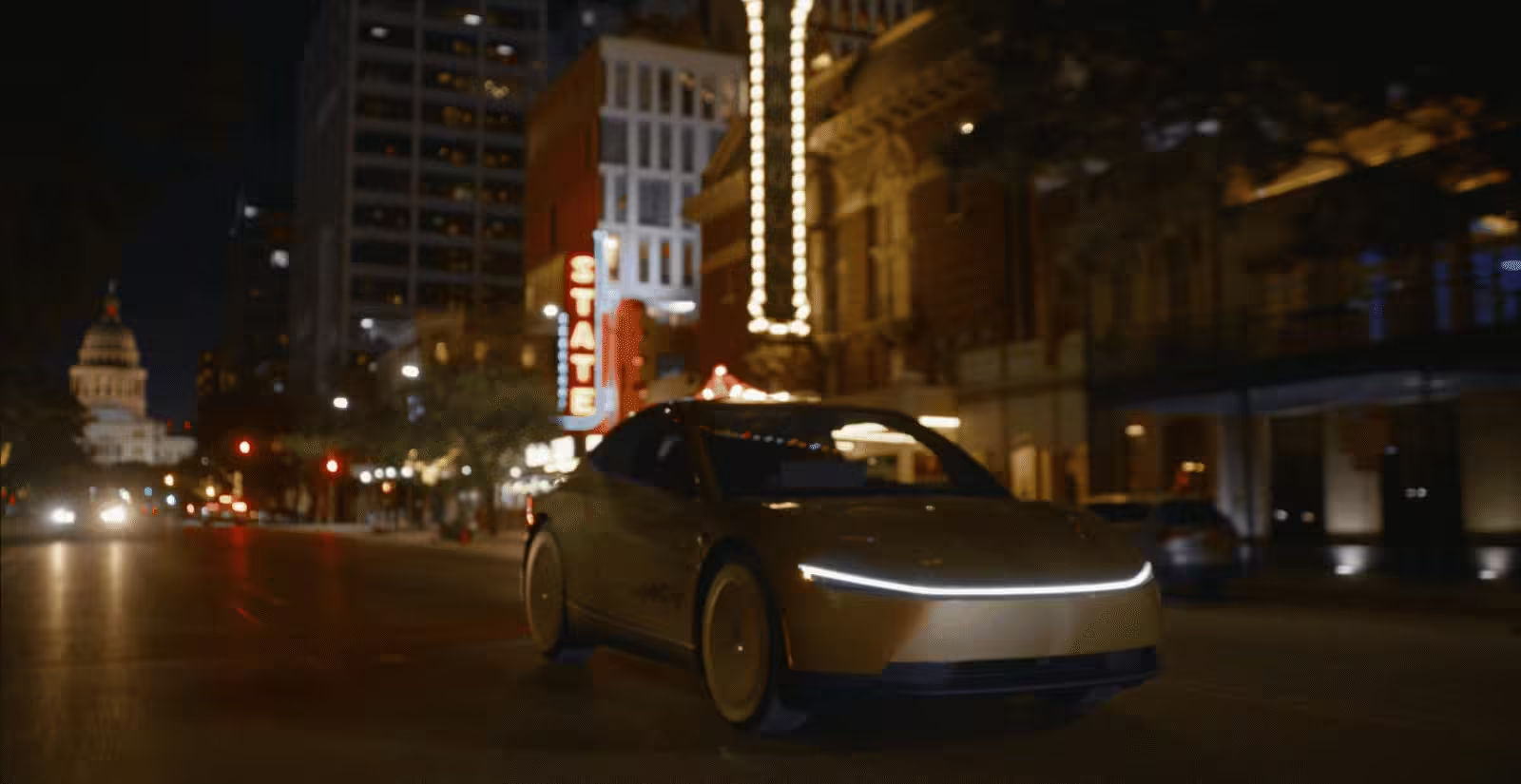

Three federal actions in five weeks mean NHTSA, not Tesla, is increasingly setting the pace of the robotaxi rollout. By Stewart Burnett
US safety regulators are weighing a formal defect investigation into claims that Tesla’s driverless robotaxis are speeding through active school zones, marking the third federal action against its autonomous fleet in a little over a month. The petition covers an estimated 1,000 Model Y and Cybercab vehicles, a figure which also offers the first official indication of how large Tesla’s robotaxi fleet has become.
The National Highway Traffic Safety Administration’s (NHTSA) Office of Defects Investigation opened the file on 9 October after first receiving the petition on 23 September. The investigation covers 2026 model year robotaxis operating with Tesla’s Automated Driving System engaged, and therefore presumably also includes robotaxis manufactured but still awaiting deployment.
The evidence underpinning the probe is, relatively speaking, quite limited: it comprises just three social media videos and four incidents in NHTSA’s tally, none of them involving a crash or injury. The agency has 120 days from receipt to grant or deny the petition, setting a deadline of around 21 January.
The fleet estimate is significant in its own right: Tesla does not publicly disclose robotaxi numbers, and independent trackers counted only a few dozen active vehicles as recently as June. Tesla said on 10 October that more than 300 Cybercabs were “operating” in Austin, an eightfold increase in a month. However, outlets like Electrek have noted that only a small fraction of these vehicles appear to be active at any given moment; early deployment volumes in cities like Dallas, Houston and Miami were little more than a few vehicles at most. NHTSA’s figure may reflect the total number of vehicles certified with Texas authorities.
Speed has been a recurring issue with Tesla’s self-driving technology. With the robotaxi fleet, it has been there since day one: videos from the Austin launch in June 2025 showed robotaxis exceeding limits. NHTSA also opened an investigation into Full Self-Driving (FSD) over traffic violations last October, and Tesla released a ‘Mad Max’ driving mode that ignores speed limits just a week later.
The petition adds to a growing list of regulatory woes for Tesla. NHTSA is separately investigating how the automaker self-certified the Cybercab without either a steering wheel or pedals, and Tesla’s answers to the 21 questions posed by the agency are now due on 30 October after a 30-day extension. Elsewhere, German regulators have forced the company to rename FSD as ‘Tesla Assisted Driving’ in Europe, matching similar actions in China.
Chief Executive Elon Musk has increasingly leaned on safety concerns as a justification for the long-standing delays to Tesla’s self-driving ambitions. During the automaker’s July earnings call, he said: “If we injure even one person, it will be worldwide headline news. And regulators will immediately clamp down on our activities.”
Waymo’s experiences do offer some precedent for Musk’s concerns. Indeed, it is no stranger to friction with school districts: after an Austin district reported Waymo vehicles illegally passing stopped school buses around 20 times, the company issued a voluntary software recall covering more than 3,000 vehicles in December 2025. NHTSA and the National Transportation Safety Board kept their investigations open after reports of further violations.
Four incidents without injury would rarely justify a recall alone, but school zone speed compliance is a design choice rather than an edge case, and a striking one given the high-profile issues Waymo faced late in 2025. With no driver to share the blame, Tesla must now say whether its software obeys the posted limits.
A voluntary over-the-air fix before the January deadline is likely its cheapest option, although Waymo’s experience shows that a recall buys compliance rather than closure. With three federal files now open as its fleet scales, Tesla’s rollout will increasingly move at NHTSA’s pace rather than Musk’s.
Source: www.automotiveworld.com

