



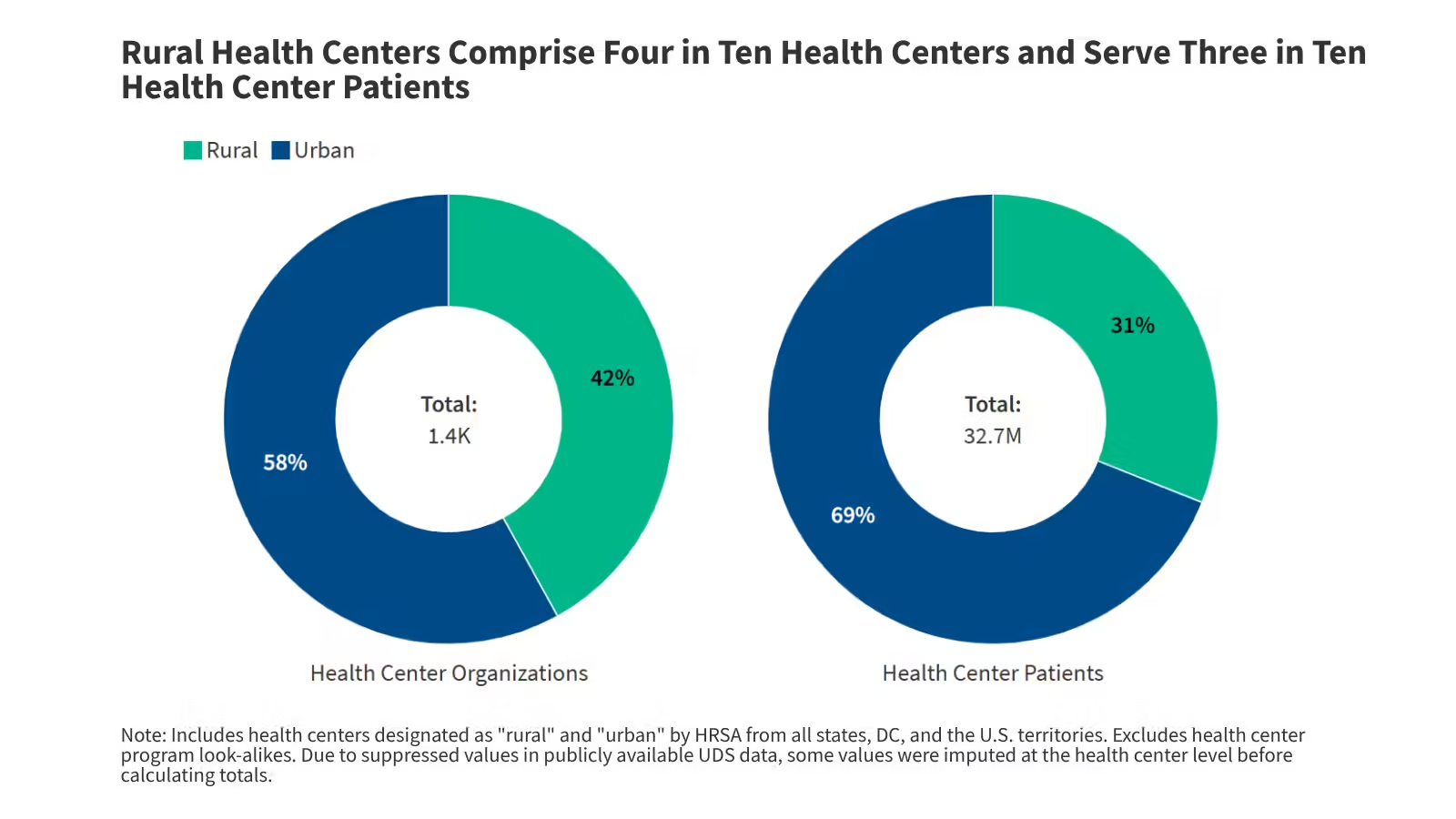

Rural health centers made up four in ten (42%) health center organizations and served three in ten (31%, or 10.2 million) health center patients in 2025 (Figure 1). Nearly 600 rural health center organizations operated over 6,900 health center sites in 2025. Meanwhile, urban health centers made up nearly six in ten (58%, or about 800) health center organizations and served seven in ten (69%, or about 22.6 million) health center patients across over 9,700 health center sites. Rural health center organizations generally served fewer patients and had an average annual patient volume that was 38% lower than that of urban health centers.
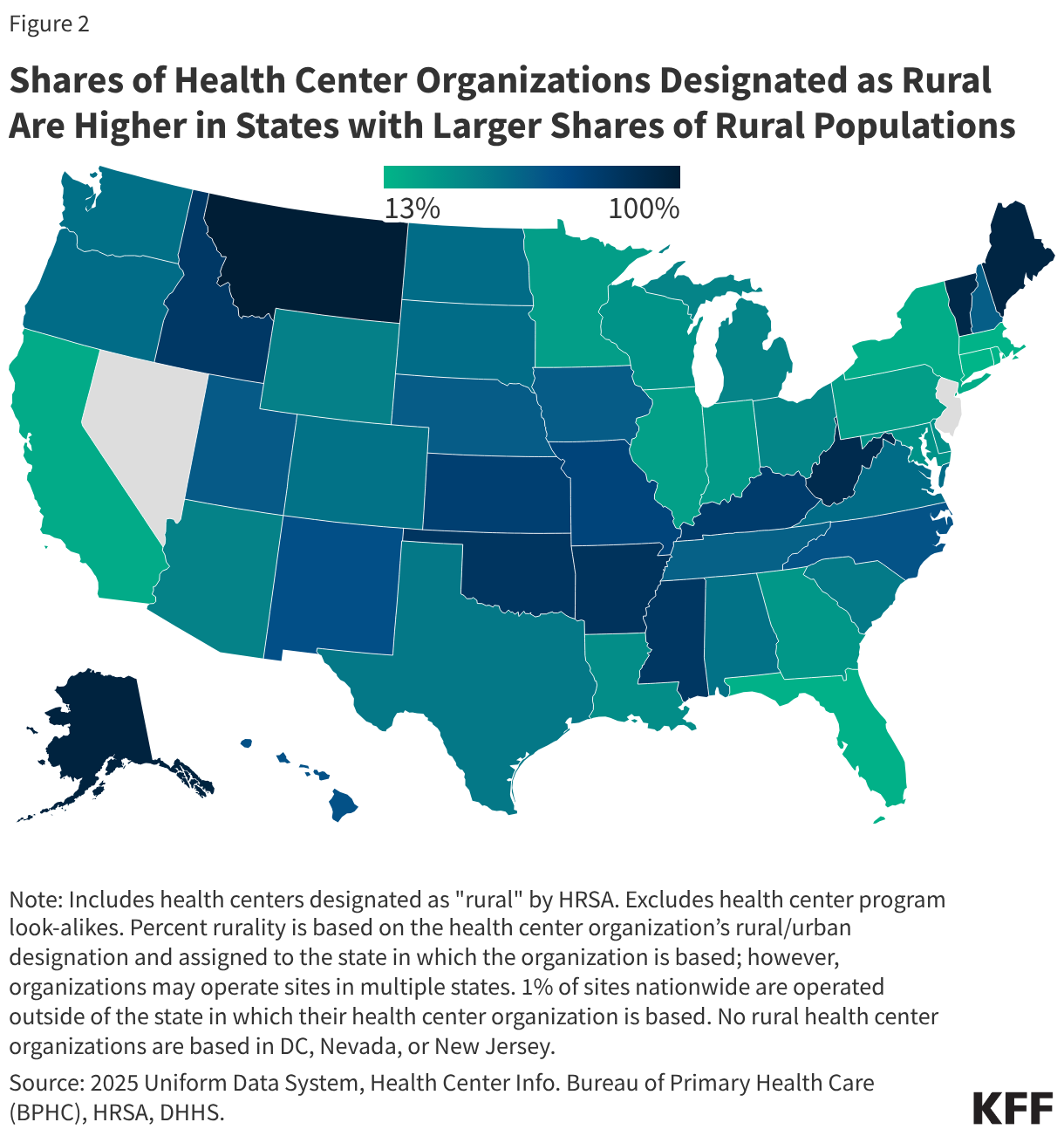
The share of health center organizations designated as rural varied widely by state in 2025. States with relatively high shares of their population living in rural areas had higher shares of health centers designated as rural, with over 90% of health center organizations designated as rural in Montana (100%), Alaska (96%), Maine (94%), and Vermont (91%) (Figure 2). In contrast, shares of health centers designated as urban were higher in states with small shares of their population living in rural areas, with at least 80% of health center organizations designated urban in Connecticut (88%), Rhode Island (88%), Massachusetts (86%), Florida (85%), New York (83%), and California (82%). All health center organizations were designated as urban in DC, New Jersey, and Nevada. However, a rural health center organization based in Arizona operated one rural clinic in Nevada in 2025.
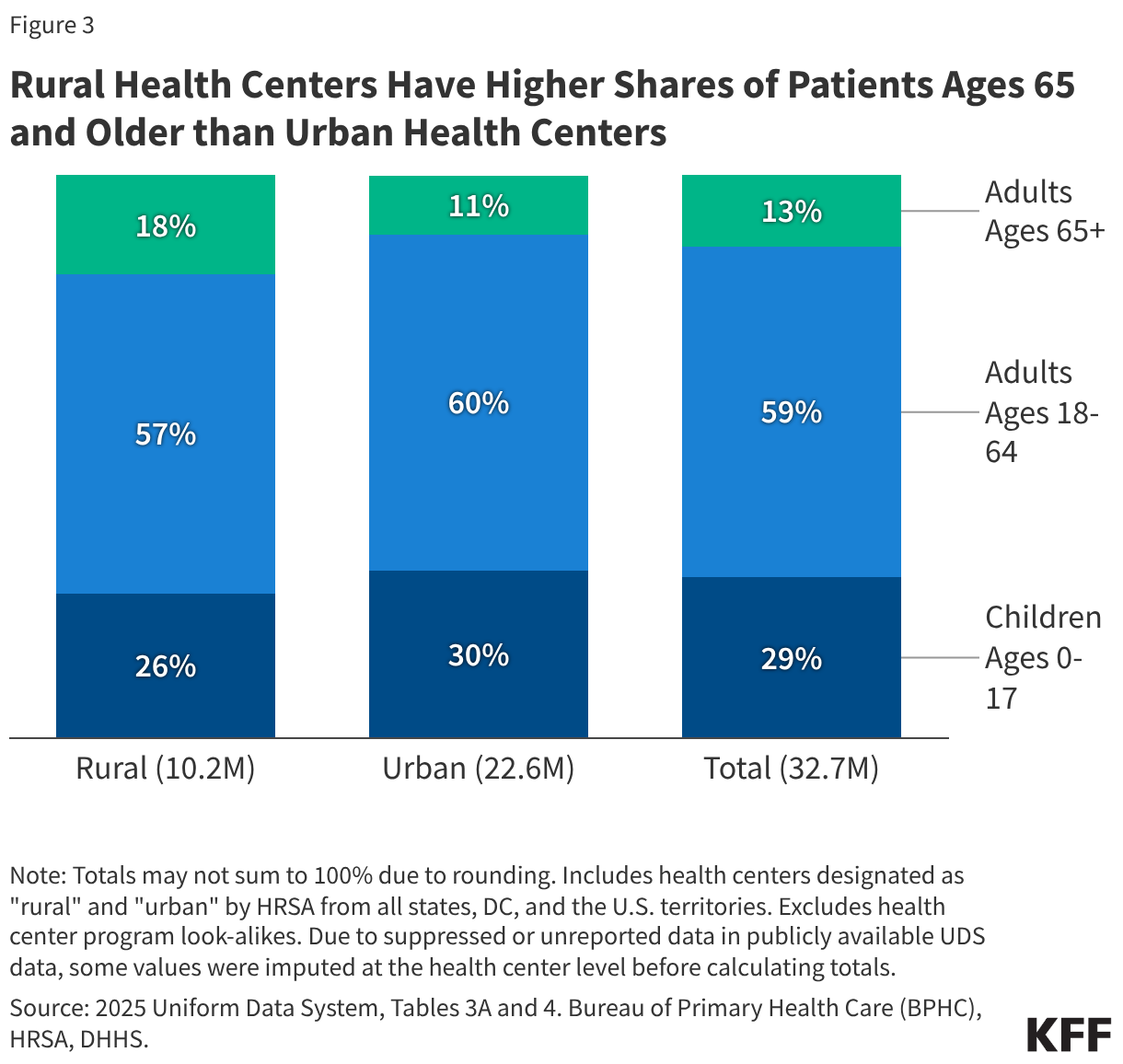
Rural health centers served higher shares of adult patients ages 65 and older than urban health centers in 2025. Rural health centers had higher shares of adult patients ages 65 and older (18%) compared with urban health centers (11%), reflecting national trends of disproportionately higher shares of older adults in rural areas (Figure 3). Rural health centers also had slightly smaller shares of adult patients ages 18–64 (57% vs. 60%) and children ages 0–17 (26% vs. 30%) compared with urban health centers.
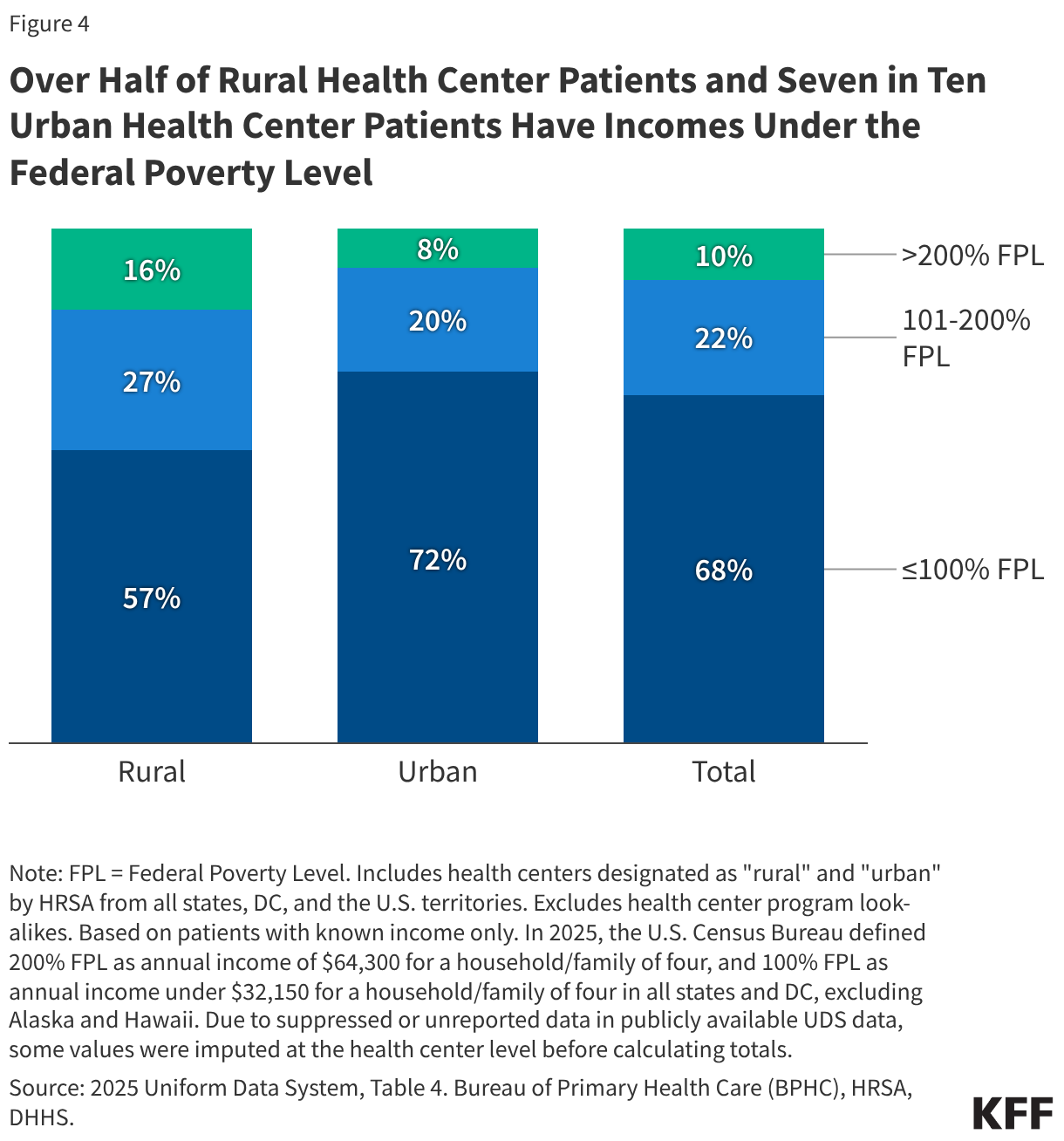
Over half (57%) of rural health center patients had income under 100% of the federal poverty level (FPL) in 2025, lower than among urban health center patients (72%) (Figure 4). Most health center patients at both rural and urban health centers had income under 200% FPL; however, 16% of patients at rural health centers had income above 200% FPL, double the share at urban health centers (8%). While rural areas have higher poverty rates than urban areas, rural health centers are more likely to serve entire rural communities and serve smaller shares of patients facing substantial economic hardship, such as patients experiencing homelessness, compared with urban health centers. These factors may partly explain the differences in the income distribution of patients across rural and urban health centers.
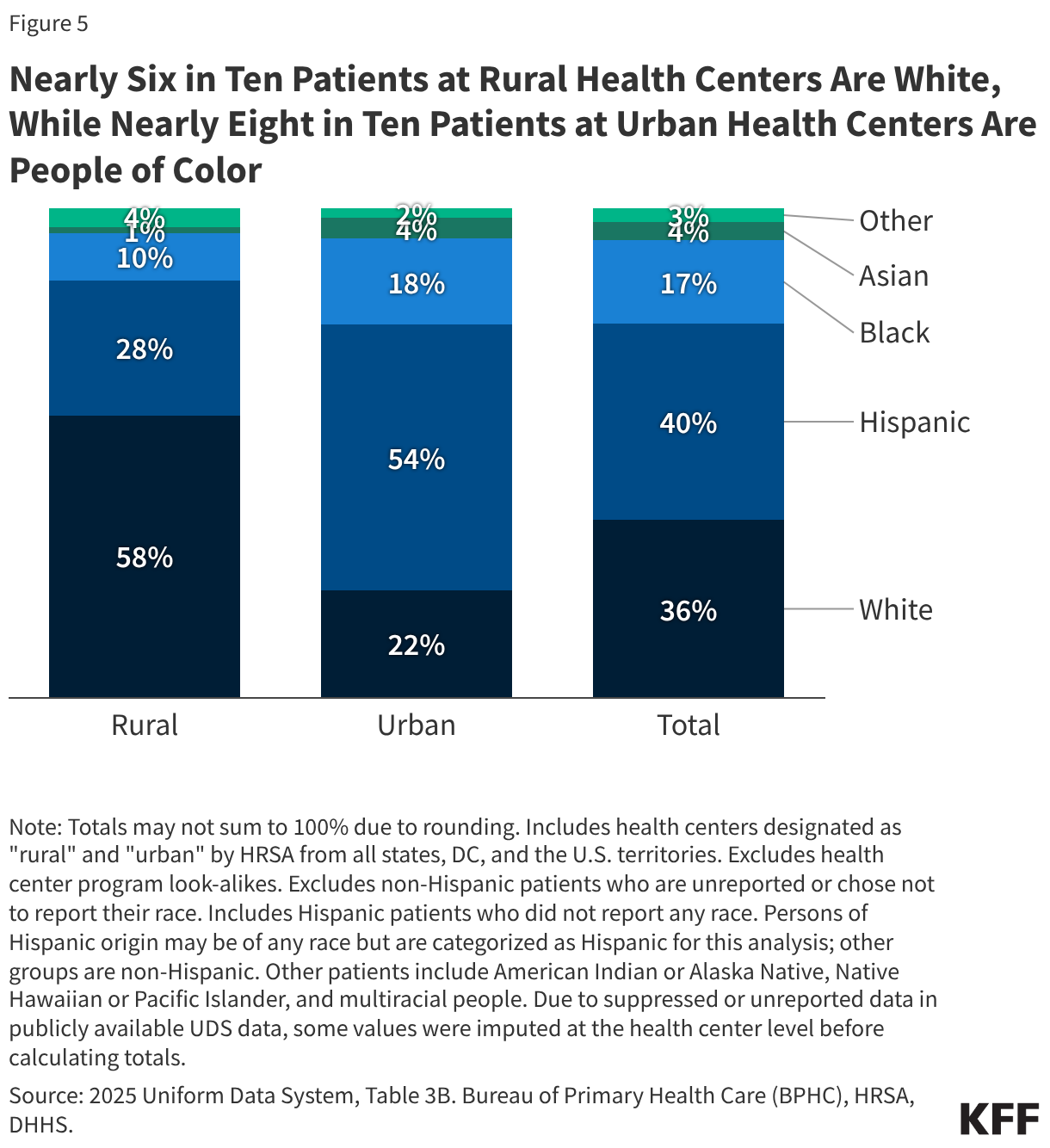
White patients represented the majority (58%) of patients at rural health centers while patients of color made up a majority (78%) of patients at urban health centers in 2025 (Figure 5). These differences in patient race and ethnicity reflect broader demographic differences between low-income populations in rural and urban areas. Rural health centers serve a higher share of people of color than are represented in the overall rural population, where about one in four residents are people of color.
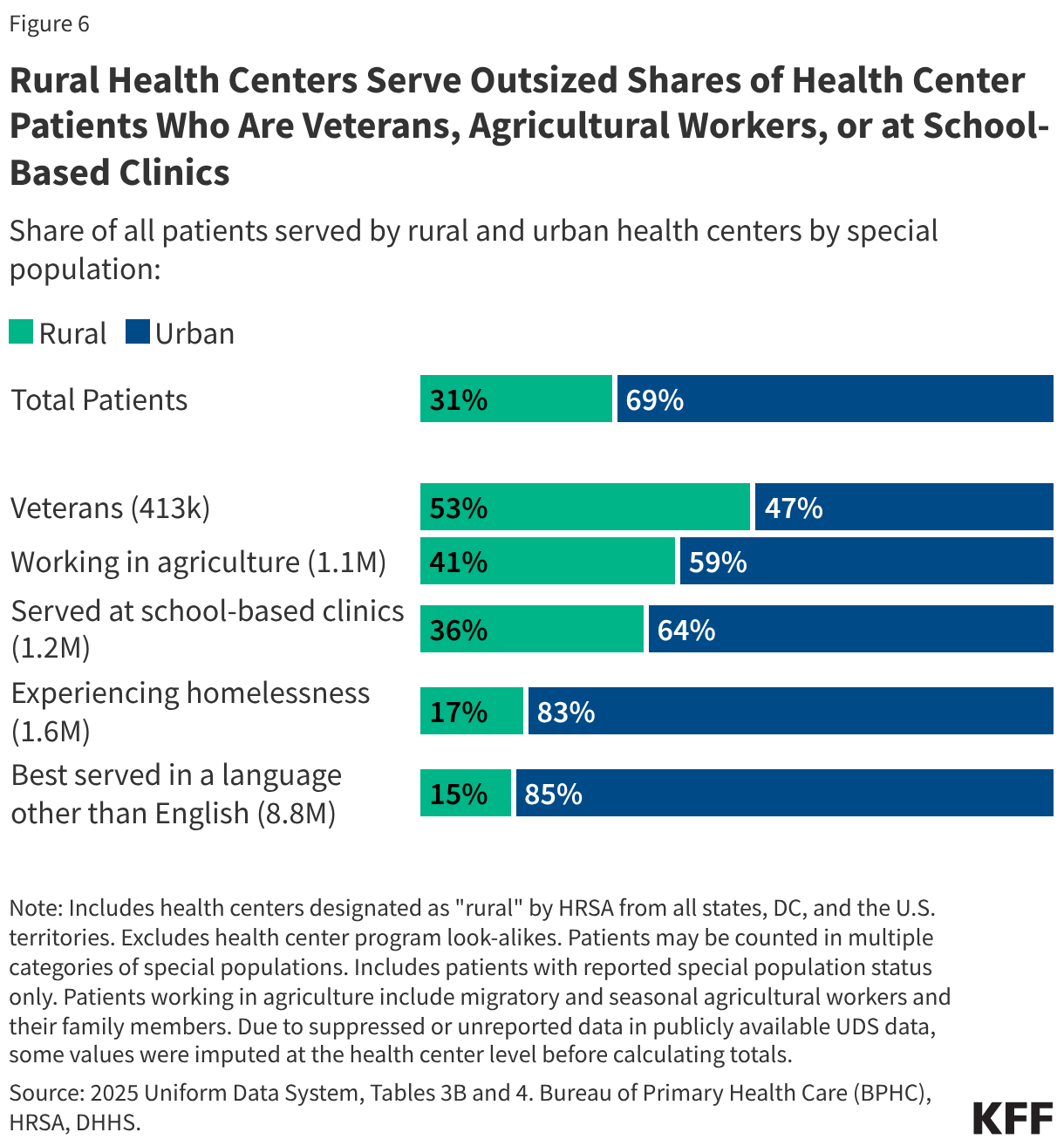
Rural health centers served an outsized share of veterans, agricultural workers, and patients at school-based clinics relative to their share of the total health center patient population in 2025. While rural health centers served 31% of all health center patients, they served 53% of health center patients who were veterans, 41% of health center patients and their family members who worked in agriculture, and 36% of patients served at school-based clinics (Figure 6). Rural health centers served a relatively lower share of all health center patients experiencing homelessness (17%) and patients best served in a language other than English (15%). These patterns reflect national trends where rural areas have a higher concentration of agricultural jobs and veterans compared with urban areas, while urban areas have higher concentrations of people experiencing homelessness and with limited English proficiency.
Source: www.kff.org