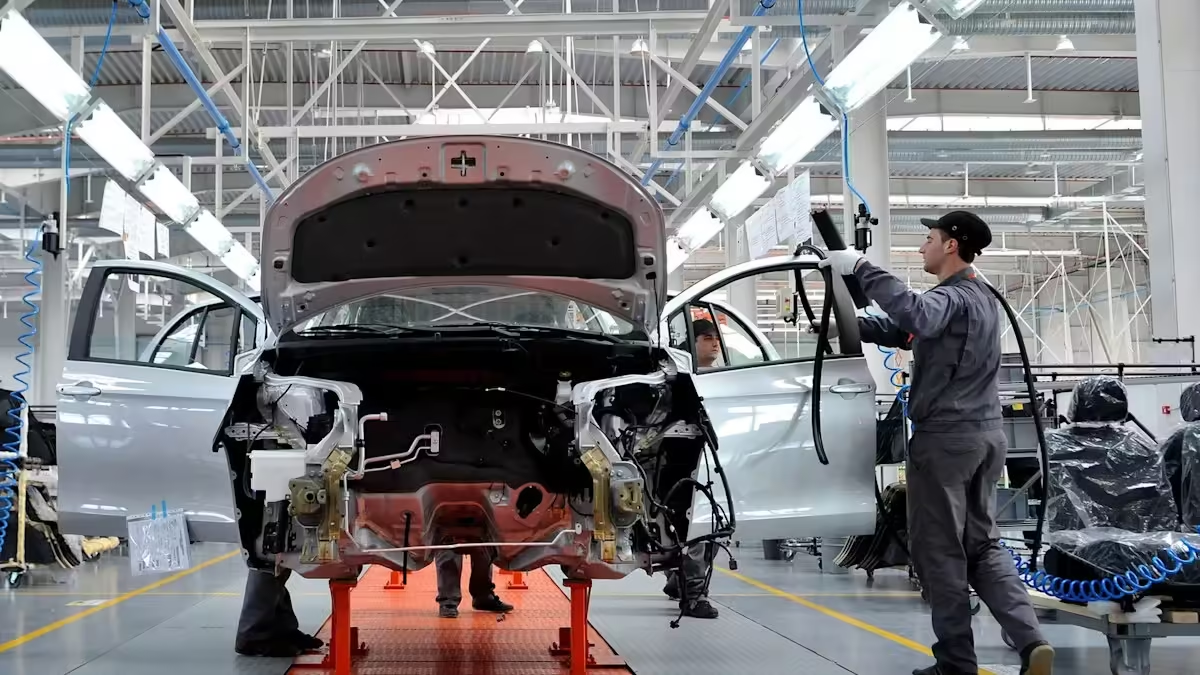

Rivian Automotive (RIVN) just reported third quarter operating results, producing 19,751 vehicles in Normal, Illinois and delivering 19,248, while also reaffirming full year 2026 delivery guidance of 65,000 to 70,000 units.
Rivian Automotive’s recent operating update lands after a weak stretch for the stock, with the 30 day share price return down 16.6% and the year to date share price return down 31.1%. However, the 1 year total shareholder return is slightly positive at 1.9%, which points to fading near term momentum even though some longer term holders are modestly ahead.
Scan beyond Rivian Automotive and compare this EV story with a curated group of battery and materials plays by reviewing 25 quantum computing stocks that are shaping the next phase of electrification.
Bulls see Rivian Automotive as a discounted way to gain exposure to growing EV volumes and a reinforced 2026 delivery plan. Bears point to ongoing losses and weak recent returns. Which story do the current valuation markers support next?
Most Popular Narrative: 30.5% Undervalued
Rivian Automotive’s most followed valuation story pegs fair value at $19.23 per share, well ahead of the last close at $13.37, which sets a high bar for what the business needs to deliver to close that gap.
The launch of the R2 platform represents a step-change improvement in Rivian’s cost structure, with management securing supplier contracts and component sourcing that reduce bill of materials by nearly 50% versus R1, significantly lowering per-unit costs; this operational overhaul is expected to improve gross margins and path to profitability as scale is achieved.
See why 257 investors see Rivian Automotive as 30% undervalued.
Under this narrative, analysts apply a 10.98% discount rate and arrive at a fair value that implies Rivian Automotive is trading at a 30.5% discount, with that view resting heavily on high forecast revenue growth and eventual margin improvement despite the company remaining loss making today.
The same storyline assumes revenue growth of 52.26% and a future profit margin of 3.55%, which together feed into a projected future P/E of 63.25x on those estimated earnings, a level that is well above the 16.6x cited for the wider US auto group in the narrative itself.
Analysts behind this framework are effectively arguing that rapid top line expansion, plus better unit economics from the R2 platform and software and services, can justify Rivian Automotive trading on a richer multiple once the business moves closer to break even.
Source: finance.yahoo.com