



Modern warfare compounds the ambiguity. Commanders have incentives to strike early, disable enemy sensors, and disrupt communications before their own forces come under attack. Those actions also deprive the enemy of information needed to distinguish a conventional campaign from preparations for a nuclear strike.
The danger changes as fighting continues. Damaged networks, depleted weapons stocks, incomplete information, and mounting pressure on commanders can make intentions harder to assess. A target judged relatively manageable on the first day may carry different implications after weeks of cumulative losses.
Kaliningrad Is Central to Baltic Defense
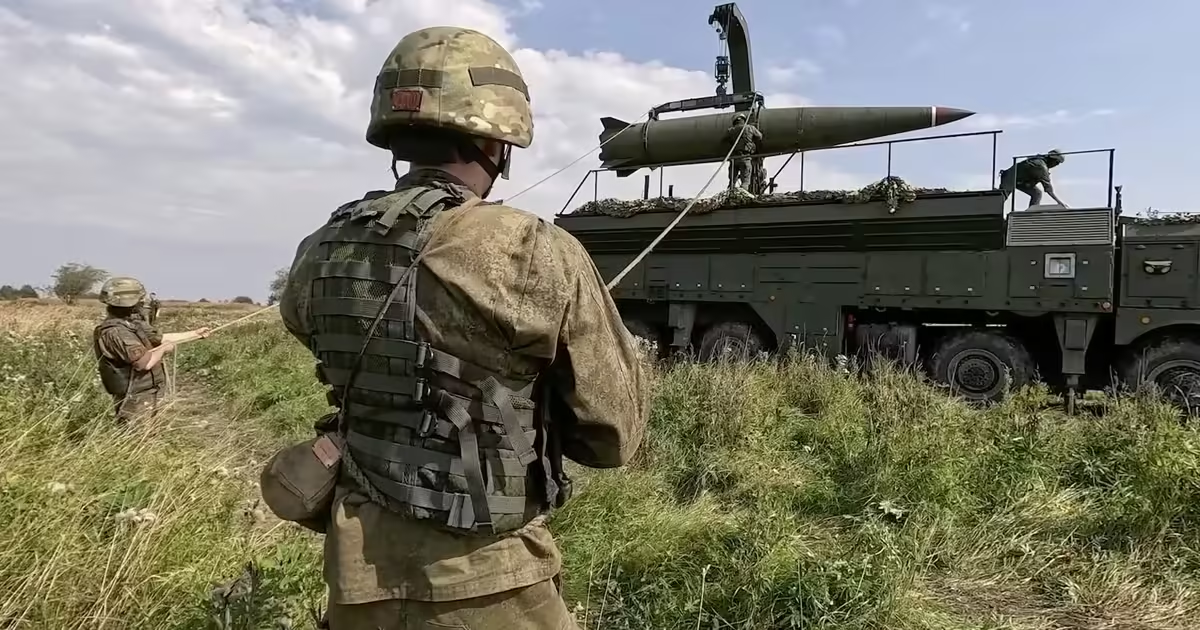
Kaliningrad’s missiles, air defenses, electronic warfare systems, and command infrastructure could help Russia attack NATO airfields and ports, disrupt allied operations, and obstruct reinforcements. Its Iskander-M missile systems can carry conventional or nuclear warheads.
Senior Western commanders have publicly discussed neutralizing Kaliningrad’s military capabilities. On July 16, 2025, Gen. Christopher Donahue, then-commander of U.S. Army Europe and Africa and NATO Allied Land Command, told the LANDEURO conference in Wiesbaden that allied ground forces could overcome Kaliningrad’s defenses faster than previously possible, presenting the exclave as an example of defeating anti-access systems with ground-based capabilities.
At the Warsaw Security Forum in September 2025, retired Lt. Gen. Ben Hodges, a former U.S. Army Europe commander, said Kaliningrad would be “eliminated in the first hours” if Russia launched a full-scale attack on Poland. In a December 10 interview, he clarified that he meant strikes against air defenses, command-and-control systems, and port facilities—not a ground invasion. These statements illustrate the operational logic RAND examines, although Hodges was expressing his own assessment rather than announcing NATO policy.
Source: balticsentinel.eu