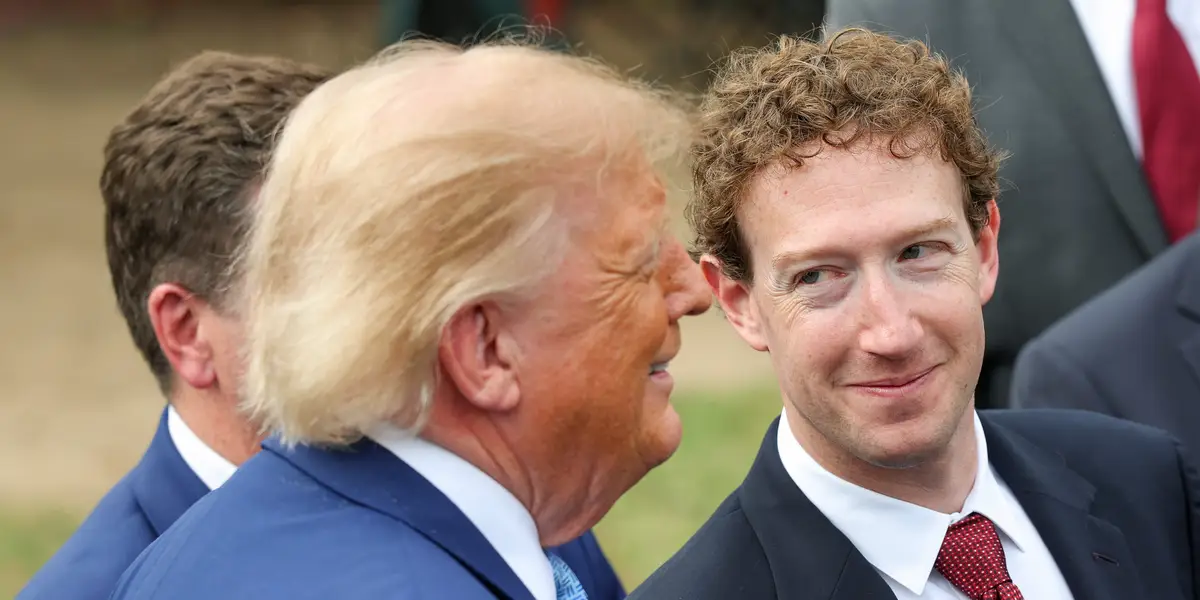




As polls come out with increasing frequency closer to the midterm election, how much credence should voters give them? Meanwhile, President Trump continues campaigning for GOP candidates.
Transcript
AYESHA RASCOE, HOST:
Candidates are campaigning, political ads are popping up on your TV channels and your social media feeds, and your phone might be lighting up way too often with notifications reminding you to get out and vote for this person or that person. Maybe you’ve already voted. Welcome to October and less than a month ago before the midterms. This is what NPR’s senior political editor and correspondent Domenico Montanaro was made for. He trains for it – the data, the maps, the coffee. And he joins us now. Good morning, Domenico.
DOMENICO MONTANARO, BYLINE: Good morning. When that October chill is in the air…
RASCOE: (Laughter).
MONTANARO: …I start to get excited.
RASCOE: The “Rocky” soundtrack starts playing. “Eye Of The Tiger.”
MONTANARO: Oh.
RASCOE: Yes.
MONTANARO: There we go.
RASCOE: So there’s polling that’s encouraged Democrats and has made Republicans nervous. But how confident should Democrats really be right now?
MONTANARO: Well, I mean, it’s not Election Day, right? I mean, there are people voting across the country, but things can change no matter what. And look, I mean, the fact is that everything shows movement in Democrats direction. When everything heads in one direction, that’s important. You know, that’s all that really should be taken away from the polls at this point. Midterms are always tough on the president’s party. The president himself has acknowledged that many times. The national mood, especially when it comes to the economy and the war in Iran are against the president and his party.
Trump right now – consider this – is tied for the lowest pre-approval midterm job approval rating of any president in the last half century, tied with George W. Bush in 2006 at 37% on average. So Democrats are the favorites right now to take back control of the House, at the very least, where there’s such a narrow majority margin for Republicans.
And the Senate, which was considered a long shot at the beginning of this cycle, seems to be within reach for Democrats now. But there’s, you know, a question of how big these gains are likely to be because redistricting has really insulated Republicans to an extent. The Democratic Party isn’t very popular either. There just aren’t that many competitive seats. You know, less than 10% of the house really is competitive. And the ones that are competitive are mostly in Trump-won districts. In fact, when I was crunching the numbers the other day, 25 of the 31 most competitive districts that Democrats are targeting are all in places that Trump won in 2024.
RASCOE: So typically, there is tightening in the polls closer to Election Day. And those polls will now be coming, you know, fast and furious. So what do you think people should consider when they hear about this person is leading or that person’s leading?
MONTANARO: People might want to consider ignoring the polls, you know what I mean (laughter)? Like, and not in a cynical, like, the polls are wrong kind of way, not in such a highly specific kind of way. You know, a 3-to-4-point lead people need to remember is not a lead at all. It’s statistically insignificant and within the margins of error in these polls. And remember when it’s a 3-to-4-point margin of error, which is a good margin of error, that’s a 6-to-7-point range. So, you know, if you’ve got a 47-44 race, there’s no real statistical lead there. The, you know, lead could be, you know, no points, it could be six points. So people just need to keep that in mind. A lot of these races are going to be close.
Polling isn’t designed for the level of specificity that sometimes people want or the campaigns want to put out there. Plus, people should know that the quality of state polling has really declined over the last 10 to 15 years because of the decline in local newspapers and journalism, frankly. I mean, there’s been less money for these outlets to pay for good quality and frequent polling. There are a lot of new polling outlets without long track records, many of which were driven by AI. We even saw fake polls that came out this year. So it’s hard to know what’s quality and what’s not for regular people.
But movement all in one direction over months is important, and that’s what we’ve seen. One question nationally, though, where, you know, there’s been a lot of – it’s been a really good indicator, and you’ve seen higher quality polling nationally, is this question known as the generic congressional ballot version of who would you vote for today if you were voting for a Democrat or Republican in your district? Democrats have a 9-point advantage on that question. Why that’s important – just looking at the last seven midterm elections in each of those, the party with the advantage on it has gone on to make gains. Because of redistricting, you know, Democrats generally need a larger advantage than Republicans to make those gains, but plus 9 is in the range that they need.
RASCOE: So let’s talk about the Senate race now. The GOP pulled out – super PAC pulled out of spending in North Carolina and is instead buying ads in Kansas. How much of a surprise is this?
MONTANARO: Look, money talks, money walks. Right now, Republican money is walking away from North Carolina and toward Kansas. And if you told me at the beginning of this election cycle we’d be talking about places like Kansas, like Texas, I would tell you, Republicans probably think they’re in a lot of trouble.
RASCOE: That’s NPR senior political editor and correspondent, Domenico Montanaro. Thanks so much.
MONTANARO: You’re welcome.
Copyright © 2026 NPR. All rights reserved. Visit our website terms of use and permissions pages at www.npr.org for further information.
Accuracy and availability of NPR transcripts may vary. Transcript text may be revised to correct errors or match updates to audio. Audio on npr.org may be edited after its original broadcast or publication. The authoritative record of NPR’s programming is the audio record.
Source: www.npr.org