



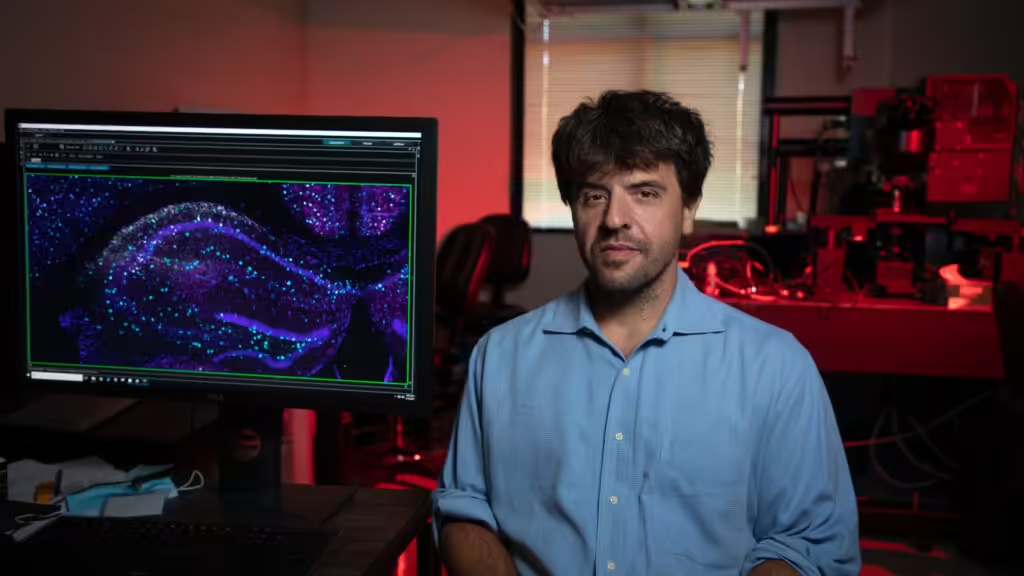

It is probably impossible to overstate how complex a brain is: A network of billions of intertwined neurons forming an intricate anatomy, capable of working on the millisecond scale to perceive reality, detect sensations, create plans, and take actions.
“All of this is incredibly complicated, and so of course the challenge that we face as neuroscientists and as physicians treating brain disorders is how can we hope to make headway without tools that match the complexity and the precision of the brain?” said Karl Deisseroth, a Stanford University and Howard Hughes Medical Institute researcher who on Monday won the 2026 Nobel Prize for Medicine, alongside German colleagues Peter Hegemann and Georg Nagel, for work developing such tools.
“Our perception of reality and all our inner subjective states come from cells, and so the appropriate tool that would be matched to how the brain works would be something that was fast and could be targeted to individual cells or individual types of cells,” he said in an interview after the announcement.

This article is exclusive to STAT+ subscribers
Unlock this article — plus in-depth analysis, newsletters, premium events, and news alerts.
Already have an account? Log in
Source: www.statnews.com