




Support CleanTechnica’s work through a Substack subscription, on Patreon, or on Stripe. Help us produce all of the high-quality, original content we publish week after week despite the challenges of content-scraping AI, antisocial media, inflation, and other hurdles.
To read the market overview, see part 1 of this article here. I visited Leapmotor, BYD, Great Wall Motors, and Geely dealers in Sao Paulo.
Leapmotor
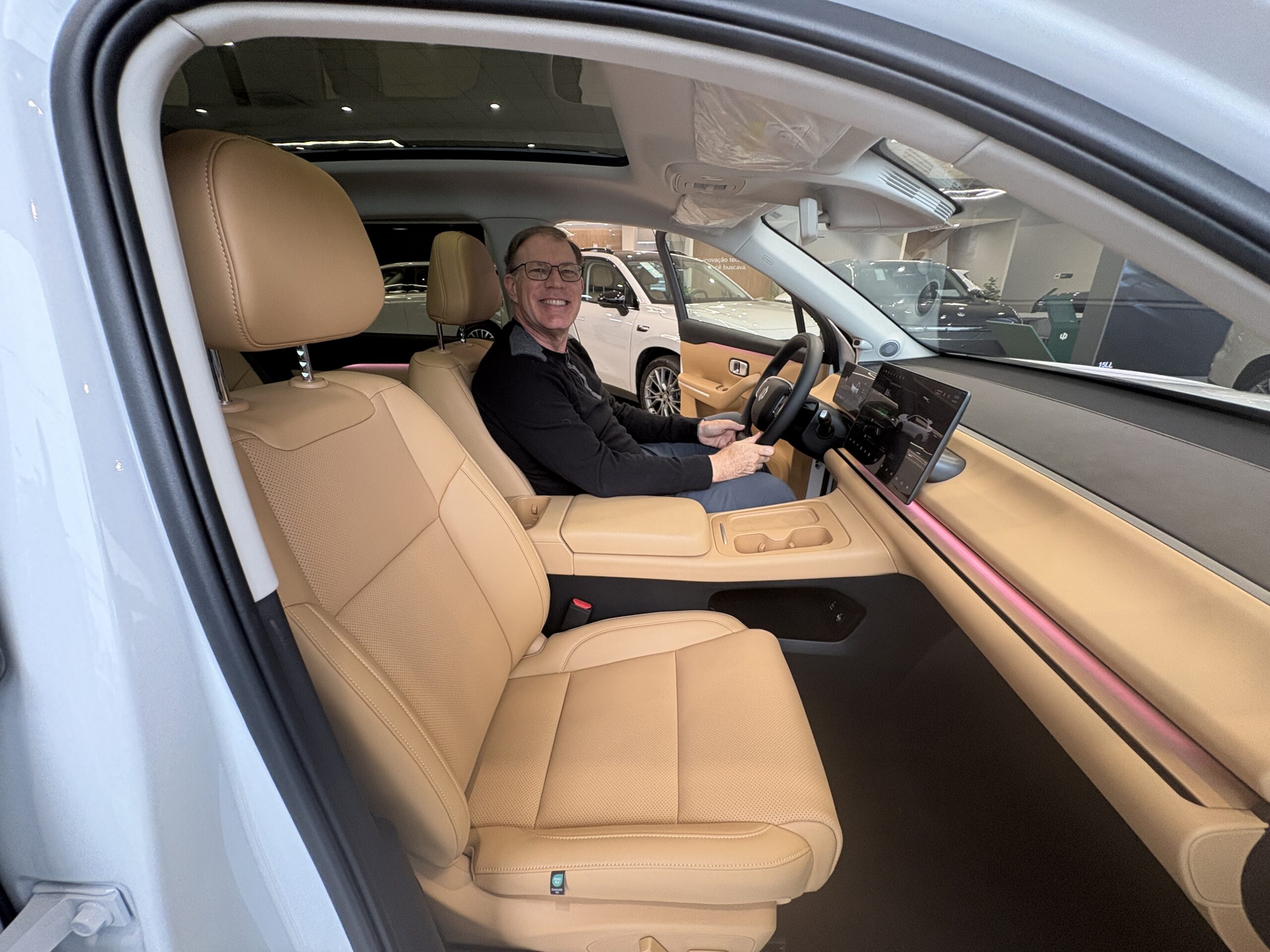
The first dealer I visited was Leapmotor. Leapmotor, the Chinese EV maker sold abroad through Stellantis, entered Brazil in late 2025 with the C10 battery SUV and a range-extended “ultra-hybrid.” By August 2026, the C10 held 51.3% of large electric-SUV sales, and the newer B10 already made up 23% of the brand’s registrations. In September, the B10 REEV arrived at R$179,990, with electric drive and up to 900 km combined range. Leapmotor is now a top-ten EV brand, with local assembly planned in Goiana.
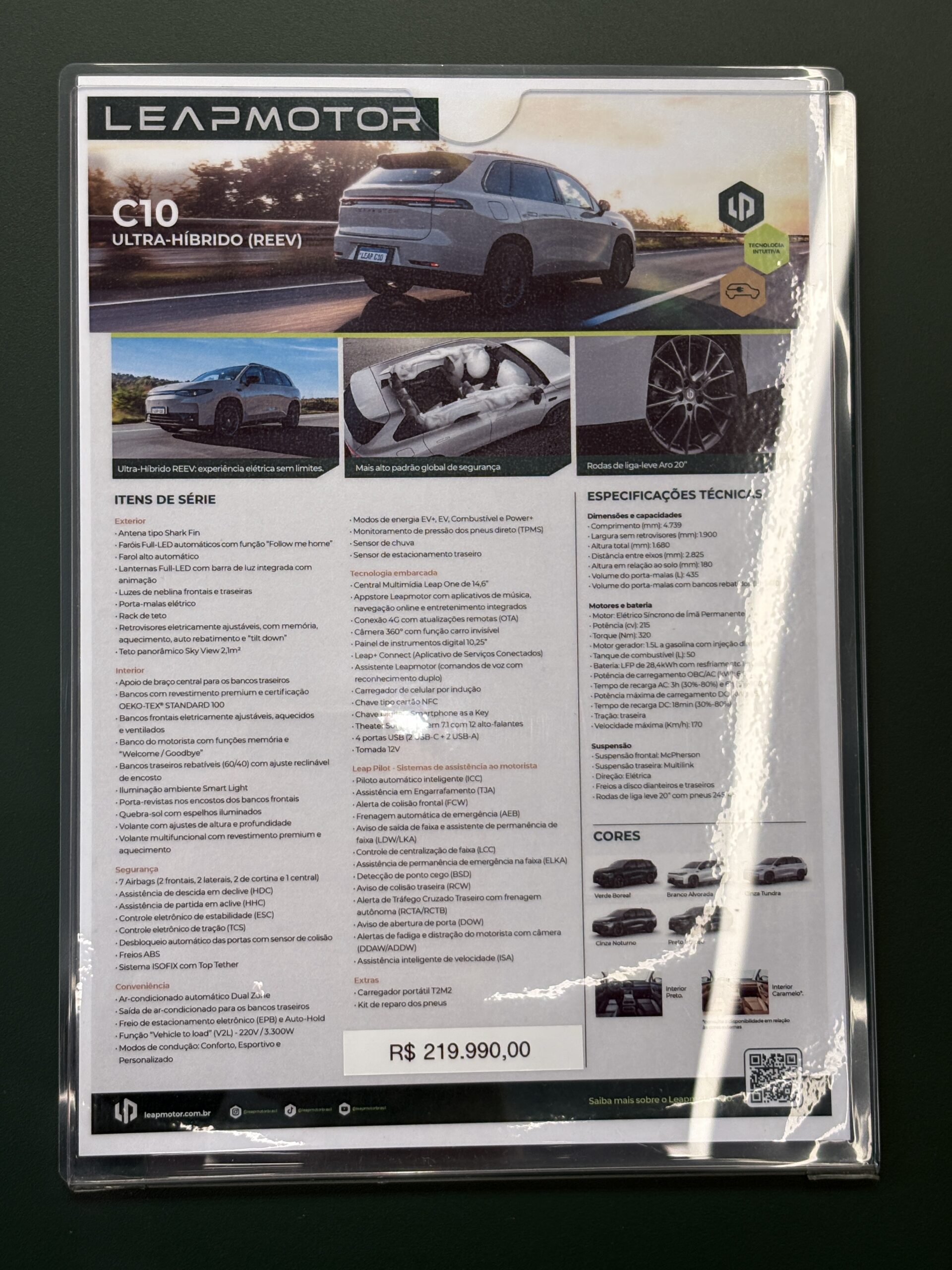


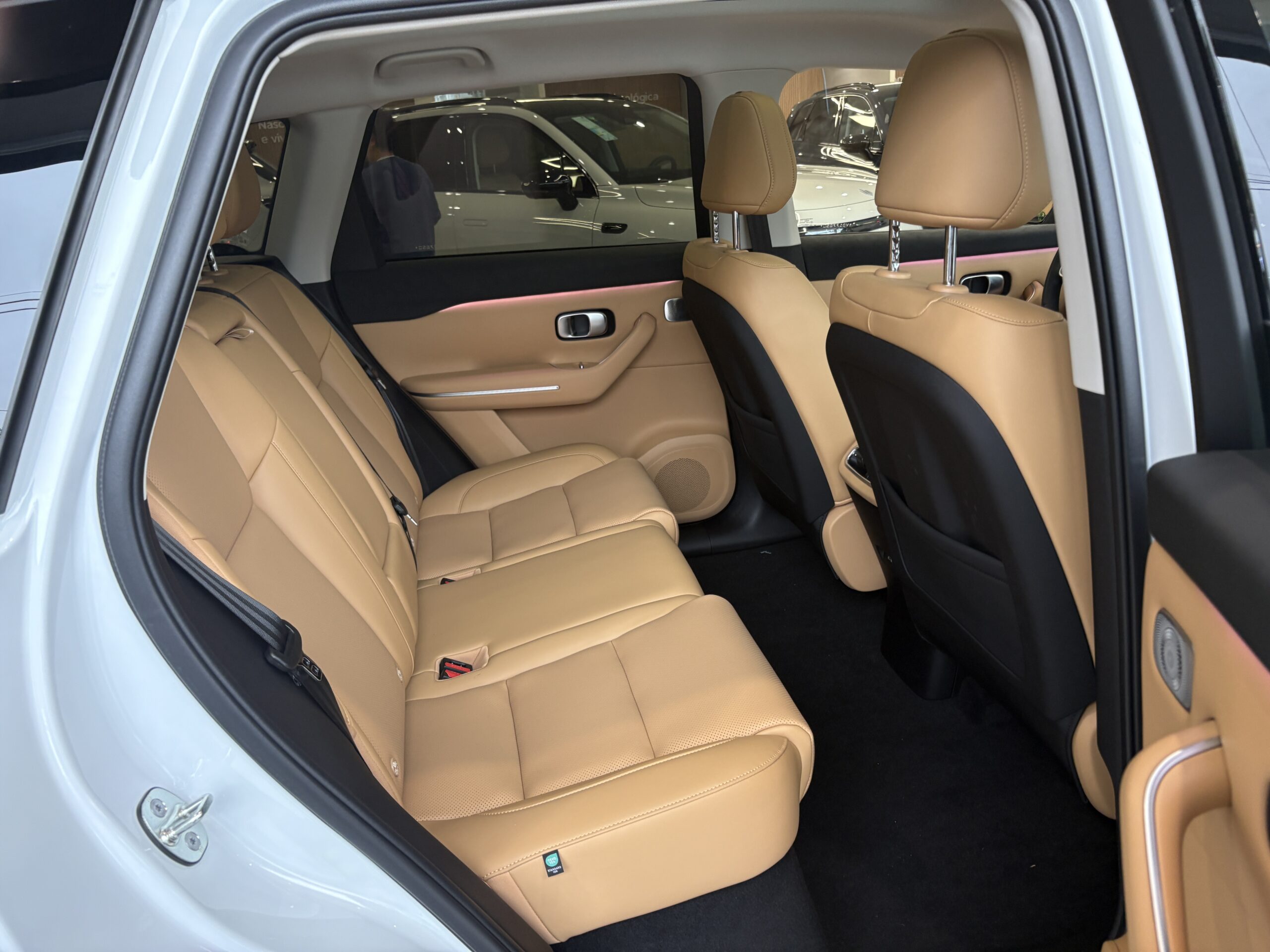
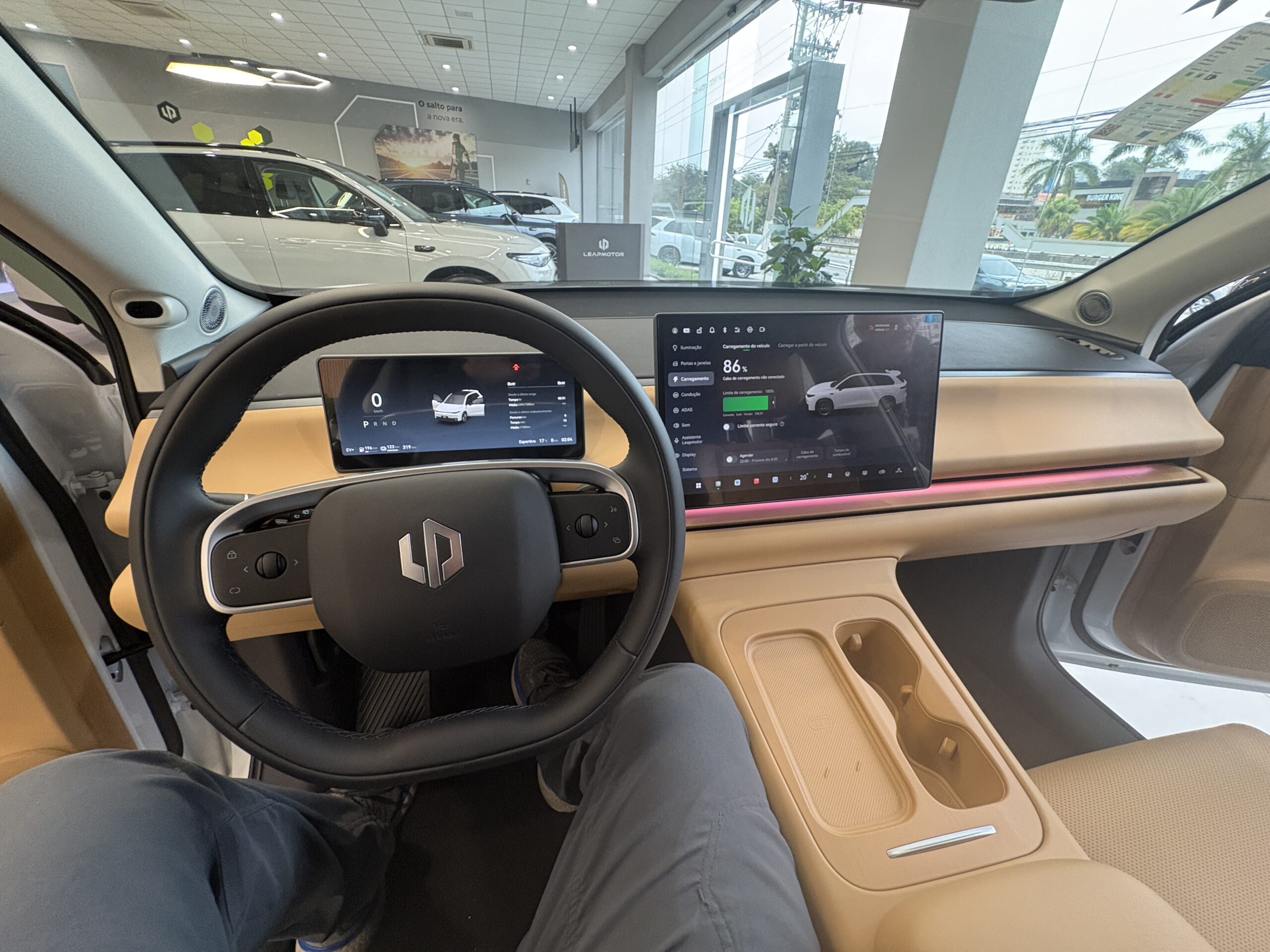
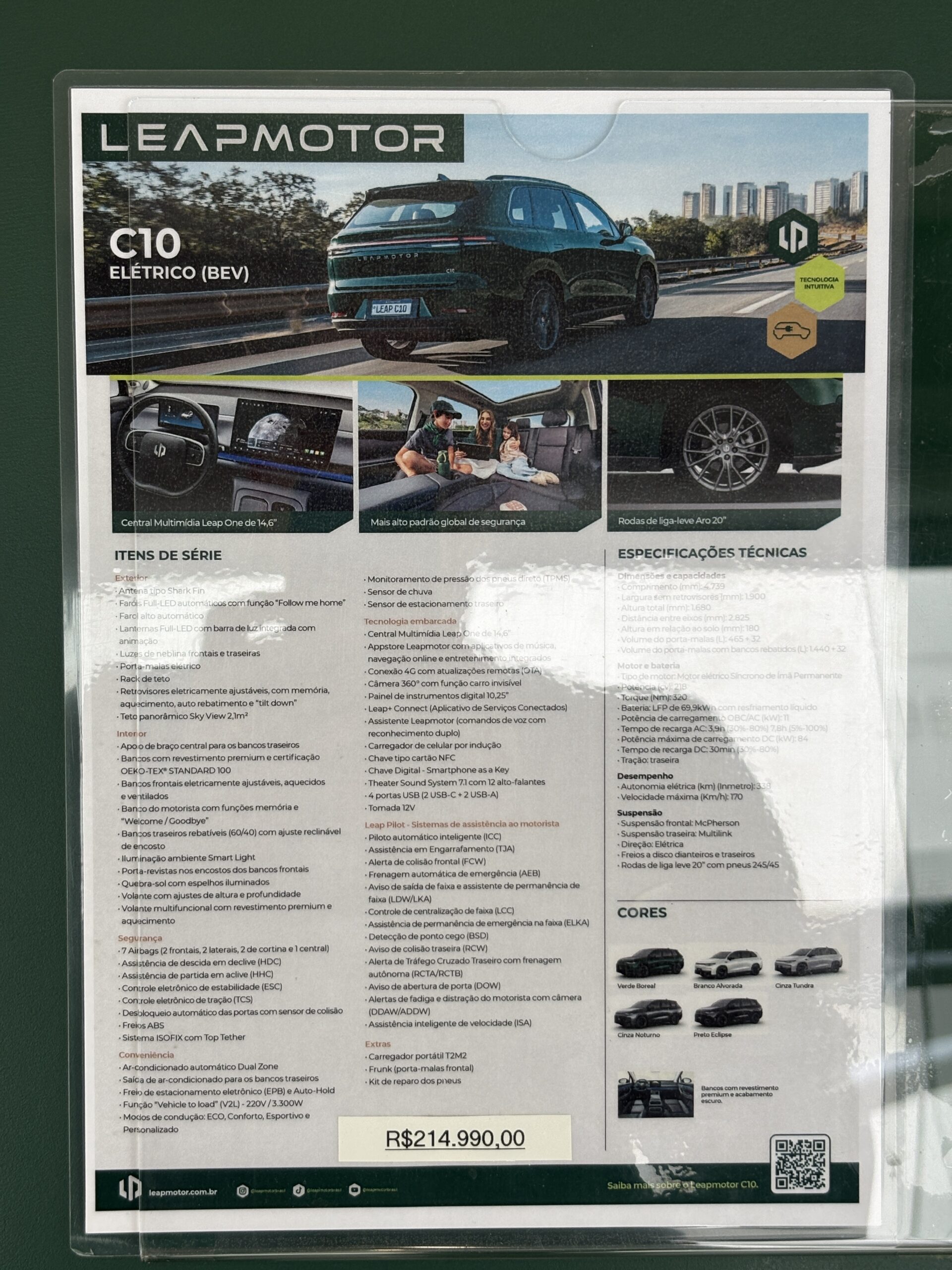
I drove the BEV, but don’t have a lot to say about the driving impressions. They made me keep it in Eco mode and I didn’t know how to set it to heavy regen. So it had no power and I was fairly distracted having to deal with the heavy traffic and constantly shifting from the accelerator pedal to the brake pedal. I don’t blame the car for that, the car can be set up for one pedal, I just couldn’t get it done with the language barrier.
BYD
BYD is now a top-tier seller in Brazil. In September 2026, it finished fourth among brands, with about 22,000 registrations, ahead of Hyundai and Toyota. The Dolphin Mini became the first electric car in the national top three, at 9,385 units. The King plug-in passed the Toyota Corolla in August and sold 1,666 cars in September, against 475 Corollas. Through August, BYD had already beaten its full 2025 volume.
Local build is underway in Camaçari, Bahia. The plant, opened in October 2025, is BYD’s largest outside of Asia, cost R$ 5.5 billion, and can make 150,000 vehicles a year, with a later target of 600,000. It already assembles the Dolphin Mini, King, and Song Pro, and employs 8,500 people, with welding, paint, and stamping due by year-end.
Mike bought a Dolphin Mini (called the Seagull in some markets) for a couple of years and loves it. He may get another, or maybe the Geely EX2.
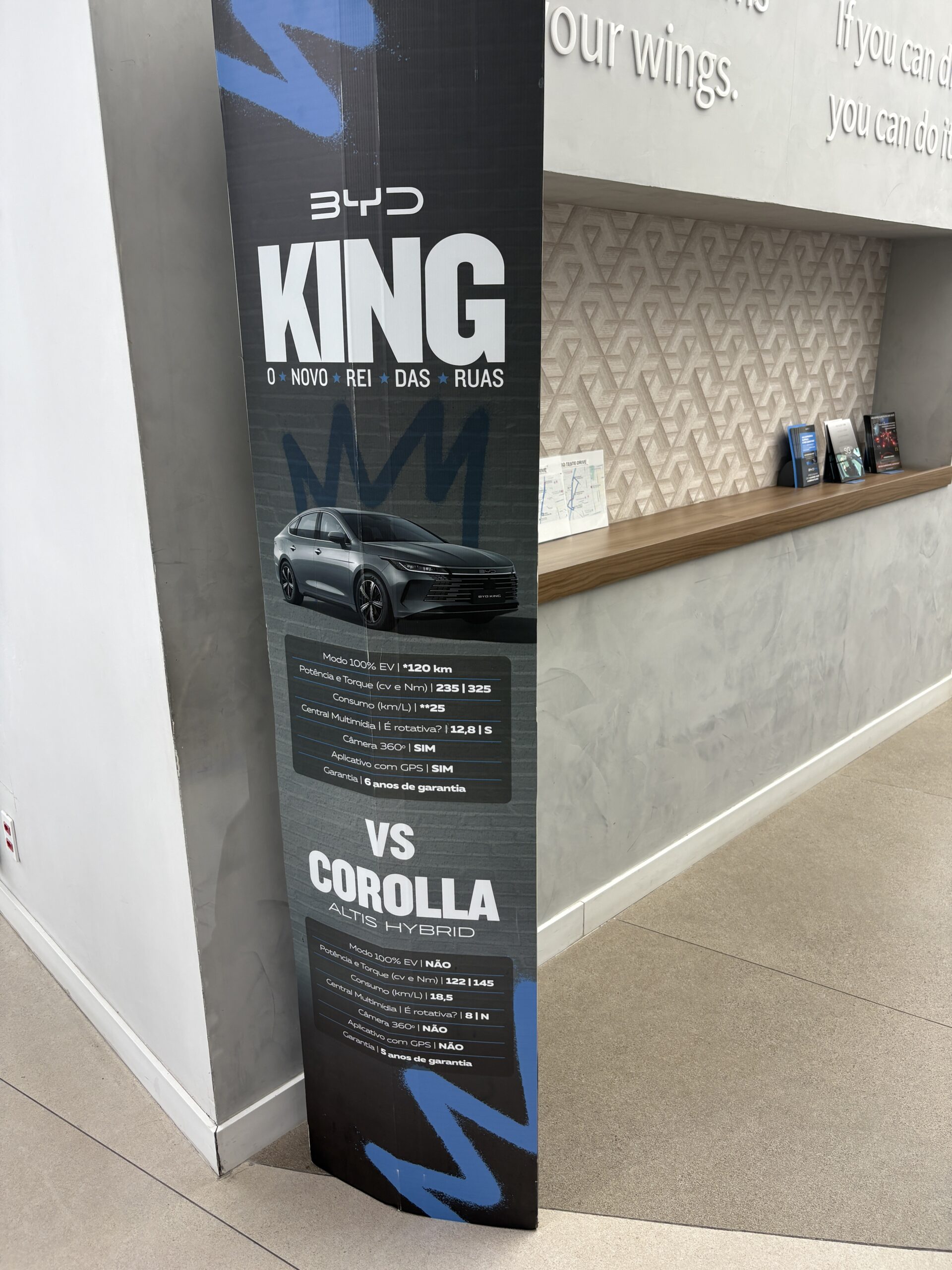
BYD has more power, better fuel economy, 120 km of all-electric range, and a 6 year warranty! And it is 20,000 less (about $4,000 less). What does Toyota have? A good reputation, but that only lasts so long. The King is now outselling the Corolla!

After thinking a little more about his situation (he is now an empty nester, his kids are grown up), he may just get another small cheap EV.
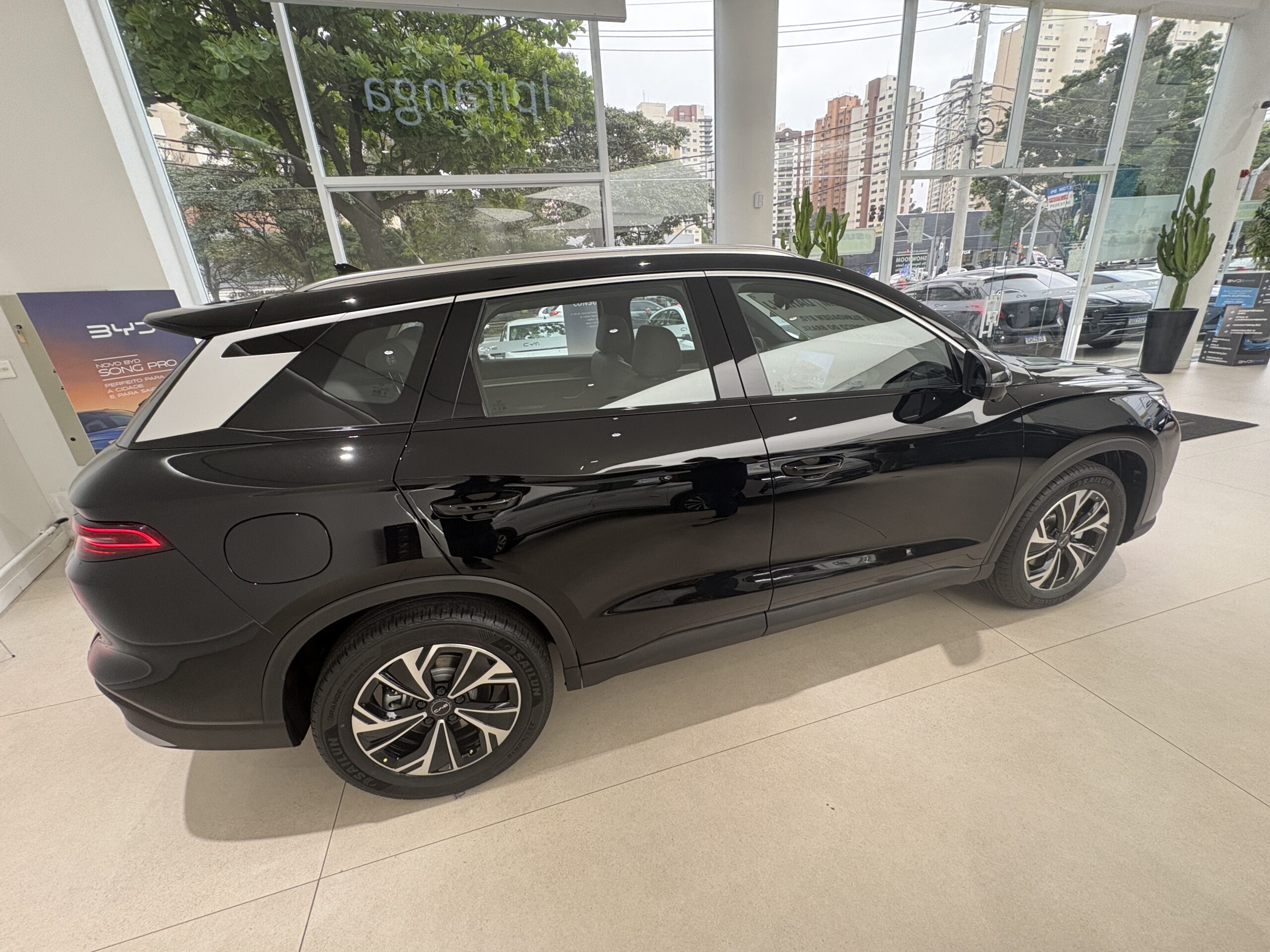
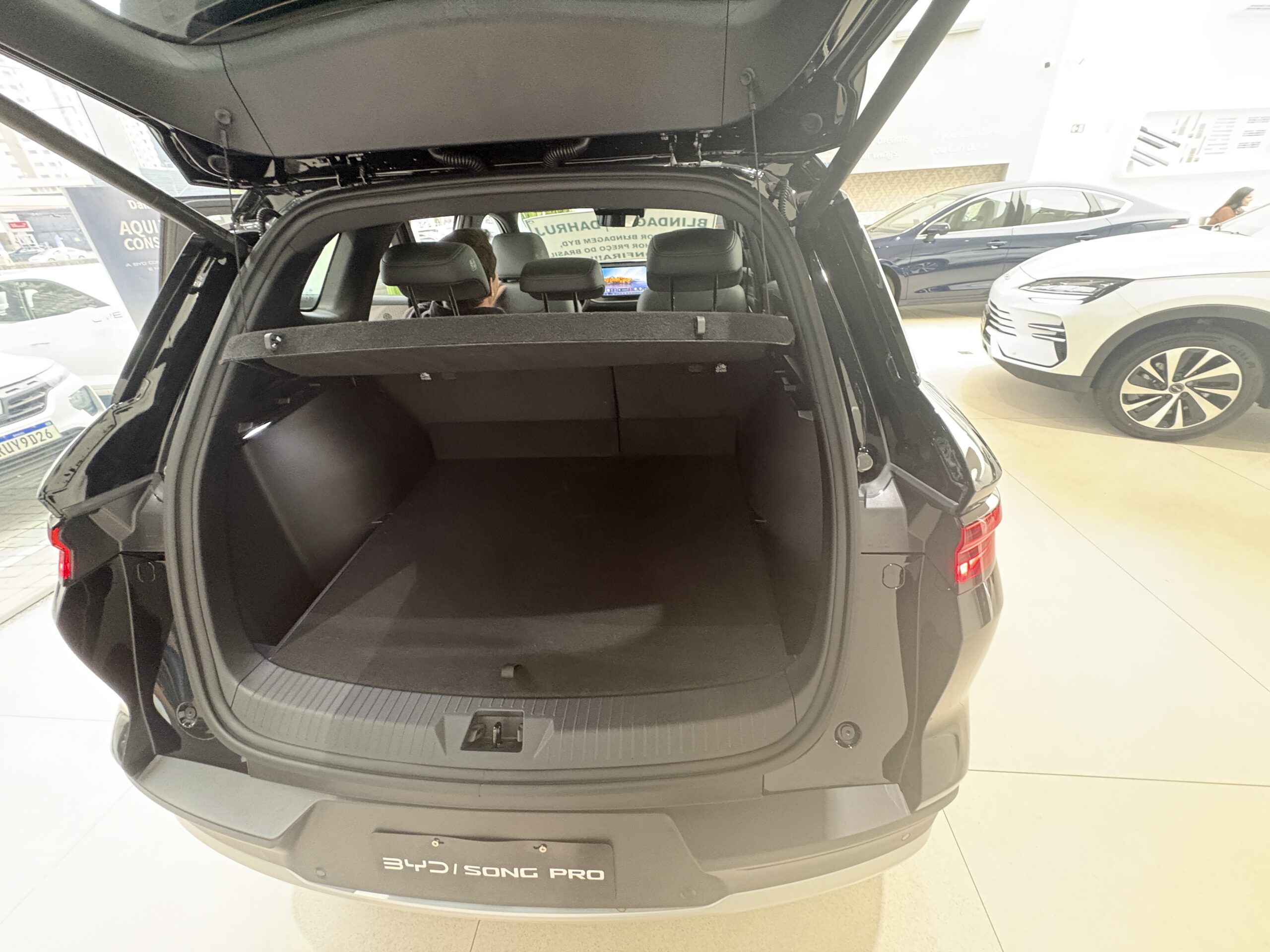
Mike also heard good things about the Atto 2 (which hadn’t arrived yet at the dealer I visited). The Atto 2 is BYD’s compact plug-in SUV, built in Camaçari from about R$150,000 ($29,000). SKD assembly started by July 2026, ahead of September deliveries. It sits above the Dolphin hatch and below the Song Pro, sharing that model’s flex hybrid with 110 km of electric range. Mike thinks it will sell like hotcakes, since nobody has a plug-in hybrid at that price. You can get pure EVs for about $5,000 less, which is great for a city car, but with Brazil’s poor charging, you need a plug-in if you want to travel without range anxiety.
Great Wall Motors
GWM is now a top-10 brand in Brazil. In September 2026, the Haval H6 logged about 6,400 sales and led retail SUVs, ahead of the Volkswagen Tera and T-Cross. Through mid-August, the brand had already passed its full 2025 total. It builds the flex-hybrid H6, the H9, and the Poer P30 pickup in Iracemápolis, São Paulo, its first Latin American plant, rated at 50,000 a year and aiming for full capacity in 2027.
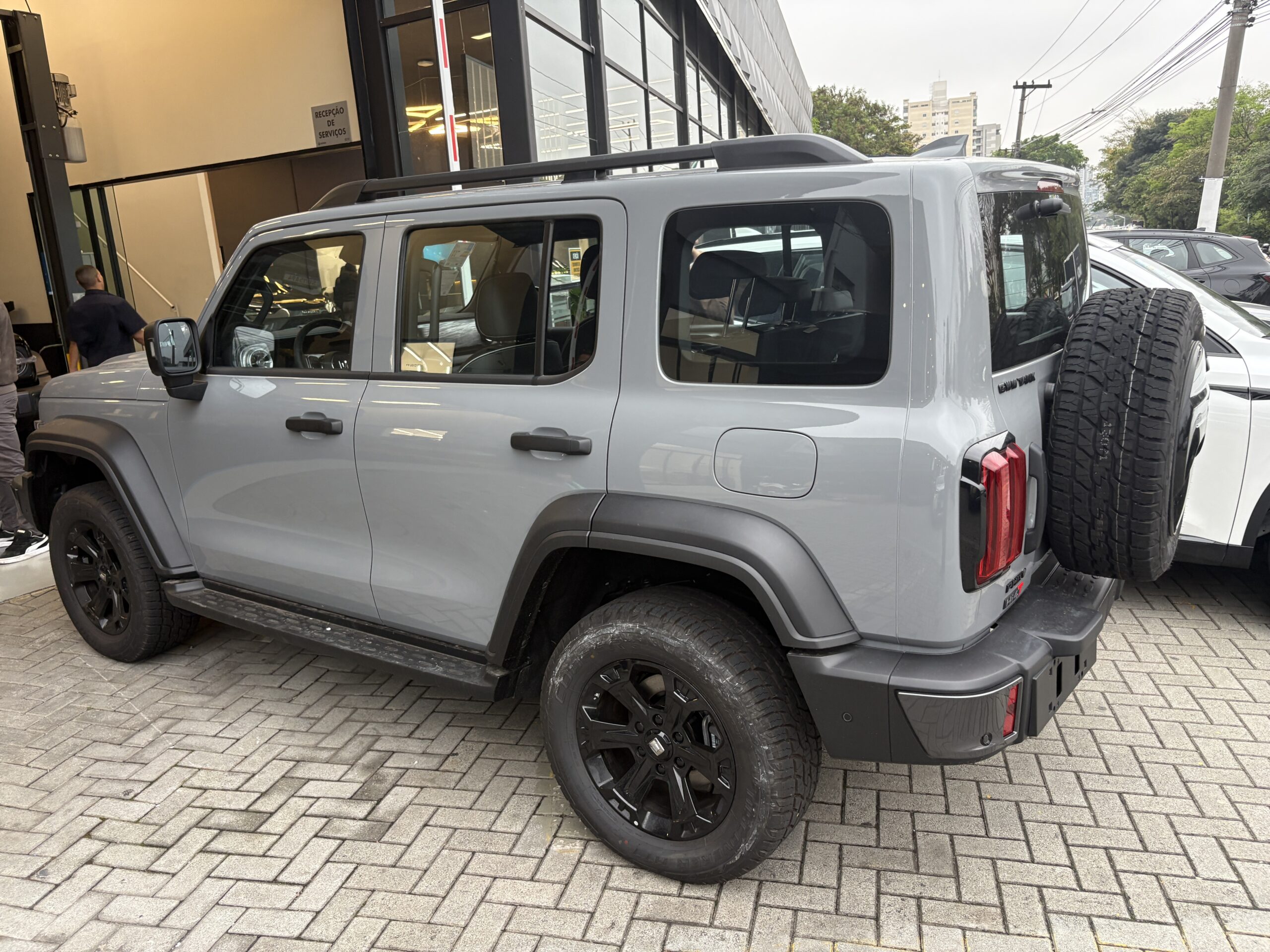
The electric side is the Ora 03, sold elsewhere as the Ora Good Cat. Launched in Brazil in 2023, it is a 171 hp hatch with a 58 kWh battery and 315 km of Inmetro range. In June 2026, GWM cut it to R$149,990, under the BYD Dolphin GS. It is a niche seller next to the H6. I wanted to see the Ora 03, but they were sold out, they just had pictures of them.


Geely
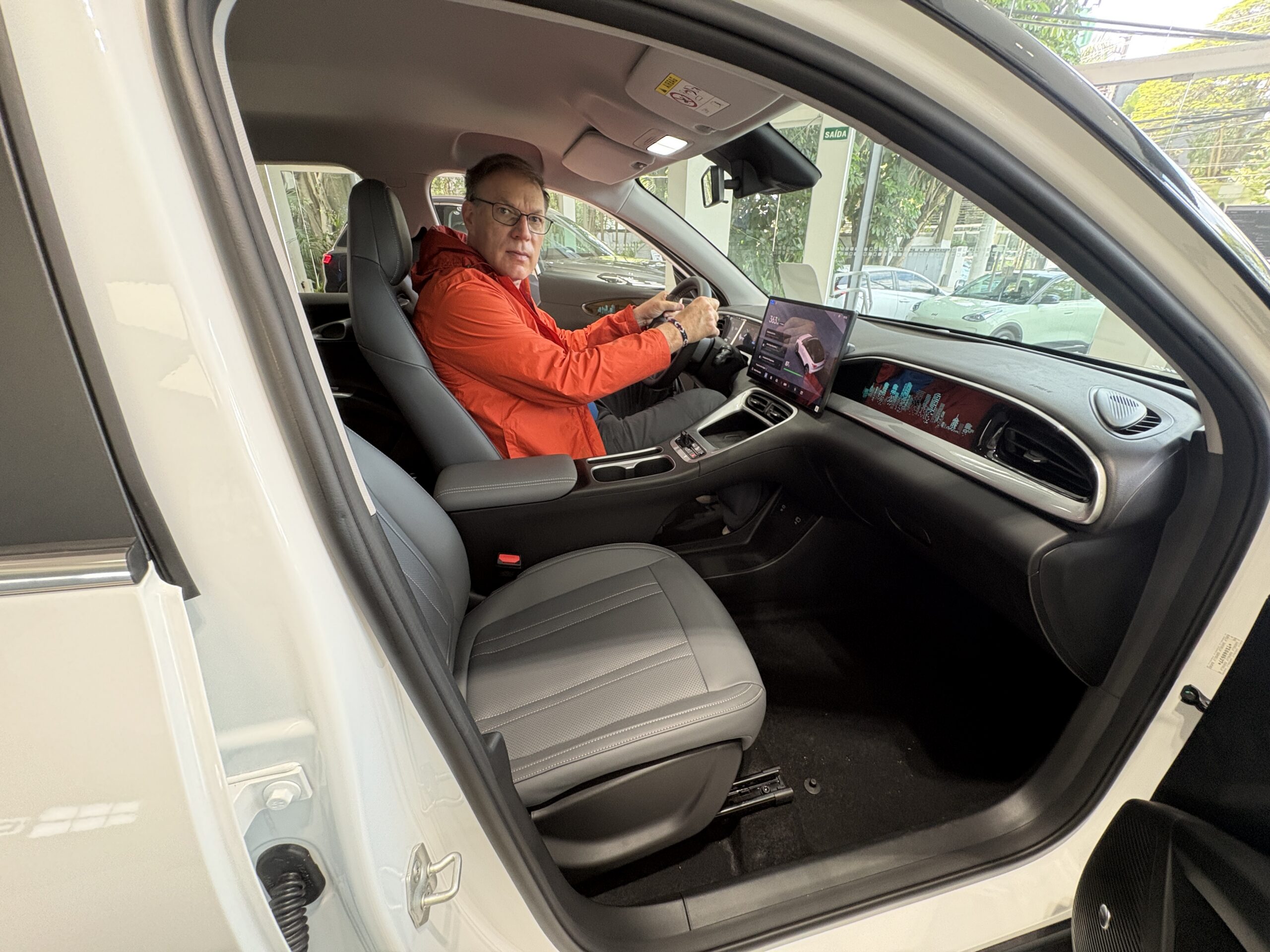
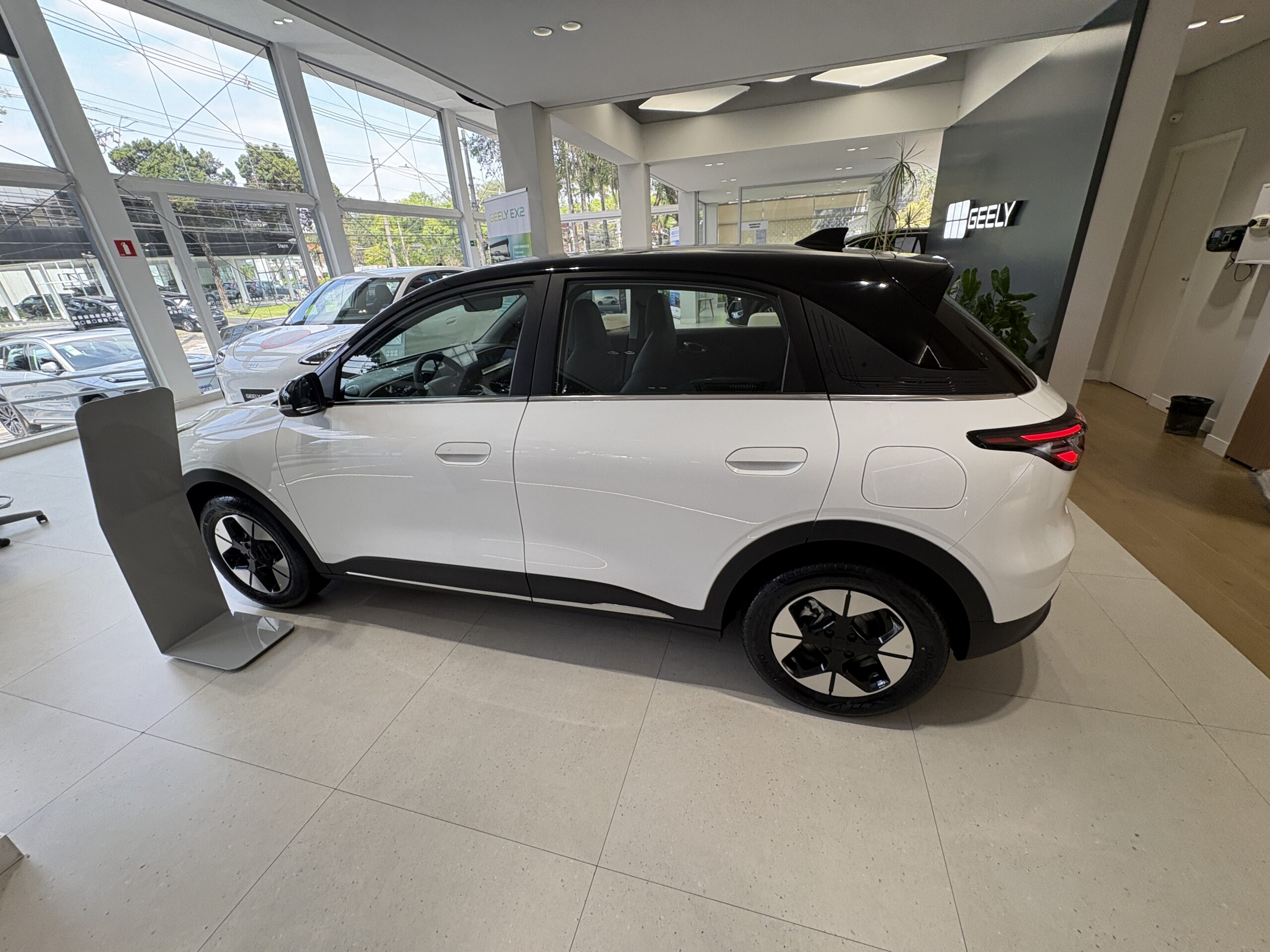
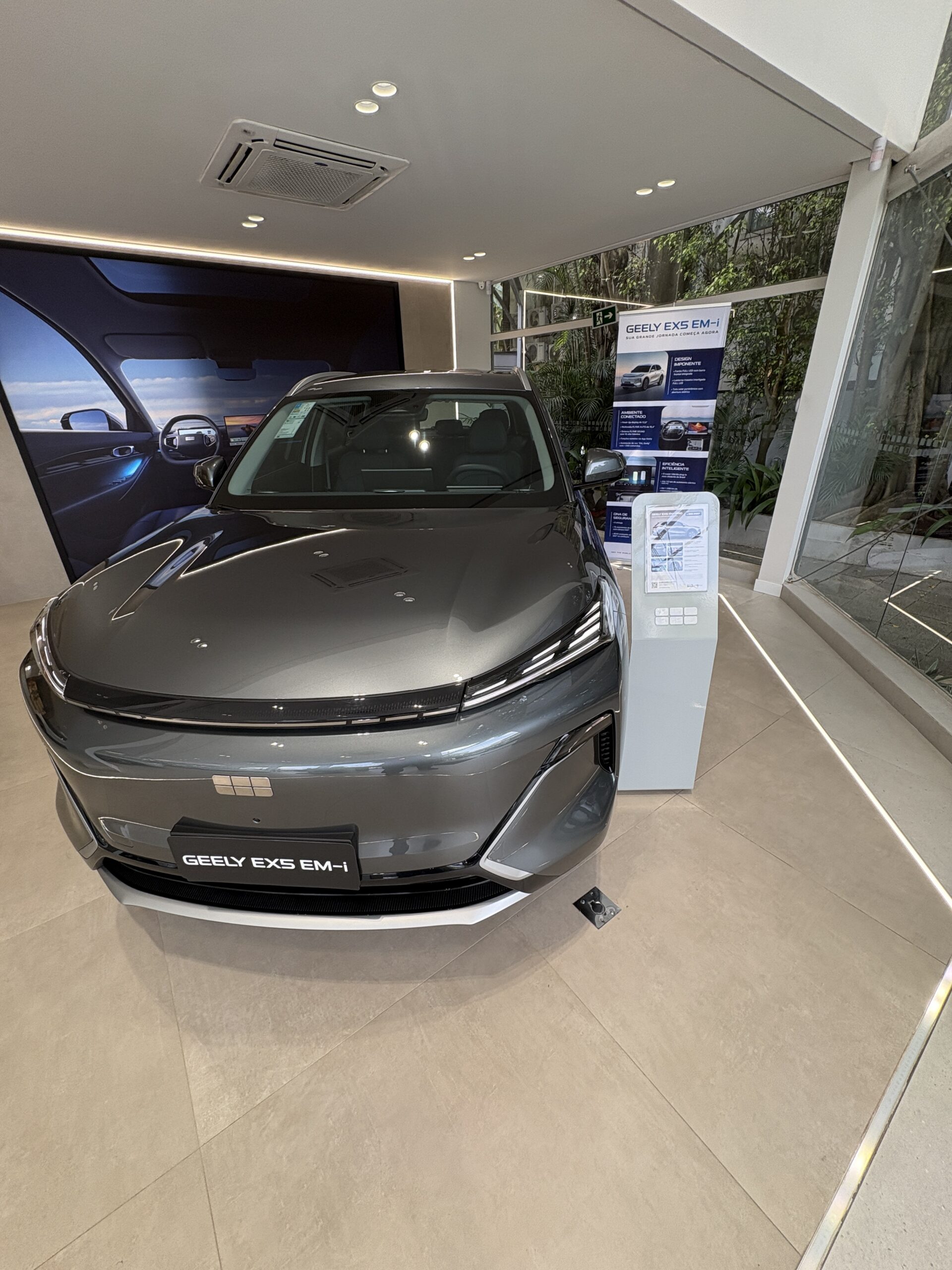
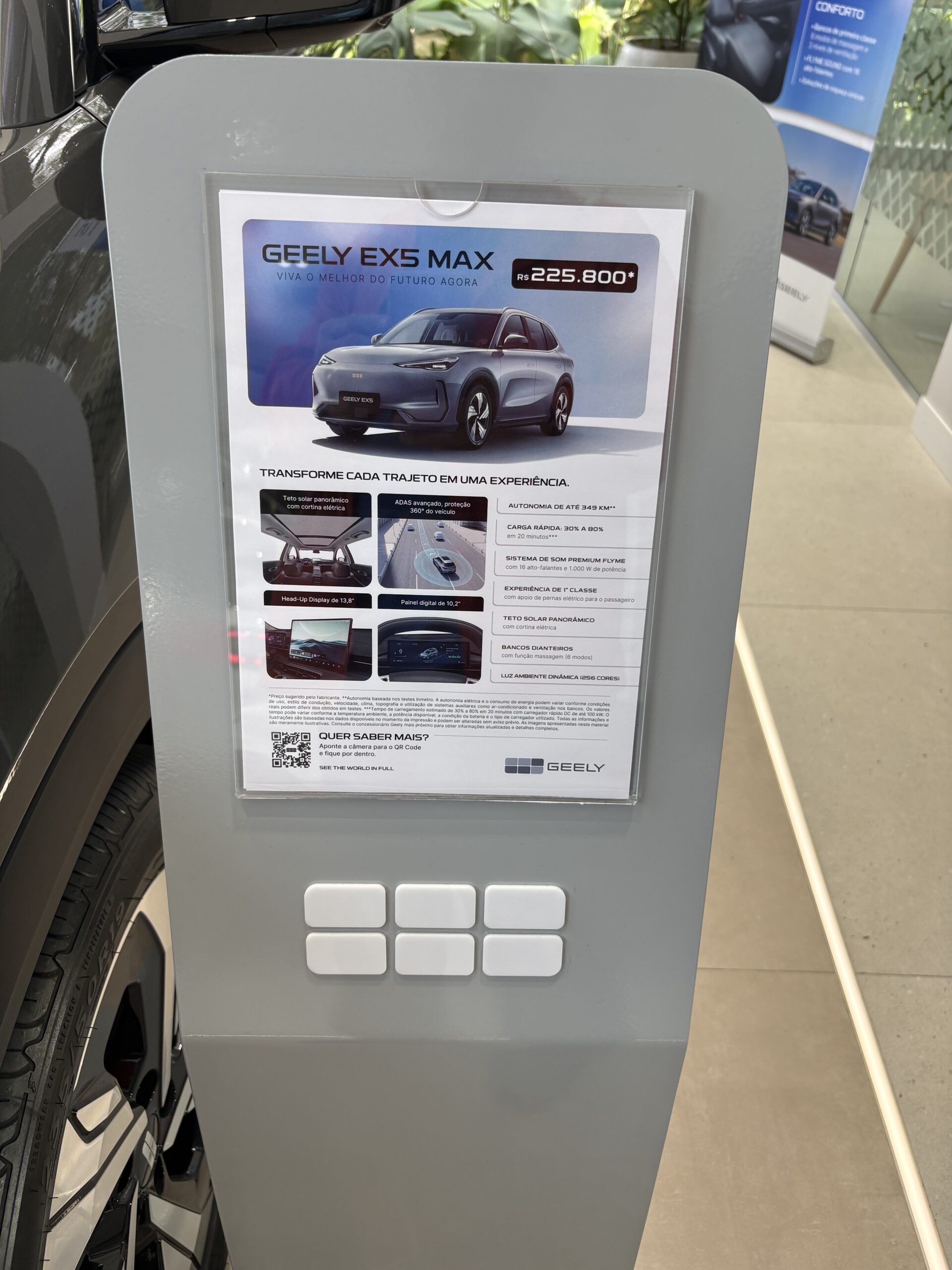
I was most excited to see Geely cars since they are doing so well globally. Geely also owns Polestar, Volvo, and Zeekr, among other minor brands. I was impressed overall, but didn’t like the aesthetics — the cars were technically great, but need a better interior designer in my opinion.
Geely entered Brazil in 2025 and bought 26.4% of Renault do Brasil, committing R$5.8 billion to the Ayrton Senna plant in São José dos Pinhais, Paraná. The plug-in EX5 EM-i began local production in September 2026, with sales due in November. The electric EX2 hatch, launched in November 2025, starts production there in December. It is the country’s second-best-selling cheap EV, at about R$124,600 with 289 km of Inmetro range. Monthly sales peaked near 5,800 in August, then fell to about 2,700 in September. Year-to-date volume is roughly 26,500.



Conclusion
The dealer visits point to the next phase of Brazil’s car market, not just a sales snapshot. Leapmotor’s range-extended C10 and B10 already lead large electric SUVs, and planned assembly in Goiana would turn a Stellantis import into a local product for drivers who want electric drive without depending on chargers.
BYD is furthest along. Camaçari, opened in October 2025, already builds the Dolphin Mini, King, and Song Pro, with welding, paint, and stamping due by year-end and a path from 150,000 to 600,000 units a year. The King has overtaken the Corolla. The Atto 2, a flex plug-in from about R$150,000 with 110 km of electric range, is the car most likely to sell where public charging is still thin. Cheap city EVs will keep winning daily use. Plug-ins will take the trips.
GWM’s Iracemápolis plant is heading for its 50,000-unit capacity in 2027, led by the flex Haval H6. Geely, through a 26.4% stake in Renault do Brasil, starts EX5 production now and the EX2 in December. The race is shifting from imports to local factories.
Disclosure: I am a shareholder in Tesla [TSLA] and XPeng [XPEV]. But I offer no investment advice of any sort here.
Sign up for CleanTechnica’s Weekly Substack for Zach and Scott’s in-depth analyses and high level summaries, sign up for our daily newsletter, and follow us on Google News!
Have a tip for CleanTechnica? Want to advertise? Want to suggest a guest for our CleanTech Talk podcast? Contact us here.
Sign up for our daily newsletter for 10–15 new cleantech stories a day. Or sign up for our weekly one on top stories of the week if daily is too frequent.


CleanTechnica uses affiliate links. See our policy here.
CleanTechnica’s Comment Policy
Source: cleantechnica.com