




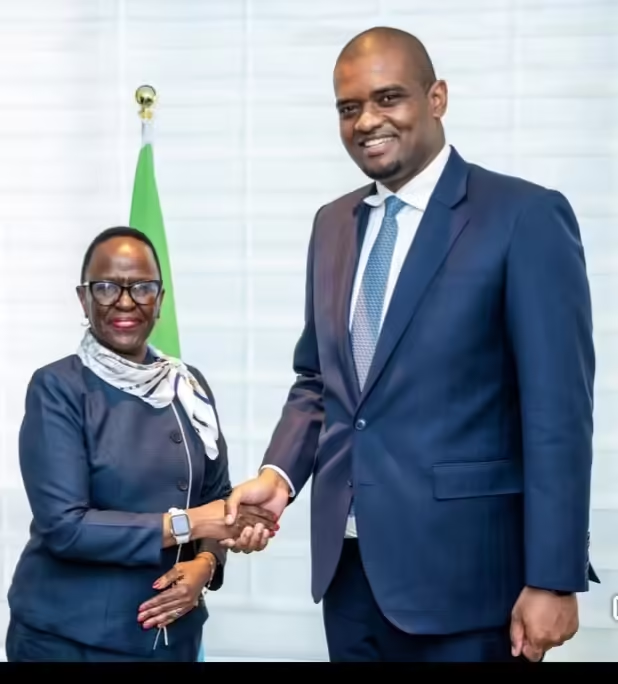

By Mutayoba Arbogast
African Union Special Envoy for Women, Peace and Security, Ambassador Liberata Mulamula, has called for greater representation of women in decision-making, particularly in health, peace and security, arguing that women who carry much of the responsibility in these sectors must also have a stronger voice in shaping policies and priorities.
Mulamula made the call while reflecting on her participation in SHE RISE, a high-level initiative focused on women’s leadership in maternal and child health, held on the sidelines of the 81st United Nations General Assembly in New York in September 2026.
The initiative was led by Tanzania’s Vice President, Deogratius John Ndejembi, on behalf of President Samia Suluhu Hassan, the African Union Champion for Maternal and Child Health.
Mulamula said the imbalance between women’s contribution to Africa’s health systems and their representation in leadership remains striking. Women account for about 70 percent of the continent’s health workforce, she noted, yet occupy only about a quarter of decision-making positions.
For Mulamula, closing that gap is not simply a question of representation. It is essential to building health systems and policies that respond effectively to the needs of the people they serve.
She pointed to similar challenges in the peace and security sector, where women shoulder significant responsibilities and are often among those most affected by conflict, but remain inadequately represented in the rooms where critical decisions are made.
The connection between health, peace and security is particularly important, Mulamula said, because health services are often among the first essential systems disrupted when conflict erupts. Women face disproportionate consequences, especially pregnant women and mothers who may suddenly find themselves without access to emergency and maternal healthcare.
Her message was clear: women who heal communities, sustain families and contribute to peacebuilding must also have a meaningful role in deciding how health, peace and security policies are designed and implemented.
Mulamula also commended governments, institutions and partners working towards the “Three Zeros” agenda: zero preventable maternal deaths, zero sexual and gender-based violence and harmful practices, and zero unmet need for family planning.
She stressed that these commitments must go beyond declarations and be translated into concrete action that improves the lives of women and girls across Africa.
The discussions in New York came at a difficult personal moment for President Samia following the death of her husband, Hafidh Ameir Hassan. Participants at the SHE RISE event observed a moment of silence in his honour.
Mulamula joined Tanzanians and international well-wishers in expressing condolences to President Samia and her family.
She remembered the late Hassan as a kind and humble man whom she had known through various leadership engagements and extended her sympathies to the Tanzanian leader, saying she would continue to pray for her comfort and strength during the period of mourning.
Hafidh Ameir Hassan died in Zanzibar while receiving treatment. His death prompted messages of sympathy and solidarity with President Samia, her family and the people of Tanzania.
Against the backdrop of both personal loss and an international conversation about women’s leadership, Mulamula’s message from New York underscored a broader challenge confronting Africa: women are indispensable to the continent’s health systems, peacebuilding efforts and community resilience, but their presence at the highest levels of decision-making has yet to reflect the weight of their contribution.
For Africa to make lasting progress on maternal health, gender equality, peace and security, she argued, women must not only be called upon to implement decisions. They must have an equal opportunity to help make them.
Source: panafricanvisions.com

