


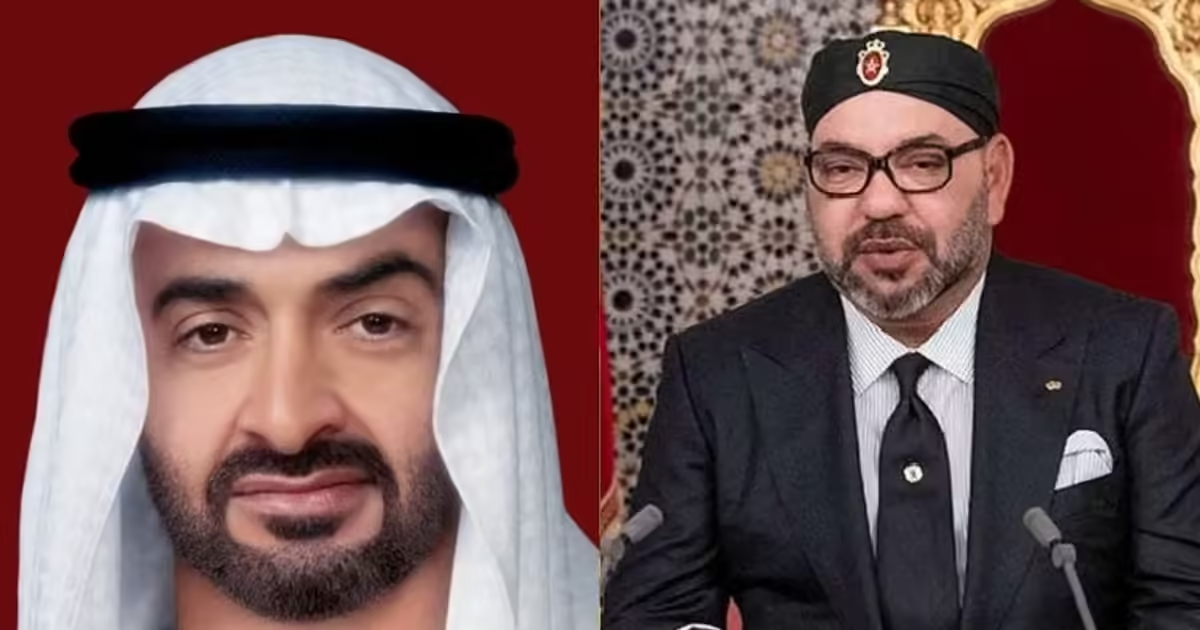

Following directives from King Mohammed VI, General Mohamed Berrid, Inspector General of Morocco’s Armed Forces (FAR) and Commander of the Southern Zone, hosted Lieutenant General Issa Saif bin Ablan Al Mazrouei, Chief of Staff of the UAE Armed Forces, for the third meeting of the Moroccan-Emirati Joint Military Committee.
To recognize his contributions toward deepening bilateral security ties, King Mohammed VI honored Lieutenant General Al Mazrouei with the Grand Officer rank of the Military Order of Merit.
During the bilateral session, both military commanders commended the growing strength of their security partnership.
According to an official statement from FAR reported by Morocco World News, both leaders praised progress in “capability development, defense industry, as well as training to exchange expertise”.
Both nations affirmed their dedication to expanding defense collaboration, building upon a foundational military agreement first signed in 1980.
The visiting Emirati military delegation is also set to participate in the Marrakech Air Show 2026.
Algeria breaks diplomatic relations with UAE amid growing regional rift
The deepening security partnership between Morocco and the UAE takes place against the backdrop of mounting diplomatic friction across North Africa.
On September 10, neighboring Algeria formally severed its diplomatic relations with the UAE.
As reported by Morocco World News, the Algerian government ordered the Emirati ambassador to depart within 48 hours and banned all UAE-registered military and civilian aircraft from its airspace, citing “provocative or hostile acts”.
This diplomatic breach follows Algeria’s earlier decision to cut ties with Morocco in 2021.
At the time, Rabat expressed regret over Algeria’s decision, dismissing accusations as unfounded while repeatedly extending an olive branch to restore diplomatic dialogue amidst regional instability.
Algeria and China apply similar strategies
Algeria also continues to challenge Morocco’s territorial integrity by backing the Polisario Front’s claims to Western Sahara and rejecting Morocco’s autonomy plan, which has been backed by around 120 countries as a proposed solution to the Western Sahara dispute.
By taking a firm stand against the UAE, Algeria is signaling how seriously it views the actions and alliances of countries involved in regional disputes.
The move shows that disagreements over foreign policy can have wider diplomatic and economic consequences, including the severing of diplomatic ties.
This approach is not unique to Algeria. China has also used its economic and diplomatic policies to reinforce its position on Taiwan.
In May 2026, Beijing extended zero-tariff access to goods from 53 of Africa’s 54 countries, excluding Eswatini, the only African country that maintains diplomatic relations with Taiwan.
Source: africa.businessinsider.com