



By Lea Hostetter-Habib, EDF Intern and Abhinav Gaurav, Lead Advisor for Sustainable Dairy
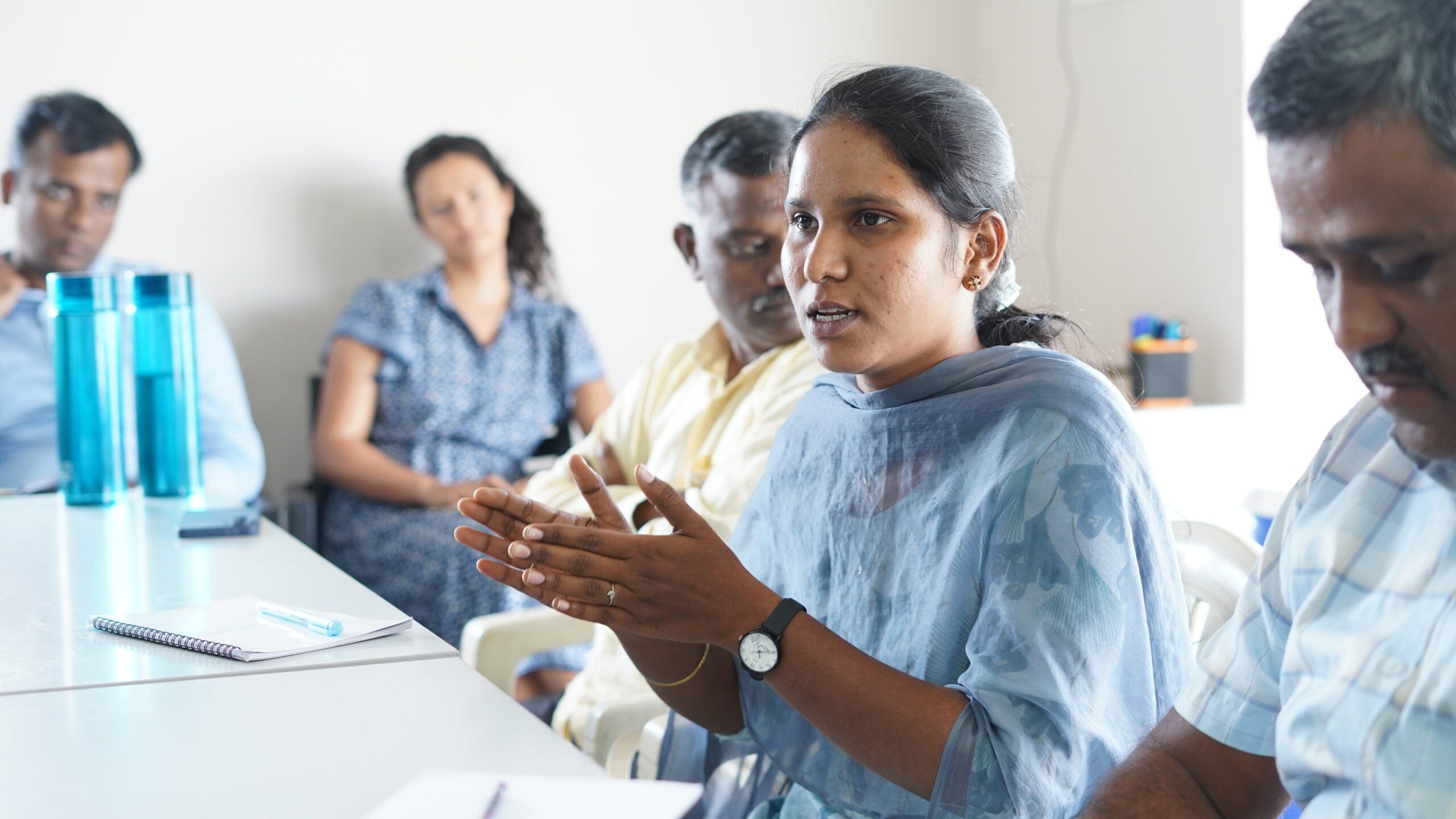
“Even though most women are involved in agriculture in our area, they did not get any recognition for their activities,” Shanthra Prakash, an agri-entrepreneur in India states as to why she created her women-led dairy cooperative. “That’s why I was inspired to create women leadership in our community.”
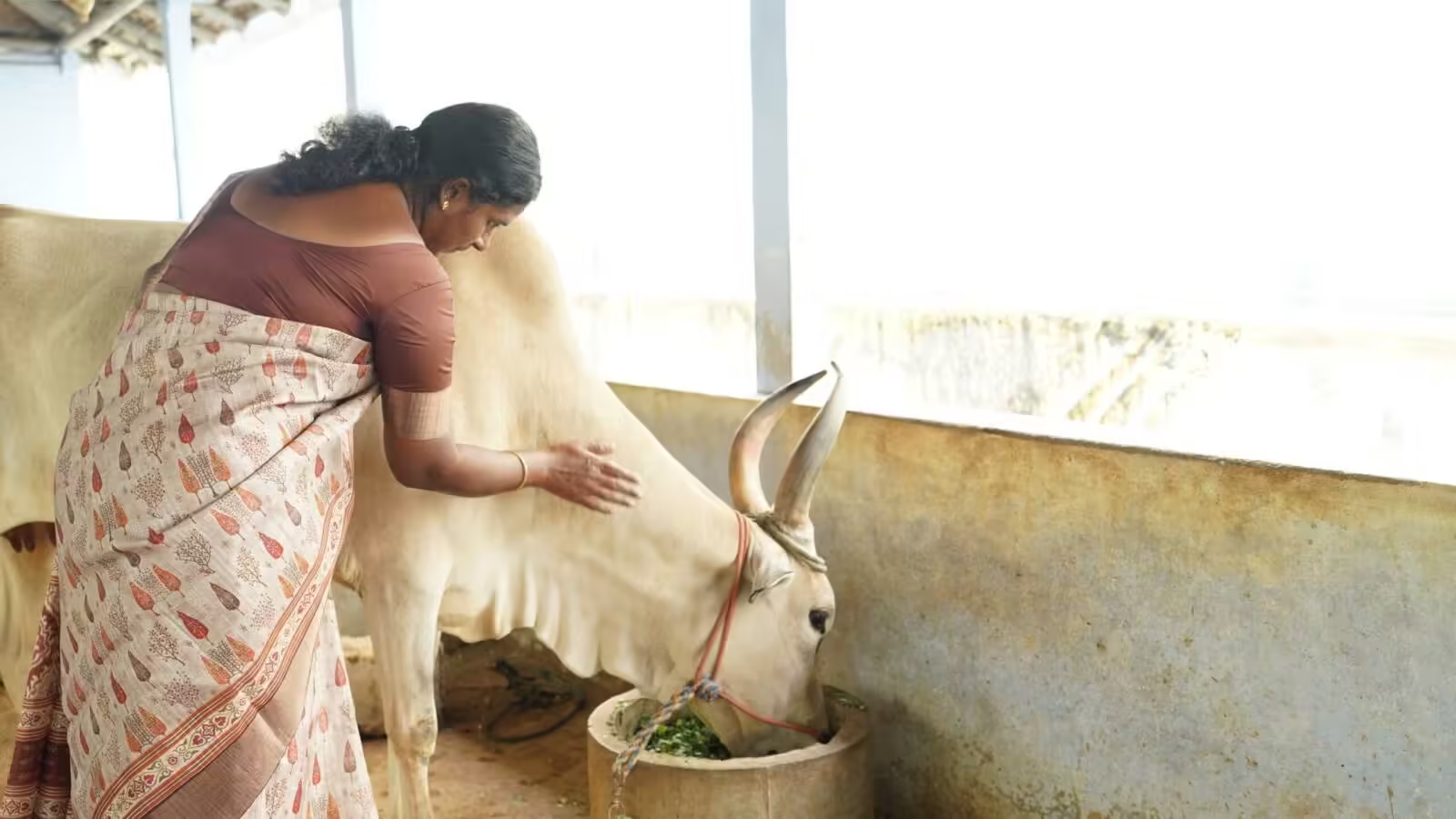
In India, the world’s leading producer of milk, women comprise nearly 70% of the dairy workforce. Despite their prominent role, women continue to face significant obstacles compared to men.
Social norms in India still shape who owns animals, who controls income and who is recognized as a decision maker. As a result, women often lack land rights, their labor goes unpaid, and they have less access to the advisory services and technology that can help boost dairy production.
Without the means to adapt or safety nets to fall back on, women are often hit the hardest by climate change. With India facing more extreme weather, worsening water scarcity and unpredictable rainfall each year, women are having to work harder on their farms only to see their profits shrink as the quality of their milk decreases.
Ensuring that women have equitable access to land, resources and knowledge, not only gives them more economic agency, but also enables them to implement sustainable agricultural practices that can boost climate resilience and lower emissions.
Recognizing this potential, EDF-India and Kumaraguru Institutions partnered together in 2024 to create the Climate Smart Dairy Entrepreneurship Programme in Tamil Nadu, a state in southern India, to help train entrepreneurs, men and women alike, in implementing sustainable practices into their local businesses.
These are the stories of two women who are using their entrepreneurship to lead India’s dairy industry down a more sustainable path, while supporting women along the way.
Women are making dairy more sustainable in India
Shanthra Prakash is a recent university graduate, and she used her training to create a women-led farmer producer organization, Pariyur FPO. Working like a cooperative, this all-women producer organization allows members to jointly sell their milk to markets to help increase their bargaining power and negotiate better prices for their dairy.
Members in the organization also receive training to learn how to implement more sustainable practices into their dairy production. Through her organizing efforts, Shanthra has created a network of over 400 women who support one another to become self-reliant and stewards of the environment.
Shanthra also created a Rural Dairy Mart, a one-stop shop where farmers can go to buy agricultural inputs and services like quality cattle feed, affordable dairy equipment and veterinary health advice to help improve their dairy production. This dairy mart currently supports 1,000 rural farmers, and she hopes that it will scale up to reach over 5,000 farmers throughout Tamil Nadu.
Through her innovative business model, Shanthra has created a solution for women in her community to access markets and resources that can help them produce higher quality, more profitable dairy, with a lower environmental impact.
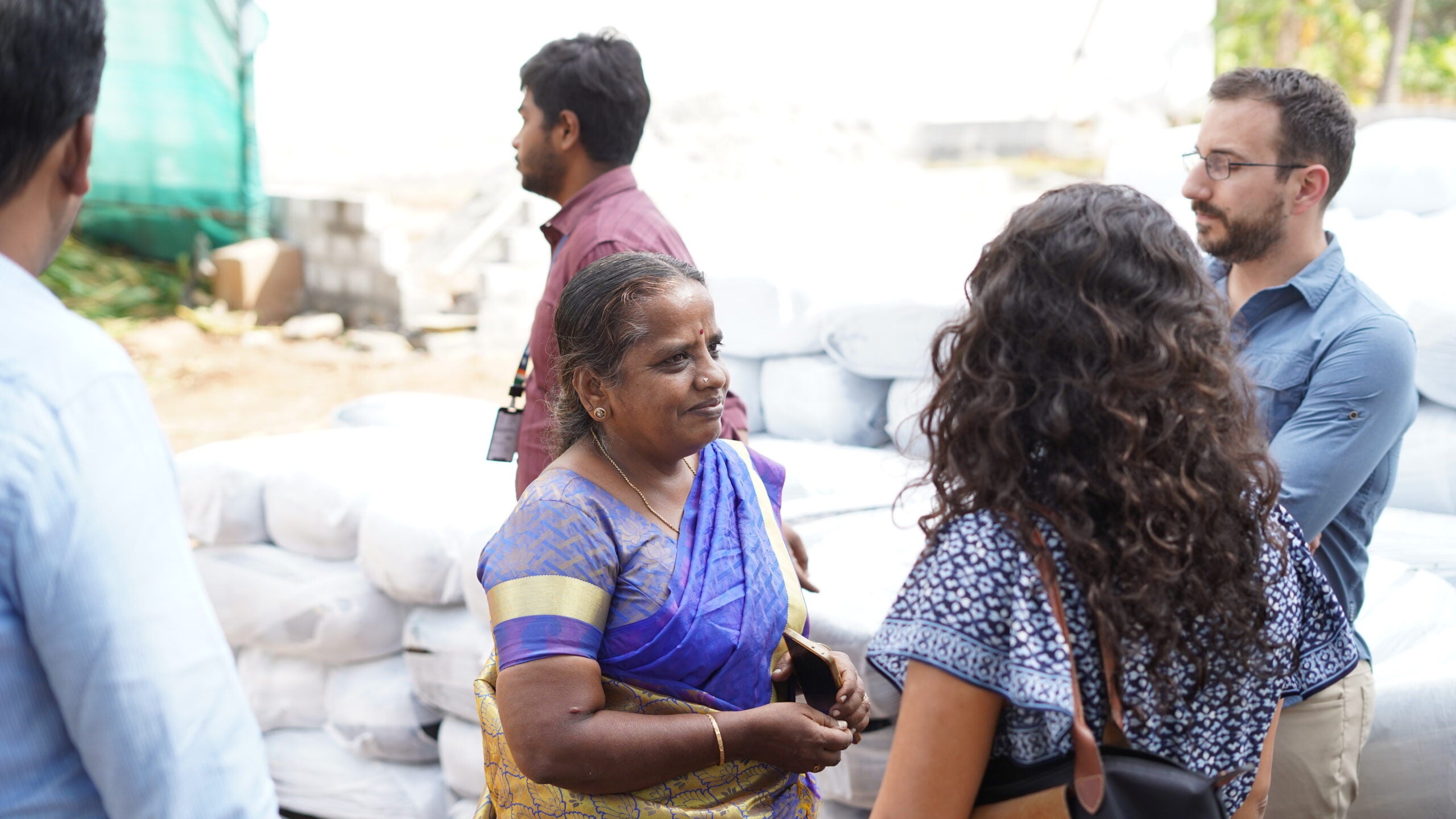
Rajeshwari and Arun Venkatesh are a mother and son duo who used the support from the program to create their business, Sarvva Smaart Tech Solutions LLP. Under this brand, the two created Sarvva Silage, which is a cattle feed business that has created a high-quality sustainable maize fodder to sell to dairy farmers.
The business helps over 650 farmers access nutritious feed for their cattle. This both increases milk yields and reduces methane emissions per liter of milk.
To sell their silage, Rajeshwari and her son have also designed a lightweight silage bag, which has allowed women to carry the feed to and around their farms more easily. Since women are typically responsible for feedings animals, this design has made a woman’s everyday workload literally lighter, enabling them to be more productive on the farm as well.
Their business is directly improving the livelihoods of rural and women farmers while simultaneously improving environmental outcomes.
Gender-smart agriculture is climate-smart agriculture
With 2026 recognized by the UN as the International Year of the Woman Farmerthere is global recognition of the power of women’s roles in agriculture. And with the need for building resilience ever more urgent as the worst impacts from climate change affect farmers, now is the time to strengthen the responses of women farmers.
The successes of Shanthra and Rajeshwari show that when women are supported, they can become change agents in building climate and livelihood resilience, inspiring other women to the same.
By continuing to support gender-smart policies, local partnerships and research — both for women and by women — we can build a more sustainable and equitable food system that the world needs today.
Source: blogs.edf.org