




The global bond rout is creating unusual volatility across the international fixed income complex.
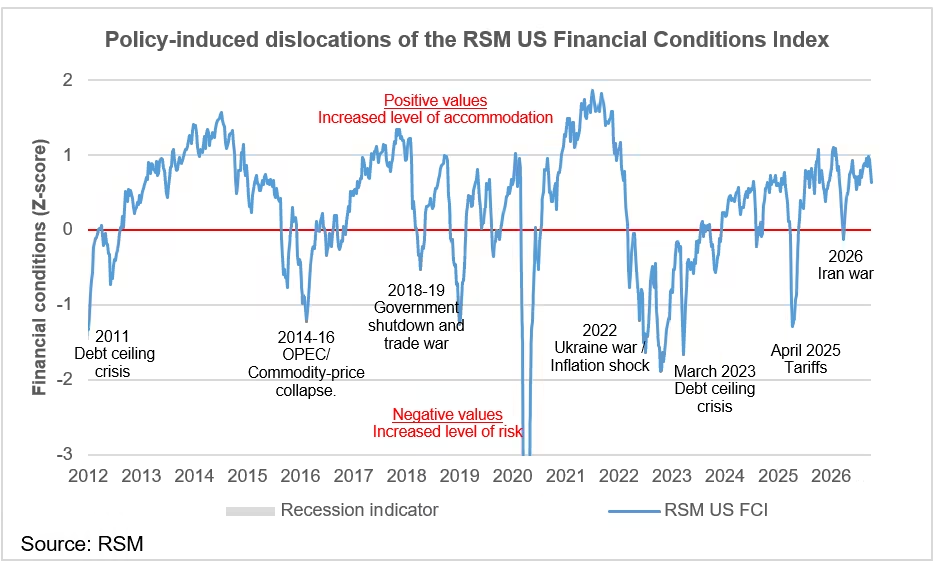
The MOVE index, a measure of volatility in the Treasury market, has had a 34 basis-point increase over the past month and the Z-score inside the RSM US Financial Conditions Index has migrated back to neutral.
Get Joe Brusuelas’s Market Minute commentary every morning. Subscribe now.
That means U.S. domestic financial conditions are essentially being propped up by equity valuations, all of which has resulted in a net tightening of the index to 0.6 standard deviations above neutral, suggesting only a moderate level of accommodation remaining in the financial markets.
Because the Federal Reserve is paying closer attention to financial conditions, this tends to support our call that the Fed will hike only once more this year by 25 basis points in December.
While we expect the Fed to increase rates once again in March 2027 should yields on longer-term rates continue to rise, we will have to revisit that call even as current market pricing using overnight index swaps supports that baseline forecast.
State of play
Financial conditions continue to tighten, with money market rates moving above 3.90%, the bond market continuing its selloff, and the S&P 500 losing ground since the end of August.
The bond market is showing the most stress, with volatility in the Treasury market spiking above its one-year and five-year averages.
This move is consistent with recent jumps in global interest rates reacting to increased inflation and deteriorating fiscal balances.
The remaining accommodation gives the Federal Reserve room to tighten monetary policy and attack inflation within an economy growing at full-employment levels.
The Fed has two more chances this year to hike its overnight policy rate, at its Oct. 28 and Dec. 9 meetings. We expect at least one more hike at the end of the year, followed by an additional hike early next year.
The money market adjusts to Fed tightening
For the money market, the long wait is over. The first step in monetary policy tightening has finally occurred, pushing the effective overnight federal funds rate to 3.88%.
Both the futures market and the overnight index swap market are pricing in a December rate hike followed by a hike in March.
In anticipation of those hikes, the Secured Overnight Financing Rate has been testing 3.90% for the past week, just above the effective funds rate, while the OIS rate now trades at 4.0%.
We expect lenders to demand higher returns to cover potential losses if rates were to move higher.

The takeaway
The bond market is leading the way in terms of anticipating tighter financial conditions, now joined by money market rates that are trading higher after the Fed’s September rate hike.
We agree with the money market’s assessment of a second rate hike before the end of the year, followed by a third early next year as the Fed works to tighten financial conditions in an inflationary environment.
Source: realeconomy.rsmus.com