



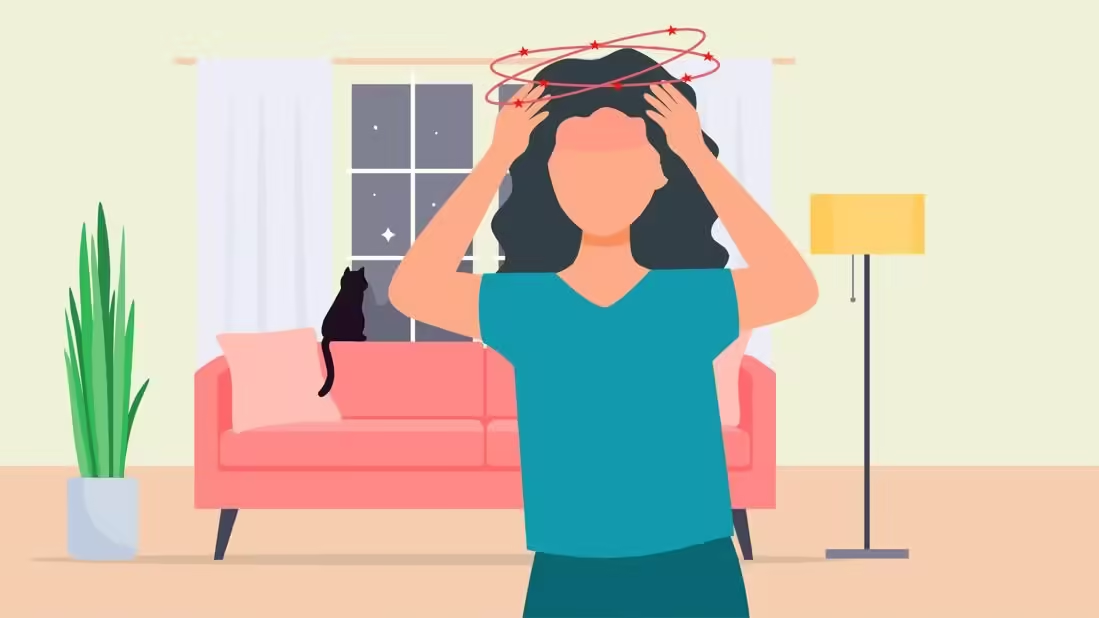

Hypertrophic cardiomyopathy (HCM) doesn’t always announce itself. Some people go many years without symptoms and have no idea that anything’s amiss — until a medical test reveals a thickening of their heart muscle. Others develop symptoms in their teen or young adult years that prompt them to seek care.
Advertisement
Cleveland Clinic is a non-profit academic medical center. Advertising on our site helps support our mission. We do not endorse non-Cleveland Clinic products or services. Policy
If you’re concerned that you or a loved one has HCM, it’s important to understand possible warning signs. It’s also vital to know when this type of heart muscle disease should be on your radar, even in the absence of signs or symptoms.
Cardiologist Ben Alencherry, MD, explains.
Hypertrophic cardiomyopathy signs
HCM is a type of heart disease that thickens your heart muscle, in turn:
- Disrupting normal blood flow out of your heart
- Interfering with your heart’s electrical signaling
- Raising your risk for arrhythmias
That’s a lot going on at once. And not surprisingly, many people start to feel the effects as HCM keeps their heart from working as it should.
Dr. Alencherry breaks down some of the most common warning signs of HCM.
Fainting with exertion
Also known as syncope, fainting happens when your brain is deprived of blood flow. With HCM, the thickened heart muscle can get in the way of blood leaving your heart to nourish your brain and other organs.
Fainting during or after physical activity is a troubling sign — and one that warrants prompt medical attention. That’s because it’s been known to occur in people with HCM before having cardiac arrest. Given that HCM is the most common cause of sudden cardiac death in athletes and younger adults, being extra cautious is the way to go.
“You should avoid exerting yourself again until you can see a healthcare provider and figure out the cause,” Dr. Alencherry stresses. “Don’t chalk it up to heat, dehydration or whatever else might be happening in that moment.”
Fainting when you’re not pushing yourself is also worrisome and worthy of prompt medical attention, but it’s not as closely tied to HCM.
Feeling like you’re going to faint
When you come close to fainting but don’t, it’s called presyncope. You might feel lightheaded, weak, sweaty or sick to your stomach. You may see black spots or have blurry vision.
“Presyncope is a classic symptom of HCM, particularly the obstructive form,” Dr. Alencherry says. “If it occurs with exertion, that’s a huge red flag for HCM.”
With obstructive HCM, your heart muscle is too thick in the area leading up to your aortic valve, which is like an exit ramp that lets blood leave your heart. The thick muscle forms an obstruction, like a barrier in the road, that reduces how much blood gets out to your body. When you’re physically active, the obstruction gets worse, which can make you feel woozy.
Shortness of breath with exertion
We all get winded from time to time. But we’re not talking about your run-of-the-mill breathlessness here.
“With HCM, you may suddenly feel shorter of breath than usual, even when you’re doing the same physical activities as before,” Dr. Alencherry says.
That might mean you’re having a hard time getting through your typical exercise routine. What felt like a good workout before now feels impossible because your breathing can’t keep up. But it could also mean you’re struggling to catch your breath during basic daily activities, like climbing a flight of stairs, walking your dog or shopping.
Chest pain
HCM can cause chest pain when your heart muscle is deprived of blood flow. Normally, blood leaves your heart through the aortic valve and enters a big artery called the aorta. The first arteries that branch off your aorta, called the coronary arteries, deliver blood to your heart muscle. (Yes, your heart actually pumps out the blood that nourishes itself!)
When HCM reduces blood flow out of your heart, it also limits how much blood can reach your heart muscle. This can lead to chest pain, especially with exertion.
“Even if you have what we’d call a sedentary lifestyle, you shouldn’t have chest pain or discomfort when you’re moving around — or anytime,” Dr. Alencherry states. “This is a worrisome sign for HCM, but also for many other heart conditions, including a heart attack.”
Seek medical care immediately if you have unexplained chest pain, he urges.
Heart palpitations
A racing, pounding or flip-flopping sensation in your chest can signal an arrhythmia, especially atrial fibrillation, a type that’s common among folks with HCM.
While palpitations are common and can occur for lots of reasons, they’re more likely to signal HCM when they disrupt your normal routine.
“You may feel really tired when you have these palpitations, making it hard to get through the day,” Dr. Alencherry notes.
Fatigue
Feeling really tired all the time, possibly along with shortness of breath, can be a warning sign of HCM. “This is a general fatigue and breathlessness that pervades your entire life, even when doing daily tasks,” Dr. Alencherry says.
Final thoughts
The warning signs that you experience partly depend on the type of HCM you have — obstructive or non-obstructive. There’s no way to know which type you have until a healthcare provider diagnoses you. But there might be some clues. For example, if you consistently have symptoms with exertion, you may have the obstructive form.
Aside from symptoms you can feel, your biological family history is another factor that can help you and your provider understand your risk for having the condition. That’s because HCM commonly runs in families. Some people — especially those with the non-obstructive form — have zero symptoms and only learn they have HCM through testing.
If you’re worried you might have HCM or have symptoms you can’t explain, contact a healthcare provider. They’ll talk with you about what you’re experiencing, and they may recommend tests to identify the cause.
Seek care without delay if you:
- Faint
- Feel like you might faint
- Are very tired or short of breath all the time
“These symptoms could point to many possible issues, not just HCM,” Dr. Alencherry says. “But don’t try to guess the cause on your own. Getting the correct diagnosis is the first step toward feeling better and protecting yourself from serious complications.”
Source: health.clevelandclinic.org