




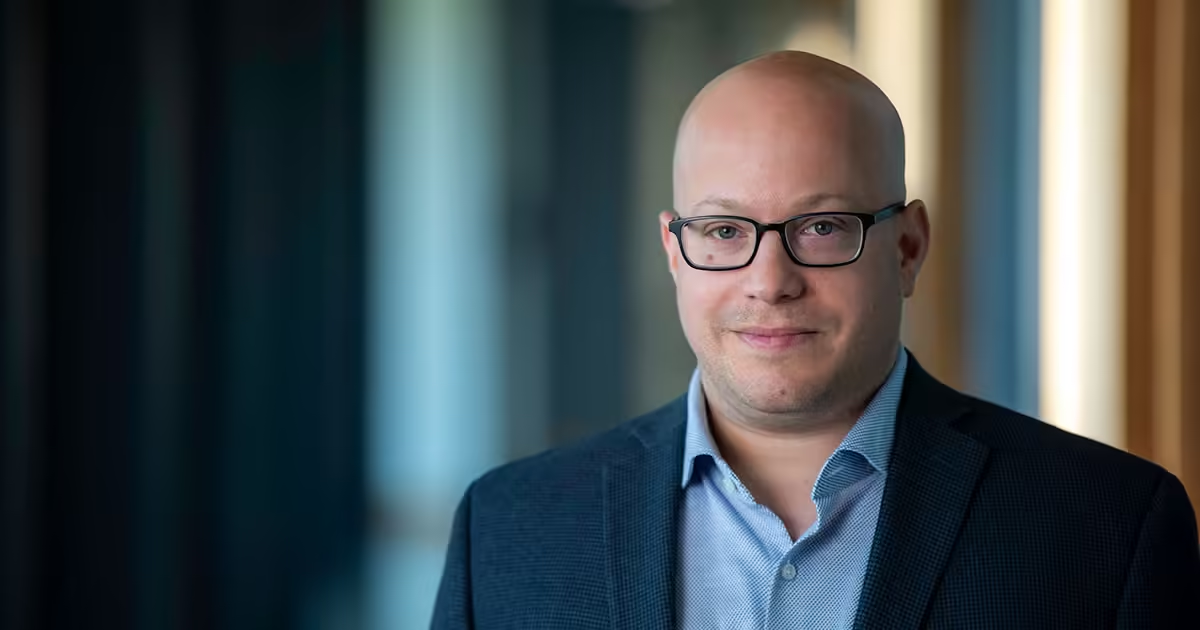

Rivnay’s work centers around soft electronics to communicate with the body, and materials that mimic how biological systems send messages. His research also combines electronic materials with living tissues to create devices that can make and release medicine directly into patients, potentially personalizing medical approaches and ensuring treatments are correctly administered, even after the hospital or doctor’s visit ends.
As part of a large Advanced Research Projects Agency for Health (ARPA-H) funded project, Rivnay currently is exploring and developing biohybrid devices to produce native biologic drugs that can deliver personalized immunotherapy to ovarian cancer patients. In a parallel effort, they are developing a living pharmacy to provide digital prescriptions to treat type 2 diabetes and obesity. These efforts have required Rivnay and his team to create a device that can split water to produce oxygenkeeping transplanted cells alive for durable cell therapy.
This year, Rivnay is launching the Living Electronics Initiative at Northwestern.
“The intersection of electronics and engineered biology creates a tremendous opportunity to build technologies that can sense, respond, and work with biology in entirely new ways,” Rivnay noted, adding that there is broad applicability across medicine sensing and therapy, robotics, manufacturing and the environment.
Among his many honors, Rivnay has received the Faculty Early Career Development Program (CAREER) Award from the National Science Foundation, the US Office for Naval Research Young Investigator Program Award, was a 2025 American Institute for Medical and Biological Engineering Fellow, and was a Clarivate Highly Cited Researcher from 2023-2025.
William Denselthe Robert L. Letsinger Professor of Chemistry at the Weinberg College of Arts and Sciences, received the Blavatnik National Award in Chemistry in 2020. Six other Northwestern faculty have previously been named finalists.
Source: www.mccormick.northwestern.edu

