



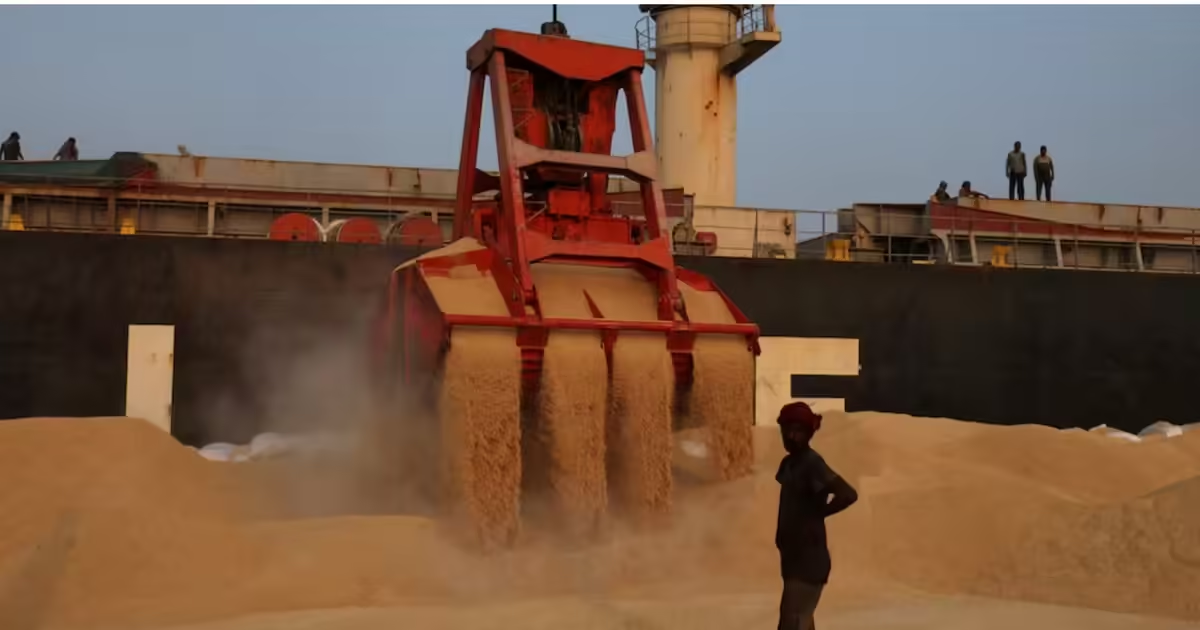

Niger became India’s biggest declared soybean supplier in the first seven months of 2026, despite producing less than 100 tonnes of the crop annually, according to industry assessments cited by Reuters.
India imported 380,868 tonnes of soybeans declared as coming from Niger during the period, up from zero a year earlier. Overall imports also jumped to a record 909,606 tonnes, compared with just 1,996 tonnes in the same period in 2025.
“The production data of soybeans in Niger is very much less. Therefore, it appears that import quantity exceeds the usual levels of production and export capacity of Niger,” India’s customs department said in notices sent to importers.
Authorities are now asking importers to prove the shipments qualify for duty-free treatment and provide records showing how the cargo moved from landlocked Niger.
Why Niger gets duty-free access
Niger qualifies for India’s Duty-Free Tariff Preference scheme for least-developed countries, allowing eligible products to enter at reduced or zero tariffs, while Nigerian soybeans generally face a 45% duty.
India extended the preference to Niger in 2017, but the sharp rise in soybean shipments has drawn scrutiny because the country has negligible production despite becoming India’s biggest declared supplier in the first seven months of 2026.
World Bank WITS/UN Comtrade data shows Nigeria exported about 472,000 tonnes worth roughly $118 million in 2024, with Pakistan, India, Canada, France and Turkey among its leading markets.
Importers push back
As customs authorities seek proof of origin for shipments declared as coming from Niger, Indian importers say they relied on documents supplied by overseas sellers when clearing the cargoes.
“We imported the soybeans after suppliers told us they originated in Niger and provided all the necessary documents,” one importer who received a customs notice said.
“It is not possible for us to physically travel to Africa to verify the origin ourselves,” the importer added.
Togo and Benin could gain
The disruption could strengthen the position of Togo and Benin, which are established suppliers to India and also qualify under the same duty-free preference scheme as Niger.
In 2024, India imported about 221,619 tonnes of soybeans from Togo and 92,756 tonnes from Benin, according to World Bank WITS/UN Comtrade data.
If Indian customs determine that the disputed cargoes were mislabelled, importers could be required to pay the full 45% duty.
Source: africa.businessinsider.com