




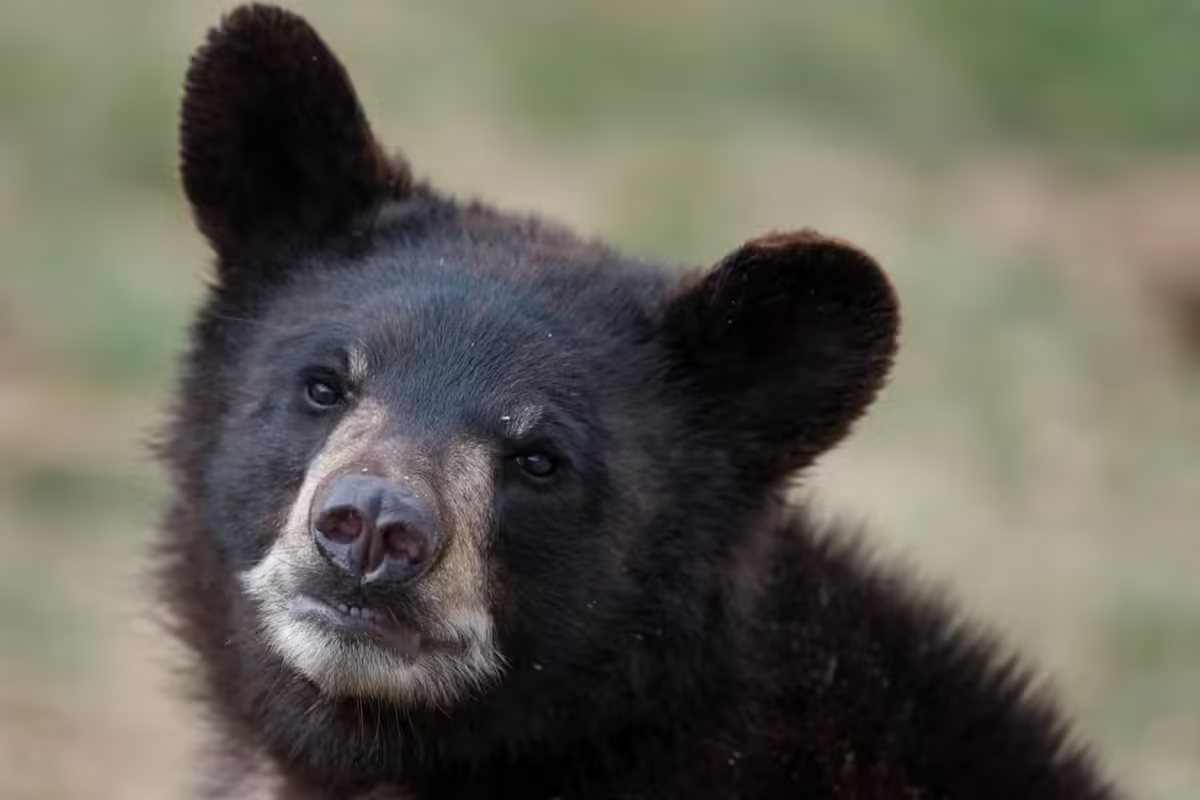

A family boating on Okanagan Lake in British Columbia watched a black bear cub go from swimming normally to struggling in the water.
Here’s what to know
Christina Zamniuk said the cub’s “little nose kept going under the water and he was blowing little bubbles,” according to the CBC.
The family pulled the shivering cub onto their boat and affectionately nicknamed it Boo Boo. This wasn’t just a dramatic rescue; it also highlighted how quickly wildlife emergencies can unfold when animals and people cross paths in the same recreational space.
The Zamniuks didn’t step in right away because they thought the cub would finish the swim, but that changed when, as Christina Zamniuk put it, it “could barely paddle anymore.”
After rescuers lifted the cub out of the lake, it shook from the cold before warming in the sun.
Seeking advice, the family contacted the provincial Conservation Officer Service and the B.C. SPCA, which told them to head for shore and keep contact with the animal to a minimum.
At the shoreline the cub appeared to be heading for, it hesitated to leave the boat before finally swimming in and disappearing into the woods.
The Conservation Officer Service later confirmed the incident and said officers had not received further reports of a suspected orphan cub in the area.
More background
WildSafeBC, an education program focused on preventing conflicts with wildlife, said the outcome appeared to be positive for both the cub and the family that helped it.
In an email, the organization said, “Black bears are usually good swimmers, and this case is rare that the animal would need human intervention.”
A spokesperson for WildSafeBC’s Central Okanagan branch also reminded the public to avoid contact with wildlife. The group said bears are especially active in September, meaning encounters may become more frequent, and that if a cub is nearby, its mother is likely close as well.
At places like Okanagan Lake, a distressed cub may trigger the instinct to help, but an adult bear protecting its young can just as quickly put humans in danger.
Zamniuk said officials strongly urged the family to avoid unnecessary contact with the cub.
“They were just so adamant about us not touching the bear because I guess if you have your human scent on them or they get too used to people, then they can’t survive on their own,” she said.
What can be done?
WildSafeBC said the Conservation Officer Service should be the first call whenever a wild animal appears to be in distress.
Christina Zamniuk said Boo Boo was reluctant to part ways as the rescue ended.
“He wanted to stay with us. So, we gave him a little shove and he plopped in the water, he swam to shore and we saw him run off into the woods,” she said.
Where can I learn more?
Other bear encounters show how quickly things can change when people get too close to cubs. They include unusual bear behavior in British Columbia, on trails, and in crowded tourist areas.
• In British Columbia, a bear cub was filmed climbing into a dumpster behind a business.
• On a trail, a startled hiker captured a sow protecting its cubs nearby.
• In a national park, tourists moved uncomfortably close to a young black bear.
• In another tourist encounter, a visitor tried to high-five wild bears despite obvious risk.
Get TCD’s free newsletters for easy tips, smart advice, and a chance to earn $5,000 toward home upgrades. To see more stories like this one, change your Google preferences here.
Source: www.yahoo.com

