




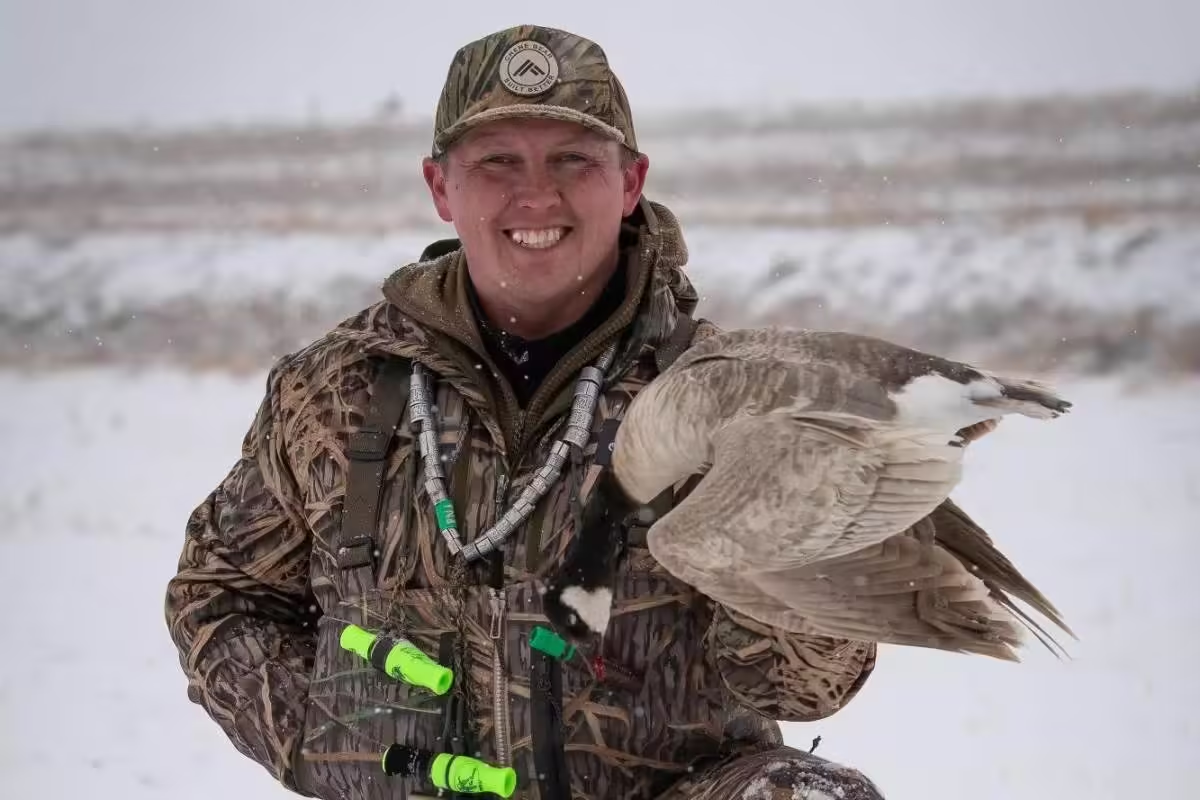

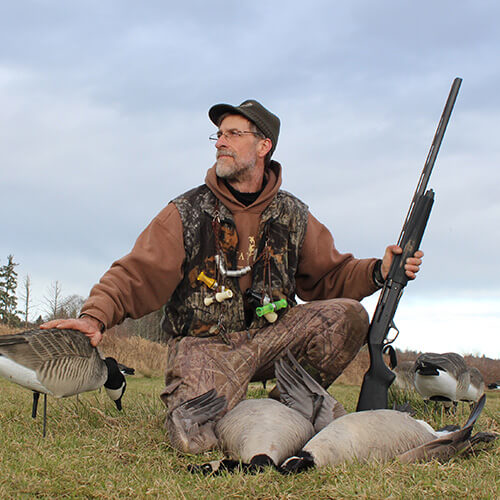
Living and guiding on the Front Range of Colorado, Forrest Carpenter is not only a talented contest caller, but one of the best all-around goose hunters in the game; especially when it comes to hunting lesser Canadas. (Photo courtesy of Forrest Carpenter.)
WILDFOWL Magazine is on a mission to bring you the best goose hunting tips and tactics from pros across the nation. These tips will range from calling advice to scouting how-tos and everything in-between. With interviews featuring champion callers to the most talented guides in the game, our goal is to bring you the info you need to start stacking up geese every time you hit the field!
Well-versed in the ways of wildfowl, Forrest Carpenter, 36, calls Berthoud, Colorado, and The Front Range home. “I’m a contest caller,” Carpenter told me, “and a waterfowl guide. I started guiding here on The Front Range back in 2005. Lessers? When they started moving (into the area) around that same time, our game changed from hunting greater Canadas to primarily focusing on lessers. Now, the lessers don’t push as far south as they used to, and we get to hunt ‘em all season instead of just a couple weeks at a time.” An accomplished pilot, Carpenter currently builds content for his YouTube channel, ‘Faithful Migration Outdoors.’ Here, the young competitor talks specifically about hunting lesser Canada geese.
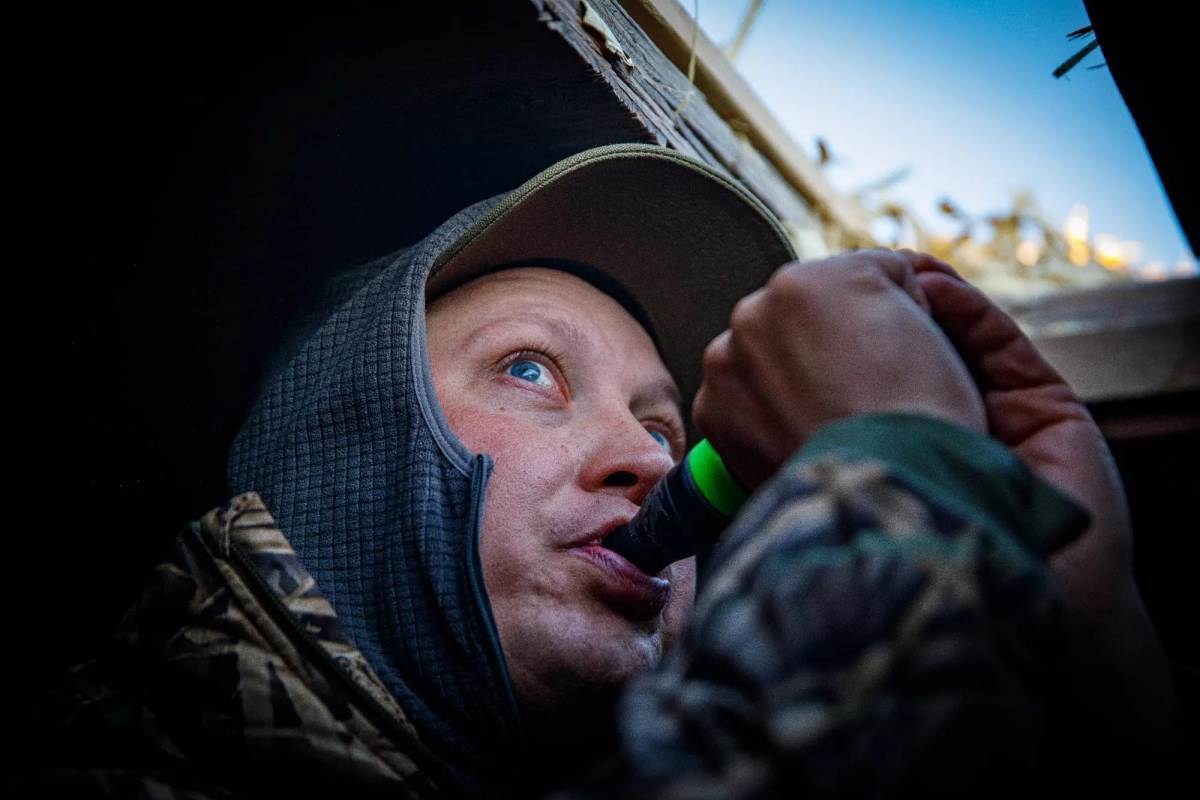
WILDFOWL – Lessers. What’s the primary difference between lessers and big Canadas, say Washington westerns or Ohio giants?
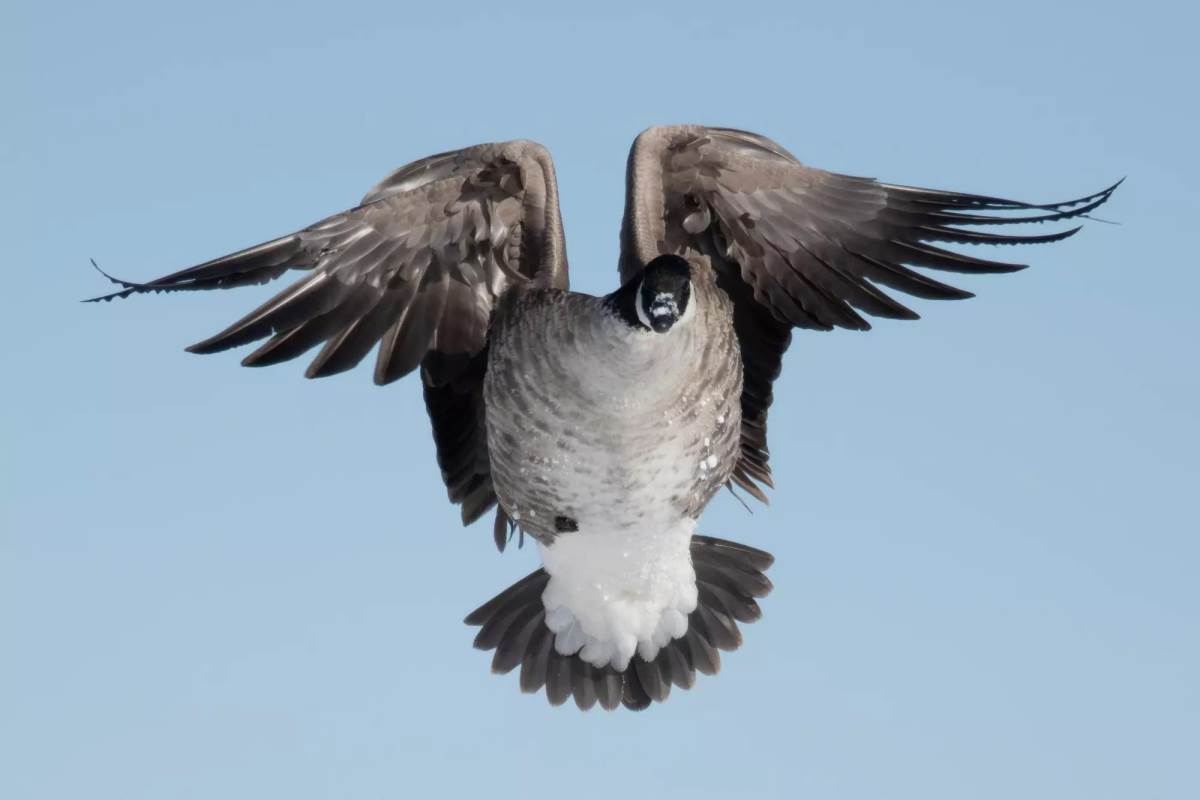
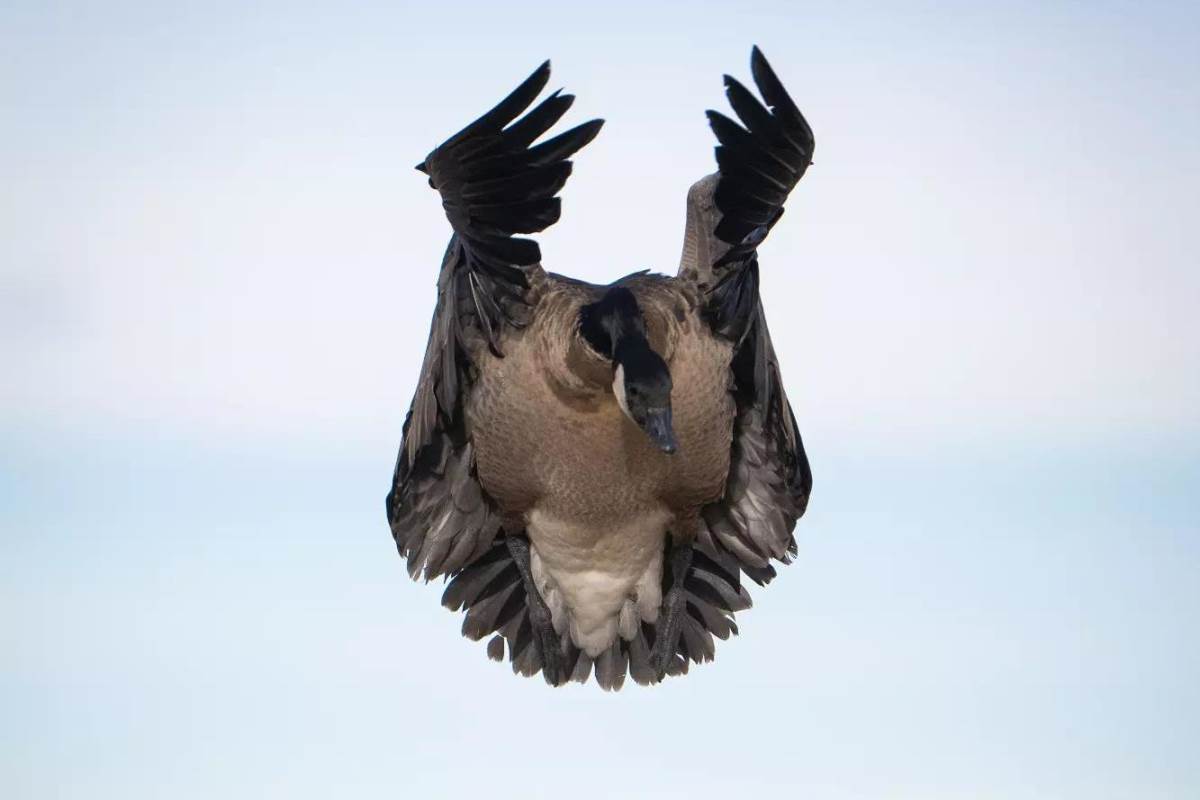
Carpenter – There’s a lot of difference between them. It’s easier to say they share a paint scheme, and that’s about it. Everything from the way they work to the way they listen to a call. The amount of calling they want to hear. The way they approach a spread and how you have to hide even feels different. You’re spending a lot more time under lessers, where the bigger geese will go out wide and get lower. With lessers and no wind, they’ll circle directly above you and you really have to be well hidden. Better, in my mind, than when you’re hunting the big ones.
Advertisement
WILDFOWL – So if a hunter has a lot of snow goose experience, and they have a tendency to work vertically from on top, does he have a leg up on the guy who doesn’t know snows?
Carpenter – I would say very much so. Outside of your experience likely running a flute or a short reed, everything else (about lessers) runs toward snow goose or even specklebelly hunting. Typically, lessers aren’t going to be flying 30 or 40 yards off the ground. And instead of doing wide circles around your hide, all three of those – lessers, specks, and snows – are going to be a little higher and, again, work more vertically.
WILDFOWL – Scouting is scouting, right? Is there any difference between scouting lessers and scouting big geese?
Advertisement
Carpenter – I think so. There are fields where the birds go year after year. But at least in my area, the big geese aren’t feeding in big enough flocks to be seen, unless you have a high vantage point. If I’m going into a new area and chasing big Canadas, I’ll try to get somewhere high where I can overlook a roost. With the lesser, they’re often in large enough flocks that I can often be anywhere and see a big ‘train’ of geese working. In that respect and again, they’re often like snow geese where you have a mile-long line of geese.
WILDFOWL – Switch gears, Forrest. True or false. All Canadas are the same when it comes to concealment?
Carpenter – I’d say false. Like we discussed, when lessers approach a spread, unless it’s a windy, windy day, they’ll typically work vertically. They’ll spin down over a spread, thus it’s very important to be hidden from directly overhead and to make sure you’re concealing any movement in those blinds. If I’m hunting big geese out of an A-frame, I’m a little less concerned about how things look from above, but more focused on how things look out front. With lessers, I’ll grab tumbleweeds or extra bundles of grass to stack on top of the blind to cover that gap. I’m not lazy, but with big Canadas, I think you can get away with a little bit more.
WILDFOWL – Do you need lesser decoys to decoy lessers?
Carpenter – You don’t need them, (but) I would say the benefit to lesser decoys lies in those last 60 yards. If you have a big spread of anything, you’re going to get some attention. And you don’t need a big spread to be successful hunting lessers. I’ve killed so many lessers over Bigfeet and the old Super Mag shells, and I know that size is not THE determining factor. I’d say that while greater Canadas tend to avoid lesser Canadas, lesser Canadas will often go where the resident greater Canadas go because the residents are used to getting shot at so they go places where it’s safe. Now, I’d say the benefit of having lesser decoys is when the birds get to the point where they’re starting to finish or when they’re hitting the ground, they’ll stick longer and (feel more secure) in smaller decoys.
WILDFOWL – Another true or false. A lesser spread ALWAYS needs big, big numbers?
Carpenter – False. I will typically use a smaller spread if: (A) I can be where the geese want to be, and (B) if I’m in a place where I can hide very well. If I have to hide in the decoys, I use big numbers to hide me. Conversely, if I have a great place to hide and sit outside the spread, they’re less likely to swing wide and land 150 yards out. When I run a big spread, it’s often 300 to 400 yards long. I want to give them space to spin WAY out there, lose altitude, and then finish with the main body of the spread.
WILDFOWL – Let’s talk spread design. Specifics?
Carpenter – My typical lesser spread consists, generally speaking, of about 10 dozen Dave Smith lessers and cacklers. My generic spread is going to look something like a ‘comma,’ a ball with a long tail. Now, you want to go either very loose or very tight. One or the other, and that’s based on a food source or temperature or hunting pressure. I’ll either have them stacked super tight, like cacklers in small ball with a 30-yard string coming off the back of it. Or I’ll have three to four steps between each decoy and I’ll have that tail extended 50 or 60 yards.
WILDFOWL – True or false. You can call lessers just like you call big Canadas?
Carpenter – I would say true. You can. It’s not always the most effective, but you absolutely can. When I’m calling lessers, I give them as little as it takes. Sometimes I have to stand on the gas pedal and give it everything I’ve got to get them to make a couple turns. Primarily, though, my focus is on sharp clear notes. A good sharp cluck. A good high-pitched moan. Accurate sounds, especially if you’re hunting with a group and you get three or four guys who can make a couple good sounds, it’s better to have that rather than throwing a wall of noise at them.
WILDFOWL – So multiple callers can be an asset when working lessers?
Carpenter – I would say multiple callers are almost always helpful. While one guy’s huffing and puffing, a couple guys can be backing it up and keeping the sound going. On the days when you need less calling, if you have a couple talented callers…well, each guy is doing two or three individual geese. This helps do away with the musical ‘human rhythm,’ and helps the calling fall into a more realistic random pattern. And above all else when it comes to calling lesser Canadas, I’ve found the greatest success in having a few guys sound like a few geese apiece. Semi-random intervals.
WILDFOWL – Final one, Forrest, and I have to ask. Your Go-To calls for in the field are…?
Carpenter – I carry a Tim Grounds G-Force. That’s my big goose call. My little goose and general “traffic running” calls are going to be a Tim Grounds Real Thang or a G-Overhauler. A short version of a short reed with that short insert that I’ll tune very high-pitched, not just to accurately match the sound of a lesser, but moreso because that higher pitched tone carries better, especially in the wind. So you can make some very realistic lesser Canada sounds on those. And then I always, always, always have either a Grounds Half Breed or a Grounds Short Mag tuned very high. Those are what I call a “sound cannon.”
M.D. Johnson
Video That May Interest You
Source: www.wildfowlmag.com

