




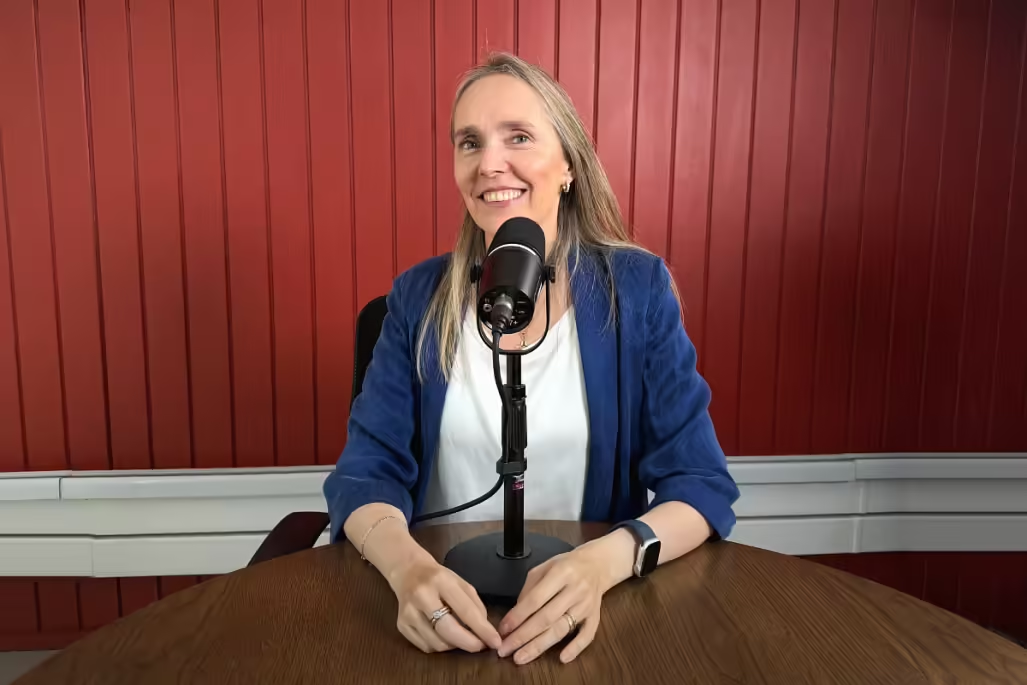

Elvira Montero was a girl when her dad – a serial entrepreneur – took her to explore the beacheswolves of the north He was looking for a place to build a resort like the ones he had seen in Europe, something that did not exist in Chile. He found a beach in the north, near Coquimbo, and on a sunny day, he crouched down next to him and told him that there they were going to make the best resort in Chile.. That’s how Las Tacas was born, she says. She saw a small beach, but he had in mind a marina and a breakwater that would not let the sand escape. There was a lack of palm trees, and with her sister Gloria they set up a nursery to grow them.
He also says that his father had a salmon farm, projects in the north and real estate developments in La Puntilla de Villarrica, and he took his three children everywhere. “My older brother, Gustavo, always laughs and says ‘I never had a vacation that didn’t have a background of my dad’s business ideas,’” says Elvira.
There, surely, Elvira began to dream of the day she would have her own company.
He studied commercial engineering at the Catholic University and his degree project, in 1999, was an internet supermarket. Then he studied programming to make web pages. When her brother Gustavo finished a postgraduate degree in optimization at UC, they began to work together: they began to develop custom software, she in the commercial field and he in the technology. His father was the investor and guarantor of the first bank loan.
This is how they made, for example, fish biomass simulator software for the Trusal salmon farm. But each project It required hiring new people, they ate up the margin and the model did not scale.
In 2012 they decided to take common problems they had seen from their customers, turn them into simple software, and lease it in the cloud instead of selling licenses. The father, who was on the board, did not understand it.
“You have big clients today with big invoices and big projects. And Elvira, are you telling me that you are going to start leasing software?” she says she told them. “Instead of billing millions of pesos, you are going to rent it for hundreds. This is not going to work.”
Gustavo answered him with a formula. “Look, dad, don’t worry, because the equation has P times Q. We are going to reach the volume.” Then he elbowed his sister. “Now, it’s your turn to go out and sell.”
Elvira had specialized in finance and defined herself as shy; sales were not her thing. He took a Google Ads course, incipient at that time, and went out to explore the Puerto Varas plaza store by store. “I slammed the door before they opened the door for you,” he says. The argument was that you didn’t have to buy a cash register, the home computer and a printer were enough.
They created three projects in parallel, one for sales, another for expenses and purchases, and another for payroll. They worked on the latter for about 10 months without looking at the competition and when they went out to see what price to put on it, they found many payroll platforms at very competitive prices. “We got a kick out of the thousandth floor,” he says.
They were left with sales, and from there came Bsale.
There was no local price reference, and they decided not to charge per user, contrary to the software as a service standard. “In Latin America it is so common to share the same user so as not to pay more,” he says. They indexed the price to the size of the company.
They joined Endeavor when they were selling less than $1 million a year. When they were thinking about going international, a mentor gave them advice. “Elvira, you have to eat ham in parts. Don’t go to another country until you have 2,000 clients.” Errors in Chile cost x and outside they cost 100x, he explained.
They went to Peru in 2018 with the idea of exporting everything: the way of selling and advertising. They wanted to sell from Chile and it didn’t work. “The Peruvian said that the Chilean spoke very fast, he didn’t understand him,” he says. She and Gustavo began to travel often to put together the Peruvian project with the rules there.
-And why didn’t they go out to look for a partner?
– Because we, very lofty, believed that we could do it alone. And you have to have partners when you need them, because relationships are not easy, they are like marriages. So we believed we could and said “let’s try.” And it went well for us.
There were 30 people in a rented house in Puerto Varas. one morning Elvira arrived first, put the key in and the door opened by itself. Inside there were all the papers on the floor and there was no computer left.
He sent everyone to work from home and went out with a suitcase to buy 30 computers in Puerto Montt, five in PC Factory, eight in Falabella. “We used all the credit cards and blew them up,” he says.
Another blow came from Google. At one point the way foreign digital services were taxed changed, Bsale paid the tax separately and Google interpreted that they did not pay full invoices. They lowered their Google Ads account, their only source of potential clients, with 10 salespeople who made a living from those calls. “From one minute to the next they turn down the switch and you don’t have any leads,” he says. After that they opened other channels.
The commercial engineer is a mother of three children. The eldest is a civil engineer and is doing a postgraduate degree in bioengineering in Milan, the middle one is studying mechanical engineering in the United States and the youngest is in school. Her husband, Carlos, was key, she says. He accompanied her from the beginning. Like her father, who made them cut the ribbon at every opening, Elvira got the children into the business. When they wanted to raise money, he gave them a box of rolls of printer paper with the Bsale brand and sent them to the center to give them to customers.
She remembers a counselor who came up to her, looked at her, and put his hand on her shoulder. “Elvira, you are going to stop the growth of your company because you have children and you cannot travel outside of Chile.”
She replied that she didn’t understand. “I am the one who is growing my company, and I have three children who accompany me in all this, we are a family,” she responded.
In the venture capital fever of 2020 and 2021, funds were constantly knocking on their door, says the entrepreneur. Bsale was profitable and growing, and her brother Gustavo did not want to sell, even though she was looking for a vehicle to grow faster. “In technology, not putting the flag in the country makes it super risky, because someone else comes, puts it up and positions themselves as the leader of the category,” he says.
In those conversations they met David Ortiz, today CEO of Siigo Latam, it was in an Endeavor course at MIT. The first email from that relationship is from about eight years ago. Siigo does accounting, expenses and payroll, the back room, and Bsale does the sales. Ortiz insisted for years and they came to negotiate, but in the final stage there was no price agreement and they cut relations for a couple of years. “We saw much more potential than they saw,” he says.
“The valuation of the company before was much lower than now,” he says. In December 2025 Gustavo told him that he was ready. “He told me ‘I want them to value us accordingly.’” That month they signed the letter of intent.
Visma and Constellation also approached, and there was no competitive process. “We might get paid more on the other side, but there was no synergy,” he says. “What we want is to take this to the next level and not wash our hands and go to Hawaii.”
-And why did you decide to go without an investment bank?
– I think it is advisable to have an independent financier, whatever the figure, someone to accompany you in the process. We did it directly, we had been talking with them for many years and they handled the concepts of the negotiation. I have dedicated my entire life, after that nudge that came to me, to uniting and conquering wills to make things happen. It seemed to me that it was much more appropriate to work on it directly because we had the skills to be able to do it.
She led the negotiation and Gustavo led the operation. The lawyers were Bofill Mir, with Octavio Bofill. “Elvira tells me, ‘you understand that we are going to have to give up some things and we are going to fight until the end.’”
Elvira refused to compromise sales goals. “If we are not going to control the company 100%, I cannot compromise goals, because it will not depend only on me,” he says. The withholding of a part of the price to cover contingencies hindered them for a while, and they unblocked it with representations and guarantees insurance that they half paid. “There is a lot of mistrust,” he says.
– You said yourself, they sell more than US$ 15 million annually recurring. One can get the idea that companies are more or less sold between three and five times. I don’t know if you can say anything about that.
– I can’t tell you about the amounts of the transaction because it is super confidential information, but I can tell you that we value it much more than that. And why? Because the company we have is a gem, it has an incredible product that is scalable. The synergies that it generates with Siigo have this multiplier that is not one plus one two, but is 10.”
Gustavo left the property and is working with the Siigo team on the integration. Elvira retains a stake and will work on bringing Bsale to more countries. Siigo operates in Colombia, Ecuador, Uruguay, Chile, Peru and Mexico.
– What motivates you to continue in Bsale?
– What moves me is to change the lives, transform the lives of those entrepreneurs and help them grow. It is changing the life of a person who has a commercial establishment, for example Sherwin Williams paint, who every day had to close his establishment at 6:00 p.m. and go home at 8 because he had to take inventory. Today with Bsale I changed his life, because at six he closes his business and goes home. You can give your child food, share with them, read them a story.”
Source: www.df.cl

