Hey all, Jason here.
Money20/20 is still two weeks away, but I’ve already started packing (not procrastinating for once!). My calendar is already filling up with various sessions I want to catch, meetings, and of course happy hours, dinners, and other side events. If you’ll be in Vegas and want to catch up, let me know by replying to this email, and we can try to find a time amidst the chaos of the Venetian.
A big if not totally unexpected piece of news dropped on Friday: the Independent Community Bankers of America, a trade group that represents smaller U.S. banks, filed a lawsuit against the OCC and Comptroller Jonathan Gould, arguing that the regulator’s move to grant trust bank charters to firms seeking to use them to conduct substantial non-fiduciary activities exceeds the authorities granted to the OCC by Congress.
I haven’t had time to fully digest the legal filing or speak to folks in my network about it, but you can expect to see coverage and analysis on it in next week’s newsletter.
Partner content: Nubank built an AI-first bank. Chime built its own banking core. Figure and Valon are rebuilding the mortgage stack.
At NerdCon, you’ll hear from the people behind those bets: what they chose, what they learned, and what they’re still figuring out.
The agenda is live, with leaders from Nubank, Chime, OpenAI, Remitly, Mercury, Figure, Valon and more.
Follow the mainstage conversations, bring the problem your team is wrestling with to a hands-on workshop, or pull up a chair at a roundtable.
Pick your quests. Meet us in San Diego, November 18–20.
Fintech Business Weekly readers save 20% with code FBW20.
Federal Reserve Board finalizes changes to enhance the transparency and public accountability of its stress test and reduce volatility in its stress test-related capital requirements (Federal Reserve Board of Governors)
FDIC Announces Conclusion of Independent Monitorship (FDIC)
Modernizing Financial Regulation: Initial Observations from eSLR (Fed Vice Chair for Supervision Michelle Bowman)
The Data Version of Godzilla versus Kong: FRED Takes on AI (Fed Governor Christopher Waller)
Financing the AI buildout (Brookings)
Q3’26: Rules for Banks but Not for Crypto (Fintech Takes Banking)
The Inevitability of Local Stablecoins (Lombard Notes)
Delusions of AI Governance: The Human-in-the-Loop Comfort Blanket (Fintech Snark Tank)
Stripe agrees to acquire Parafin to expand revenue opportunities for platforms and help small businesses grow (Stripe)
Listen: Fighting Fraud in the Age of AI, with SEON’s Tamas Kadar (Fintech Business Weekly)
If there is one overarching theme across the economy and politics in the U.S. at the moment, it’s “affordability.”
The term is vague enough to encompass a panoply of factors shaping Americans’ day-to-day lives: rising costs for the hallmarks of being “middle class,” including healthcare, housing, childcare, and education, inflation and rising interest rates, and a job market with the specter of AI hovering over it.
At the same time, policy shifts under the Trump administration have resulted in reduced subsidies to those who get health insurance under the Affordable Care Act and new restrictions on qualifying for Medicaid and SNAP, the impacts of which have yet to be fully felt.
These factors are contributing to declining consumer confidence and general dissatisfaction with the economy, despite continuing GDP growth and stock market records. This divergence is encapsulated in the idea of the “K-shaped” economy, in which a small proportion of Americans have seen their wealth balloon, while the majority of American households struggle to preserve the lifestyle they have.
Perhaps the greatest determinant of which branch of the “K” a household is on is whether their wealth and income are primarily derived from employment vs. from assets. Nearly two decades of low interest rates and, more recently, elevated rates of inflation have benefited asset owners, while those whose income is primarily or solely derived from labor have largely seen real purchasing power stagnate or decline.
This is reflected in recent Bureau of Labor Statistics data showing that labor share of U.S. GDP — the fraction of economic output that accrues to workers as compensation in exchange for their labor — dropped to just 52.8% in Q2 2026, the lowest since the BLS began keeping records.
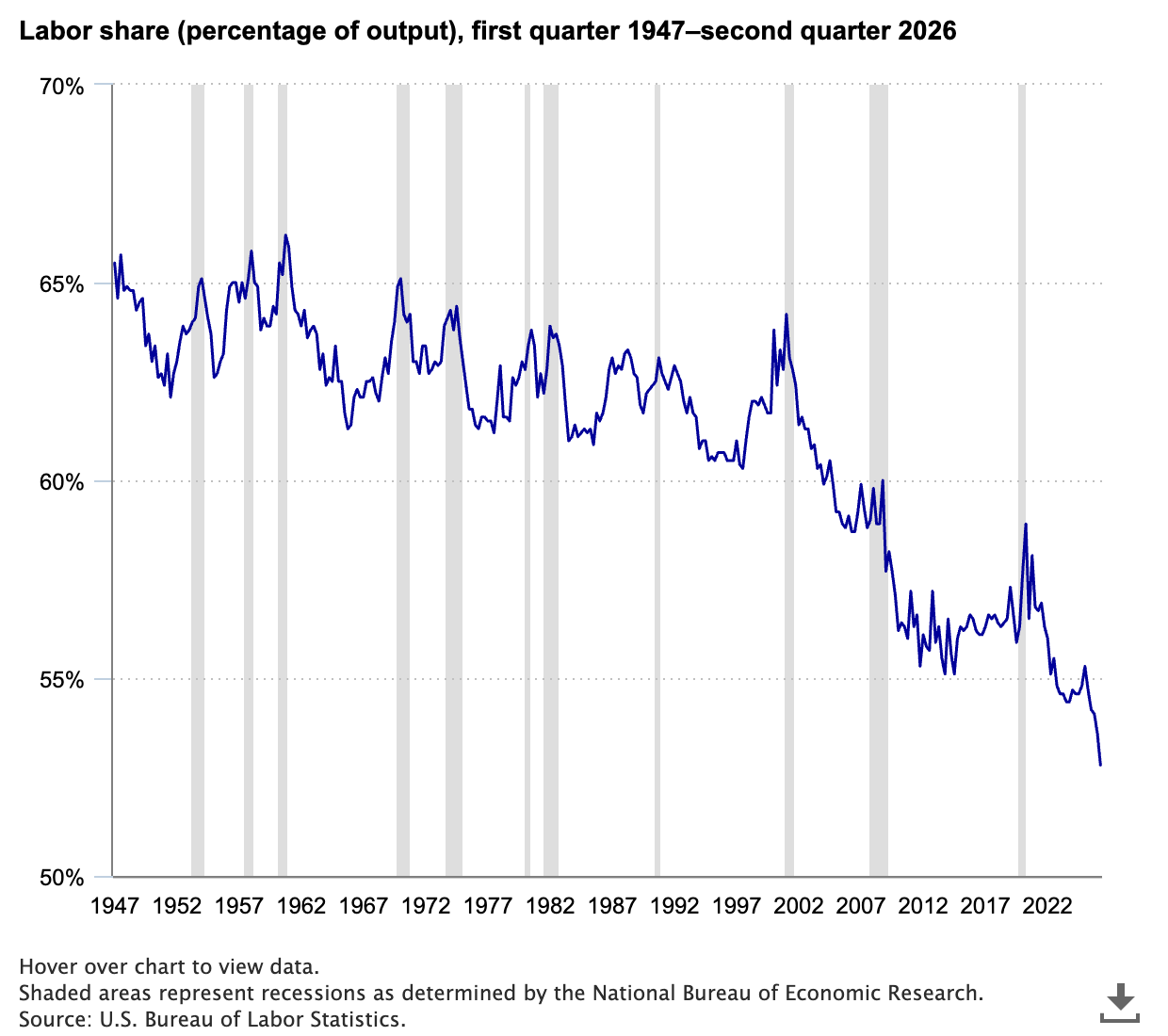
In 1947, approximately 2/3rds of economic output accrued to workers; even as recently as 2001, labor’s share of GDP was 64.1%.
Against this backdrop, we’ve seen the rise of more credit and credit-like products: cash advance apps, “no-fee” overdraft, earned wage access, and buy now pay later, which are often used as small-dollar short-term borrowing mechanisms to meet immediate consumption needs or pay other bills (eg utilities, cell phone, other debt payments).
With the markers of a middle class existence and, increasingly, basic financial stability seemingly out of reach for many, it should be no surprise there’s been an increase in “financial nihilism,” something industry peers like Alex Johnson and Frank Rotman have discussed and analyzed the roots of.
The explosion of gambling and gambling-adjacent products and services — often marketed under the guise of being an “investment” — is inextricably intertwined with the rise of financial nihilism. Crypto, sports betting, and, more recently, prediction markets offer an escape or even hope of sorts, like a contemporary, digital version of a scratch-off lottery ticket, while leaving the overwhelming number of people who use such products worse off.
The Financial Health Network’s 2026 Financial Health Pulse® report adds context on how American households are faring. (I linked to this report in last week’s newsletter, but wanted to take time to further unpack the data in the report this week.)
The Financial Health Network publishes the report annually, providing insight into how Americans’ financial circumstances are changing over time. The 2026 report is derived from a survey fielded in April and May 2026.
The report leverages survey responses to assess indicators of financial health across spending, saving, borrowing, and planning/protecting and to determine a zero to 100 “FinHealth” score. Those with scores between 0 and 39 are considered “Financially Vulnerable,” consumers with scores ranging between 40 and 79 are defined as “Financially Coping,” and those with scores of 80 to 100 are “Financially Healthy.”
The report found that moderate improvements in 2025 were reversed, with the share of respondents considered financially “vulnerable” rebounding to 17%.
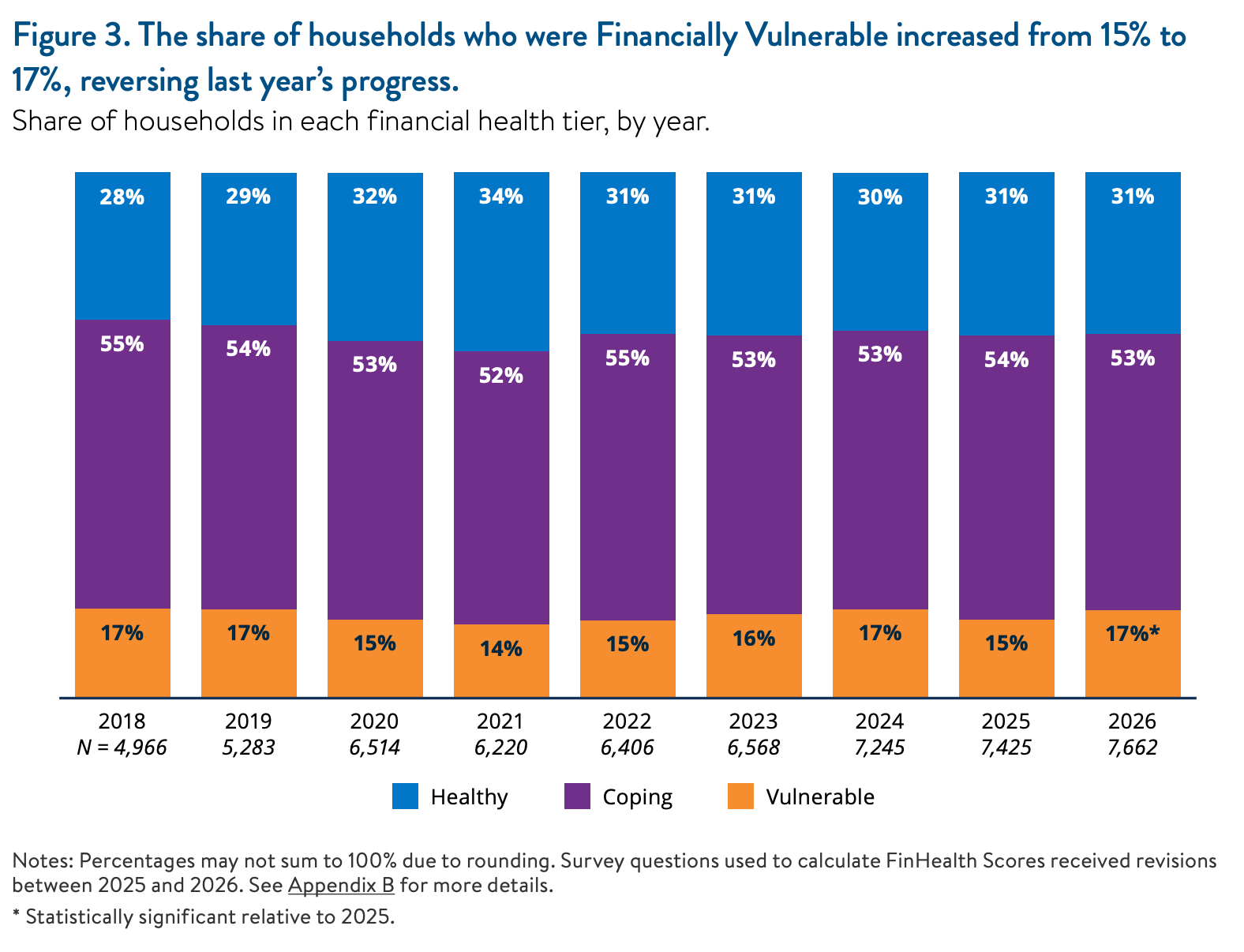
The longitudinal data reflect the impact of pandemic-era programs, like expanded unemployment, cash stimulus payments, and pauses of federal student loan payments. The positive impacts of those programs, as reflected in the Financial Health Pulse reports, had largely disappeared by 2023.
While pandemic-era inflation — to be fair, in part caused by the various support and stimulus measures — had come down from as high as 9% in 2022, it has rebounded since the start of Trump’s second term, with tariffs and energy market disruptions owing to the war in Iran pushing prices back up.
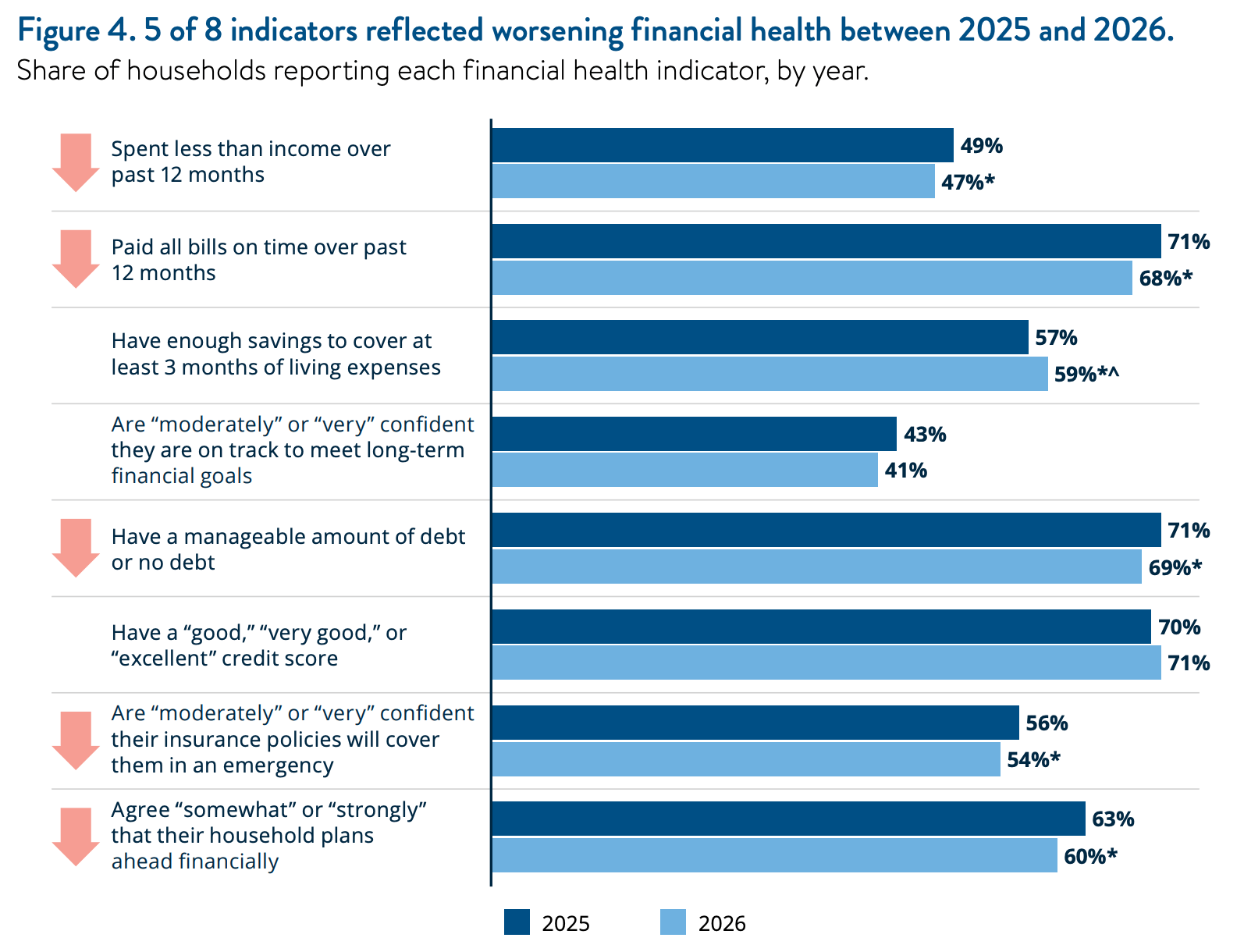
Specific indicators in the survey that deteriorated from 2025 to 2026 include the share of respondents spending less than their income over the past 12 months, the share paying all bills on time over the past 12 months, the share that have a manageable amount or no debt, the share that are “moderately” or “very” confident their insurance is adequate to cover them in an emergency, and the share that “somewhat” or “strongly” agree that their household plans ahead financially.
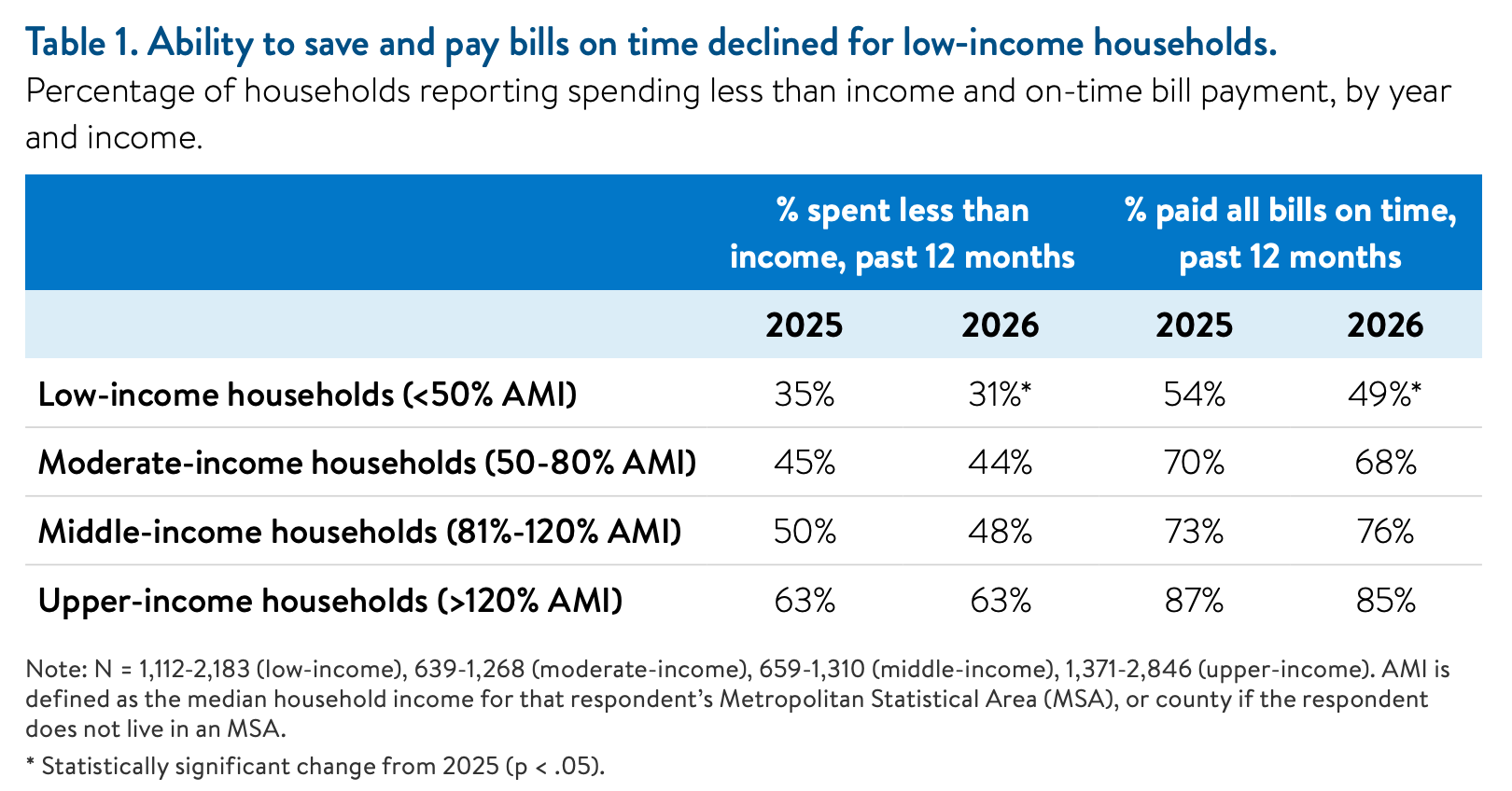
Unsurprisingly, lower- and moderate-income households are more likely to struggle to pay their bills on time and have any funds leftover to save. The share of low-income households whose income exceeded their spending dropped from 35% in 2025 to 31% in 2026, while the share of upper-income households whose income exceeded expenses remained unchanged at 63%.
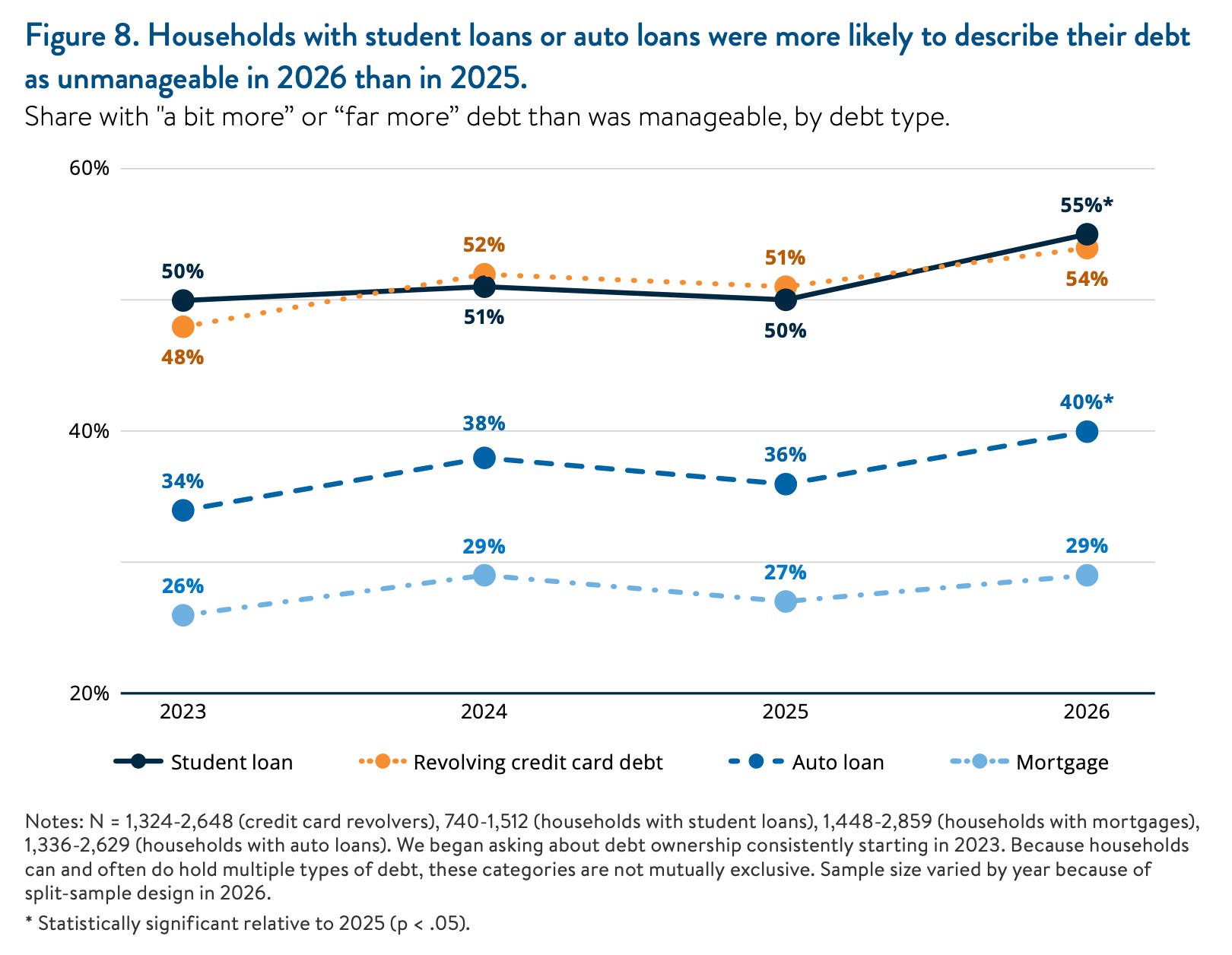
Households with student loans or revolving credit card debt reported having “a bit more” or “far more” debt than was manageable at rates far higher than those not carrying these types of debts.
The share of those with student loan debt indicating their debt load was too high to manage increased from 50% in 2025 to 55% in 2026, while the share of those with revolving credit card debt saying the same ticked up from 51% in 2025 to 54% in 2026.
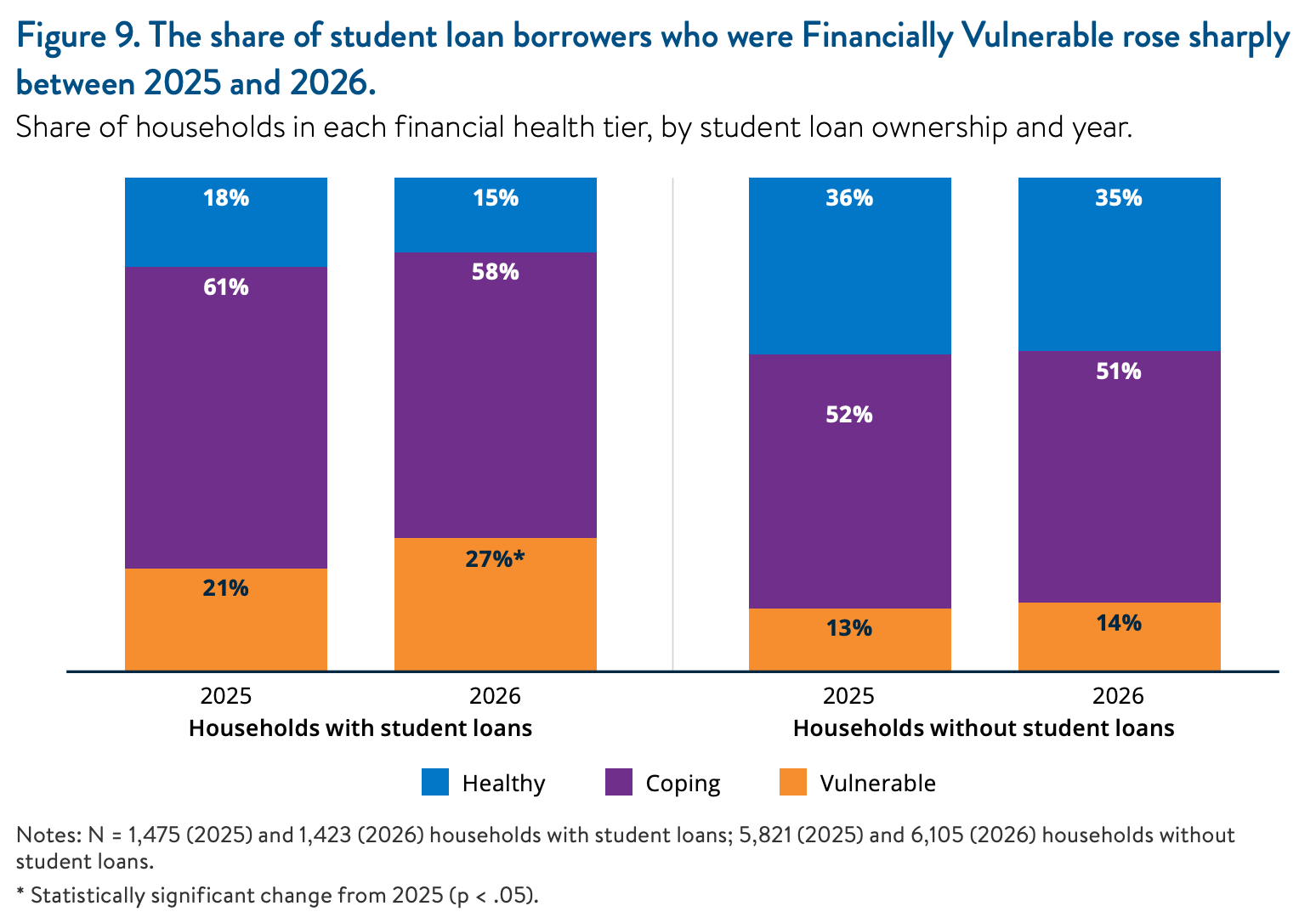
Households that had student loans were markedly more likely to be financially “coping” or “vulnerable” vs. those without student loans. In 2026, 27% of households with student loans were considered financially vulnerable, a jump of 6% points vs. 2025. Households without student loans saw just a 1% point increase (not statistically significant) in those considered financially vulnerable.
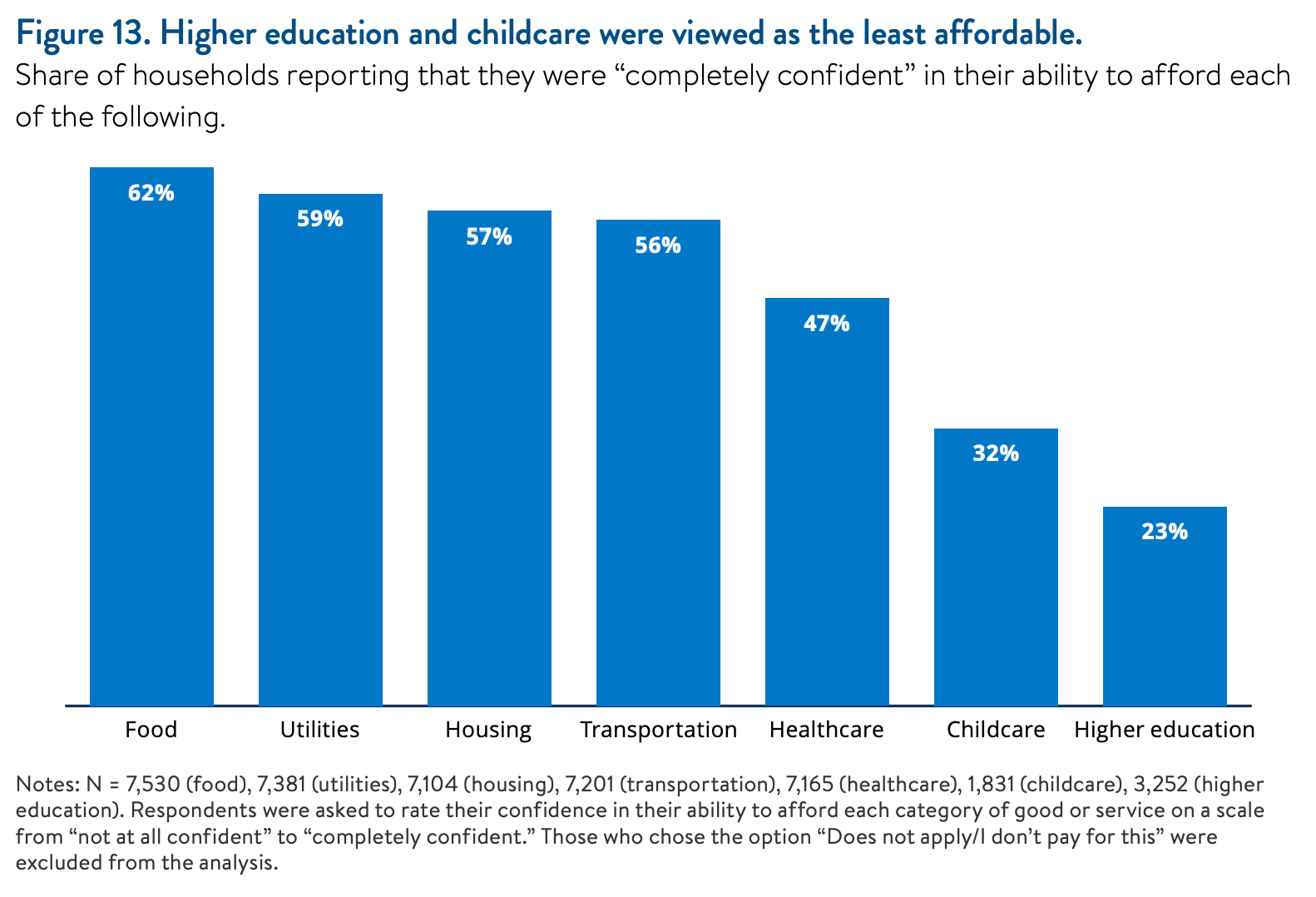
Households’ perception of the affordability of categories of goods and services paints a stark picture, with less than one-fourth considering higher education affordable, about a third deeming childcare affordable, and less than half viewing healthcare as affordable.
Fintech Business Weekly is made possible by the generous support of paying subscribers — bringing you independent analysis of banking, fintech, and crypto without fear or favor.
You can support my work by becoming a paying subscriber if you aren’t already. Paying subscribers enjoy:
-
access to the entire archive of nearly six years of newsletters
-
extended versions of the weekly newsletter, with additional content and analysis
-
and (for founding member tier) quarterly personal 1:1 fintech Q&A / strategy calls with me, tapping into my unparalleled knowledge of the intersection of banking and fintech and experience working in the sector, including helping to launch Goldman Sachs’ retail bank Marcus
You can also support Fintech Business Weekly by sponsoring a newsletter or podcast, putting you in front of 93,000+ of the most influential decision makers in banking, fintech, and crypto. Learn more about sponsor opportunities or request a media kit by dropping me an email.
Iran uses stablecoins, specifically Tether, to evade sanctions, fund regional proxies, and to purchase military drones, a report released last week by the Senate Permanent Subcommittee on Investigations says. The report was authored by committee ranking member Senator Richard Blumenthal (D-CT) and the minority staff.
Crypto and stablecoin proponents will often push back on criticism that criminals make use of these assets by arguing that, on an absolute dollar basis, far more illicit funds flow through traditional banking systems and payment rails than via crypto and stablecoins.
And while that is likely true, it elides the reality presented in news story after news story: whether state actors — Russia, Iran, North Korea — or criminal groups, those looking to engage in illicit transactions increasingly favor stablecoins and, specifically, Tether (USDT).
The report from the Senate Permanent Subcommittee on Investigations released last week adds context to how Iran uses Tether has a lynchpin in its shadow banking system.
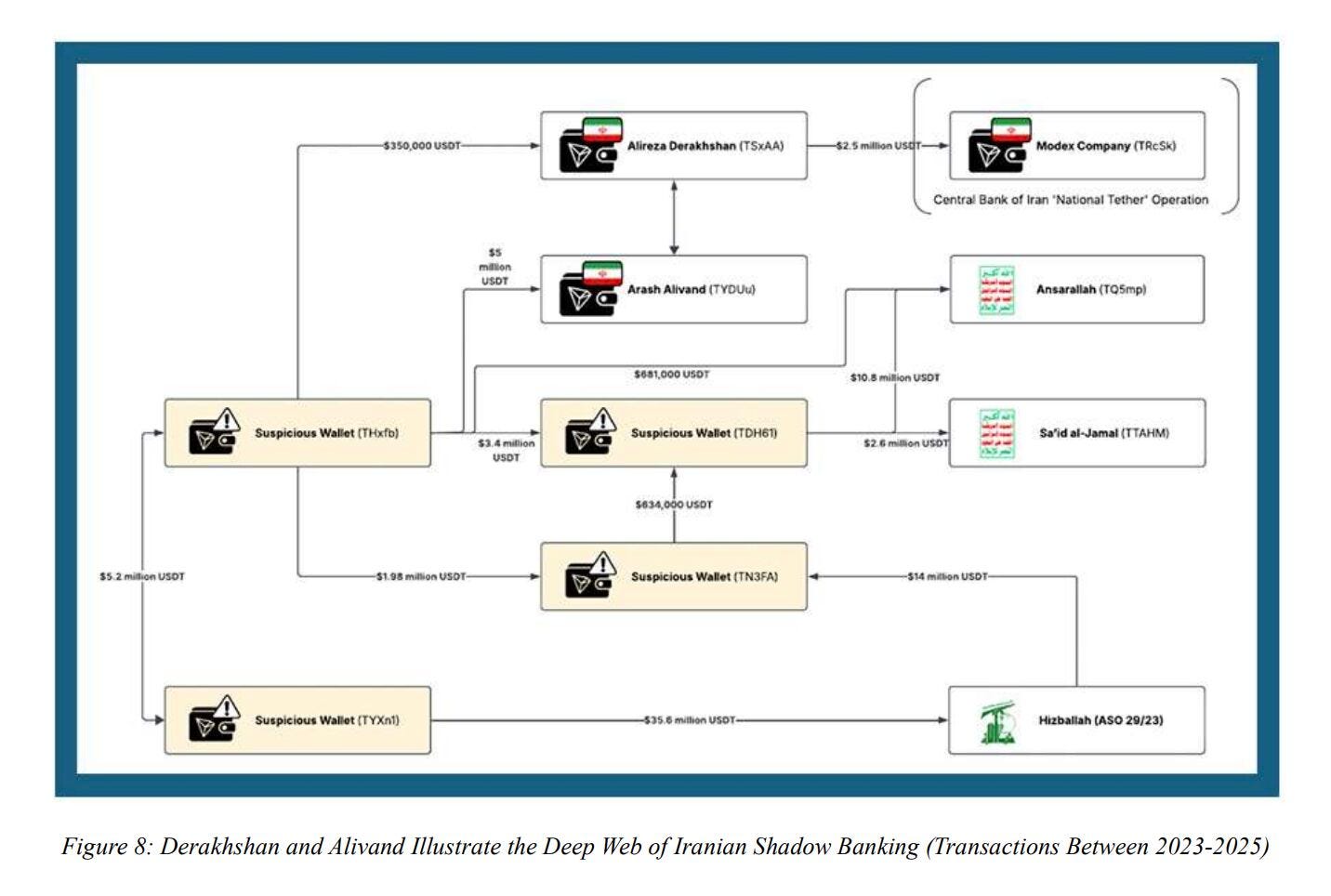
The report analyzed 846 wallets that have been sanctioned or targeted for seizure, finding that 84% of them transacted exclusively or primarily in Tether.
The ability to create near limitless, anonymous wallets and to move funds effectively instantaneously and irreversibly have made crypto a favored financial mechanism for bad actors.
Stablecoins solved key drawbacks of bitcoin, namely, the original cryptocurrency’s highly volatile value in dollars. And while Tether (the company) has the technical ability to “freeze” or destroy funds, the company is often limited and reactive in its approach to doing so, the Senate report argues.
Tether, which is nominally based in crypto-friendly El Salvador, “has stated that its compliance with OFAC sanctions is ‘voluntary’ and that it follows ‘OFAC guidelines,’” the Senate report says.
Owing to these favorable attributes, Tether “became a primary cryptocurrency for Iran, Hamas, Hizballah, and the Houthis beginning in 2023 and has expanded in scale since,” according to the report.
Tether’s role in Iran’s shadow banking system, the report says, is enhanced by crypto exchanges like Bybit, Kyrrex, OKX, Gate, and Binance, and through “over the counter” exchanges and hawala networks.
The consequences of these financial flows aren’t hypothetical. The Senate report links Tether as a funds transfer mechanism to Iranian proxies in the region, including Hizballah, the Houthis, and Hamas. Tether has also been used to make payments to secure components necessary to manufacture drones, the report says.
The report concludes by arguing that “[s]tablecoin issuers with a significant nexus to the United States, particularly those that offer dollar-denominated stablecoins, should be subject to American sanctions law rather than being allowed to hide behind foreign jurisdictions.”
Stablecoin issuers like Tether must be held accountable for repeated failures to prevent illicit finance and sanctions violations by law enforcement, the Department of Justice, the Securities and Exchange Commission, and OFAC, the report argues.
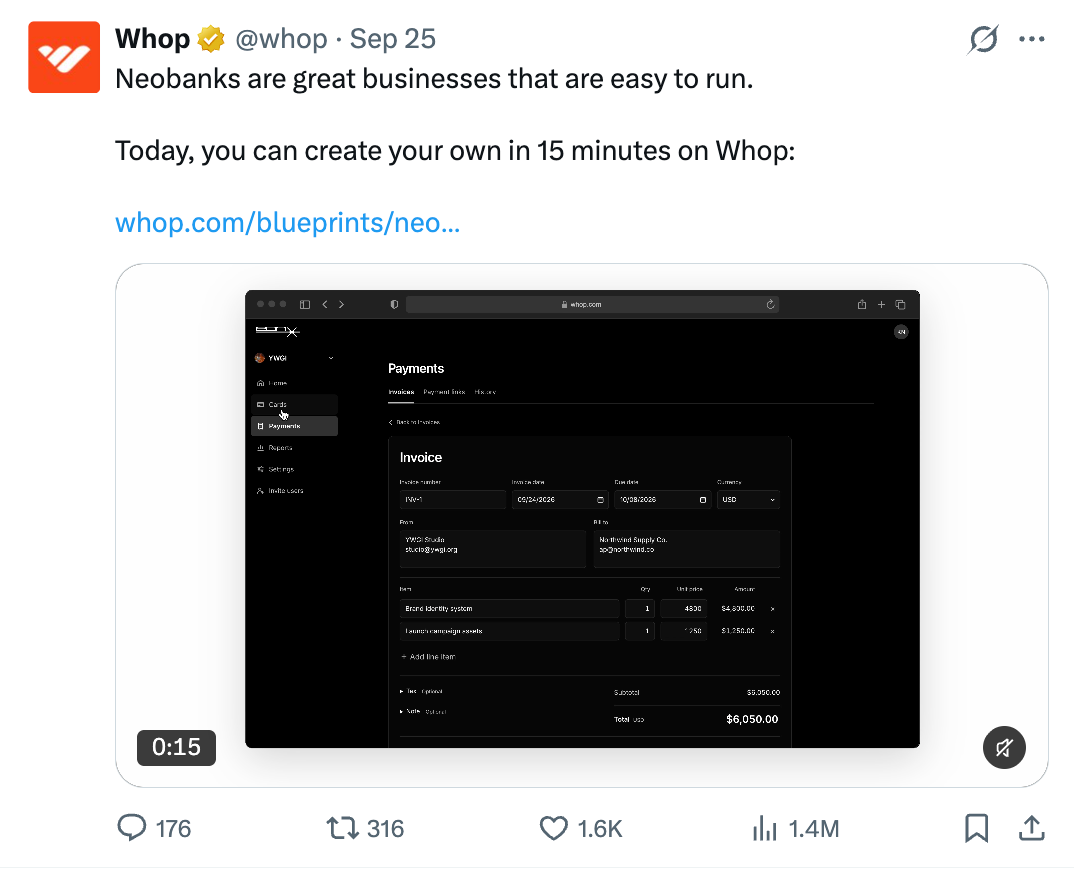
OpenUSD, the stablecoin issued by the Open Standard consortium that includes Stripe, Visa, Mastercard, core providers, crypto firms, and numerous banks, went live last week. Social commerce platform Whop raised eyebrows in fintech by offering creators on its platform the ability to launch their own neobanks, which the company describes as “great businesses that are easy to run,” in just 15 minutes. And OFAC and FinCEN target Russia’s “shadow banking” A7 Network — more on these stories after the paywall.
Source: fintechbusinessweekly.substack.com