



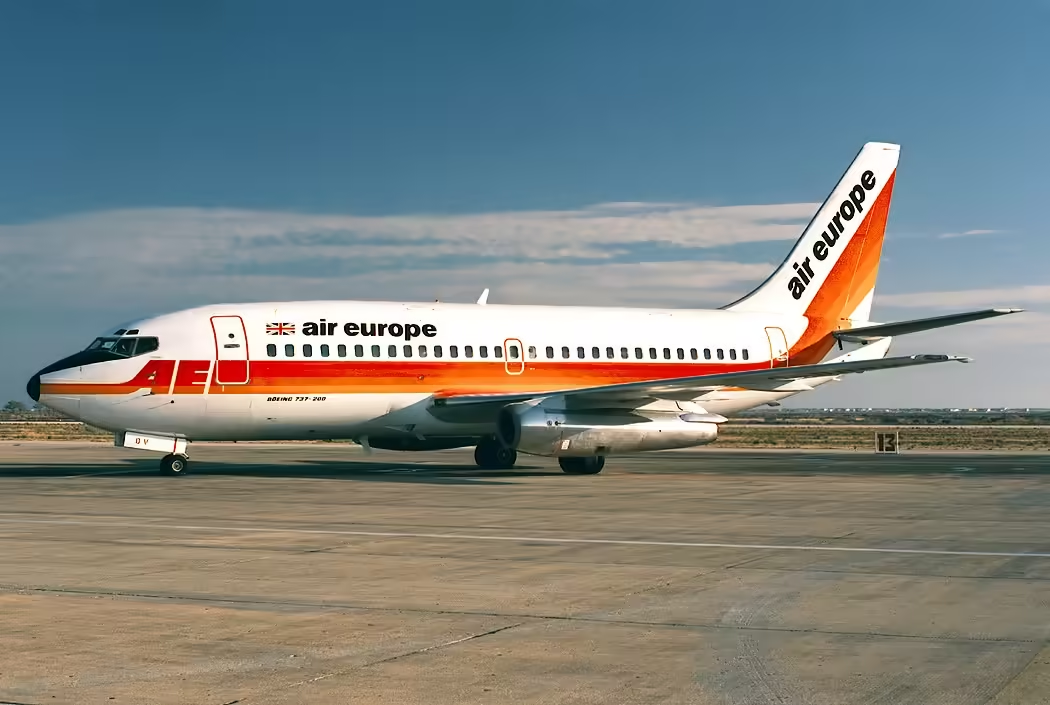

When Air Europe took to the skies from London Gatwick Airport (LGW) on 4 May 1979, few could have imagined that the new British charter airline would, within little more than a decade, develop into one of Europe’s most ambitious airline groups.
From its beginnings as a British charter airline operating Boeing 737s from London Gatwick, Air Europe grew into one of Europe’s largest independent airline groups.
Riding on a wave of success, the carrier set out with ambitious plans to become the first truly pan-European airline, with subsidiaries and bases spread across the continent.
However, its ambitious plans would eventually be derailed by increasing competition, rising fuel prices and economic recession, expediting the end of the carrier and its pan- European ambitions.
How Air Europe built one of Europe’s first pan-European airline networks
Air Europe’s beginnings were modest. It had been created the previous year as Inter European Airways by former Dan-Air executives Errol Cossey and Martin O’Regan, together with entrepreneur Harry Goodman, founder of tour operator Intasun Leisure.
The new airline’s principal purpose was simple: provide aircraft for Intasun’s rapidly expanding package-holiday business.
Yet Air Europe quickly became much more than an in-house charter operation, evolving into a major player in the European aviation market.
During the 1980s it built a substantial presence at Gatwick, moved into scheduled flying, acquired and established airlines in several European countries and created a network that crossed national borders at a time when European aviation remained heavily regulated and dominated by state-owned flag carriers.
By the end of the decade, the Air Europe name was no longer simply associated with a British airline. It had become the public face of a collection of carriers stretching from Britain and Ireland to Spain, Germany, Norway and Italy.
In an era before today’s pan-European airline groups were commonplace, this was an extraordinary achievement.
From Intasun’s airline to a major British carrier
Air Europe’s original business model was closely tied to the growth of package holidays. Its parent company, International Leisure Group (ILG), controlled Intasun, which became one of Britain’s largest tour operators.
Air Europe supplied the aircraft and seats required to carry Intasun’s holidaymakers to Mediterranean and other leisure destinations.
The strategy gave the new airline something many independent carriers struggled to obtain – a ready-made customer base.
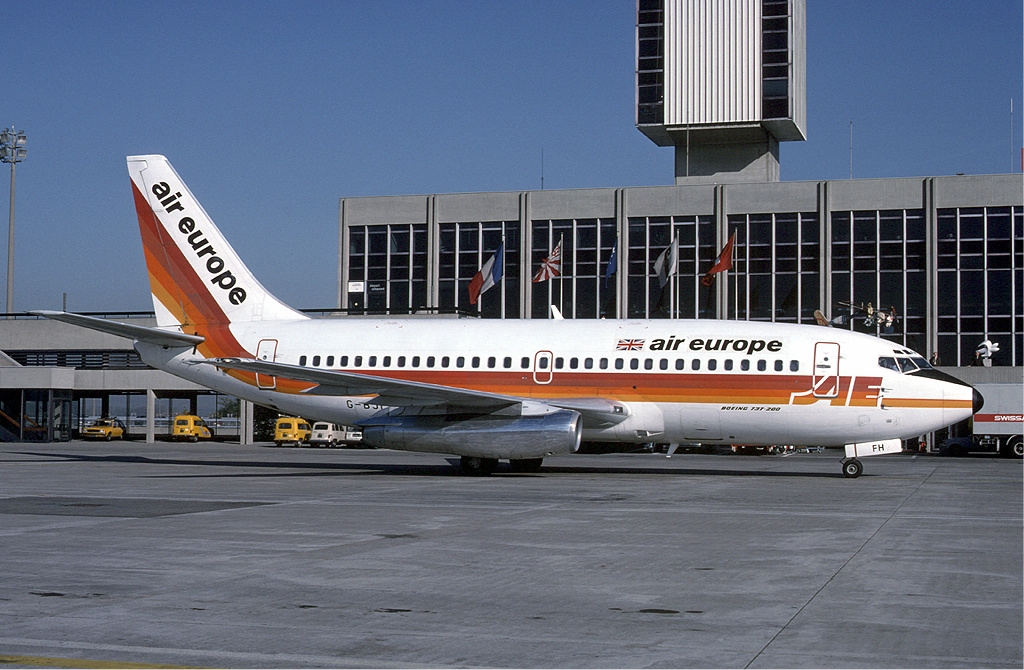
Air Europe began operations with three new Boeing 737-200 Advanced aircraft. A second base was opened at Manchester in 1979, followed by Cardiff in 1982. By then, the airline had grown to seven Boeing 737s and was carrying more than a million passengers a year.
The young carrier developed a reputation for operating comparatively modern aircraft and for pursuing an ambitious growth strategy.
Its close relationship with Intasun provided a steady flow of passengers, while the expanding British package-holiday market gave it room to grow. The next step was to move beyond charter flying.
1985: A move into scheduled services
Air Europe’s first scheduled service was launched on 2 May 1985, linking Gatwick with Palma de Mallorca, with Gibraltar following later that year, and Manchester to Gibraltar added in 1986.
Initially, the airline used scheduled services to complement its established charter operation. But its ambitions soon became much broader.
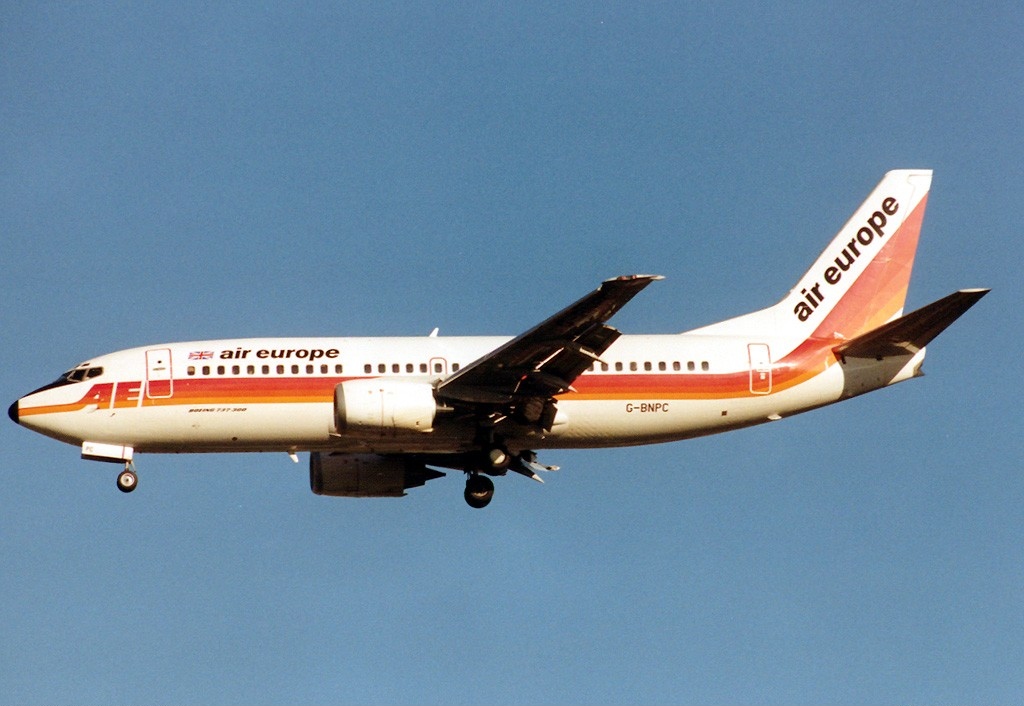
Munich was added in December 1987, followed by Paris in February 1988 and Brussels in April. Air Europe was increasingly becoming a scheduled European carrier rather than simply a British charter airline with a handful of scheduled flights.
The changing British aviation market also created opportunities. The acquisition of British Caledonian by British Airways in 1987 resulted in the surrender and redistribution of routes and slots at Gatwick. Air Europe was able to expand its presence at the airport and establish itself as one of the principal independent operators there.
By the end of the decade, its Gatwick network reached many of Europe’s major commercial and leisure destinations. Air Europe was no longer simply carrying British holidaymakers to resorts. It was competing for passengers travelling between European cities. That idea changed everything.
The most remarkable part of Air Europe’s story, however, was not its growth in Britain. It was what happened next.
Air Europe created an early version of the multinational airline model
European aviation in the 1980s was still largely organised along national lines. Flag carriers such as British Airways, Air France, Lufthansa and Alitalia were strongly associated with their home countries, while ownership rules and bilateral agreements made cross-border expansion difficult. Air Europe found a way to work within that system.
ILG began building stakes in airlines across Europe. In Spain, it created Air España S.A., based at Palma de Mallorca. Because Spanish ownership rules restricted foreign participation, ILG initially took a 25% stake. The airline operated as Air Europa.
Germany followed, with ILG acquiring a 49% stake in Nürnberger Flugdienst (NFD), a regional carrier based in Nuremberg. In Norway, it acquired a 33% interest in Norway Airlines, while in Italy it helped establish Air Europe SpA, initially taking a 35%.
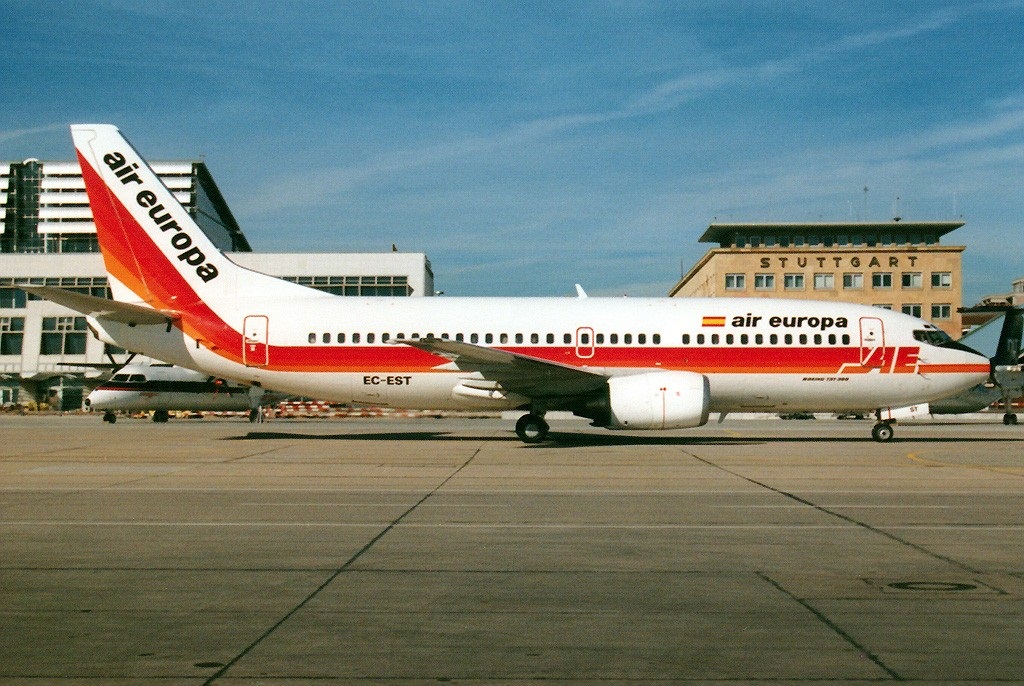
In Britain, ILG acquired Connectair and developed it into Air Europe Express, providing a regional operation capable of feeding passengers into the main Gatwick network.
The result was something unusual for its time: a family of separately registered national airlines operating under a common identity, branding, and commercial strategy.
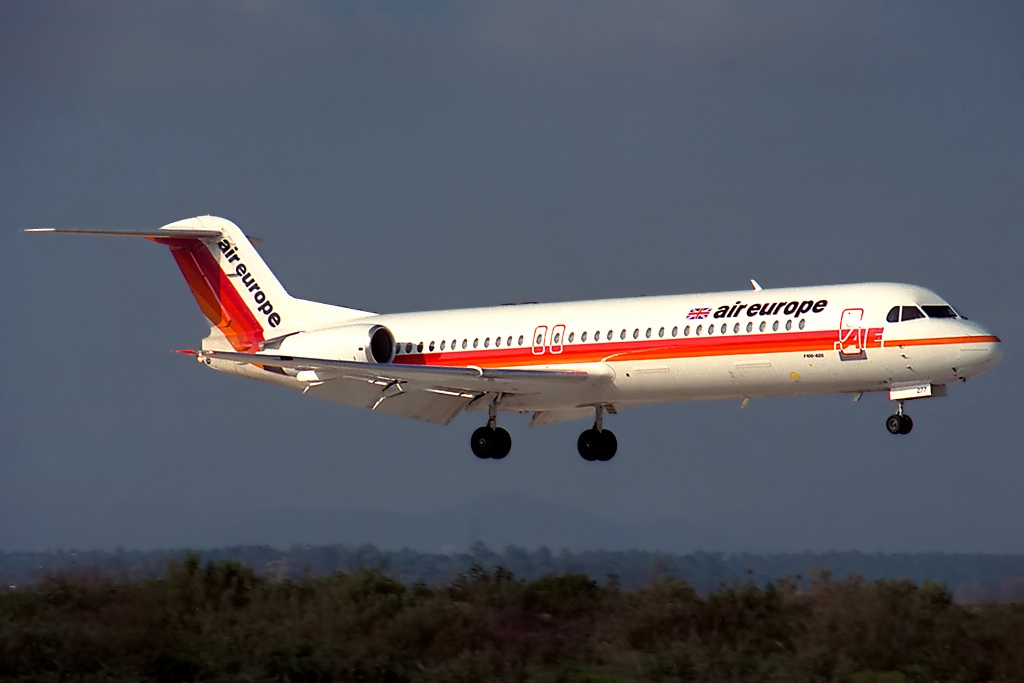
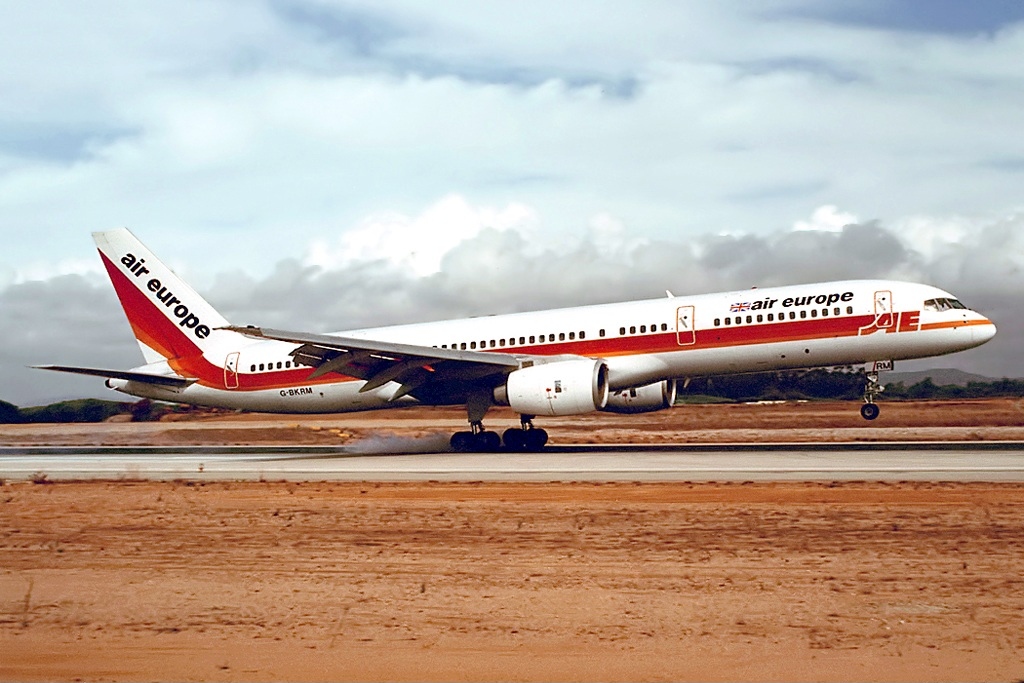
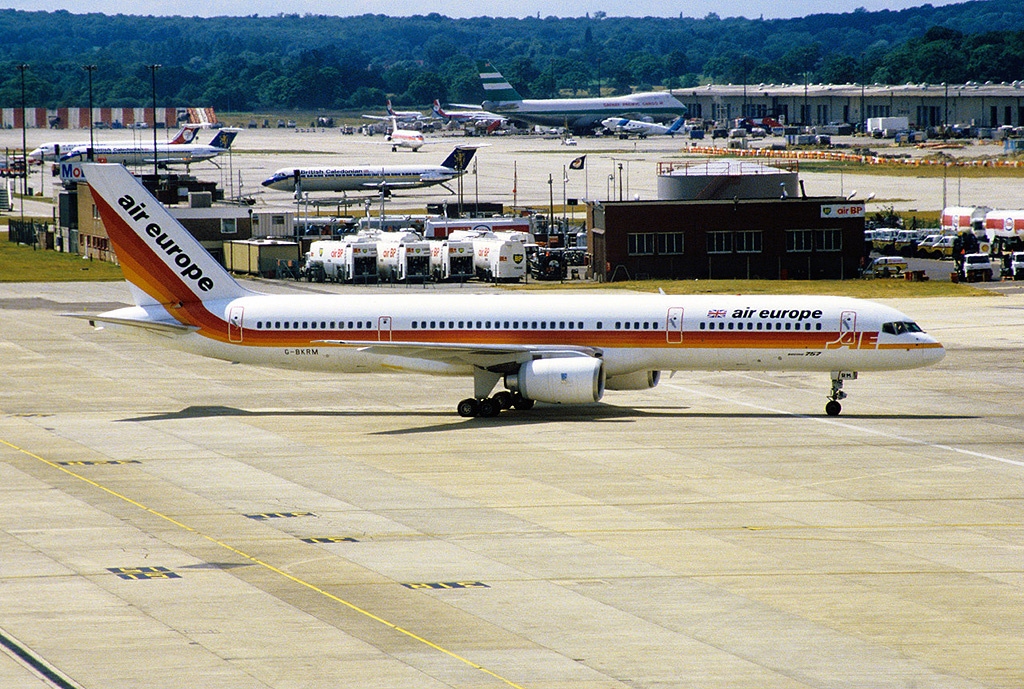
The aircraft made the connection particularly obvious. With the exception of Air Europa, the subsidiaries generally used the Air Europe name and adopted essentially the same livery.
National registration markings and small national flags were often the only obvious indication of where an individual aircraft legally belonged.
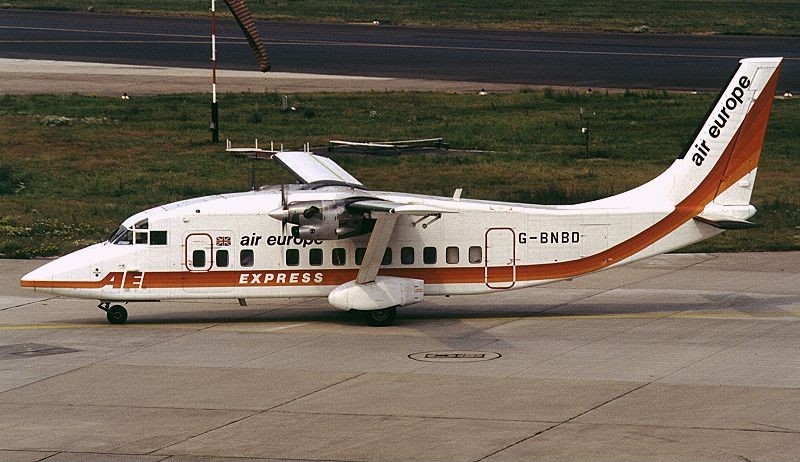
Konstantin von Wedelstaedt / Wikimedia Commons
Air Europe was creating an early version of the multinational airline model that would later become commonplace across the European continent.
1989: Air Europe becomes Airlines of Europe
By 1989, the various businesses were increasingly being brought together under the ‘Airlines of Europe’ concept. The objective was not simply to own airlines in different countries. The subsidiaries were intended to work together while retaining their national identities and operating structures.
The structure offered several potential advantages. Aircraft could be deployed between markets, purchasing could be consolidated, and the different airlines could feed passengers into one another’s networks. This was particularly useful in the seasonal leisure market.
By combining charter operations with scheduled services and a network of national subsidiaries, ILG was attempting to build an airline group that could compete across Europe without relying entirely on a single national operating certificate.
The scale of the operation was impressive
In 1989, the group’s airlines had 31 jet aircraft, 20 scheduled routes and a combined 20% share of Gatwick’s slots. The airlines carried 5.8 million passengers, while the group’s tour operators carried another 2.7 million. Group operating profit reached £35.5 million.
At Gatwick, Air Europe had become the largest resident airline. For a company that had started just ten years earlier with three Boeing 737s, the transformation was remarkable.
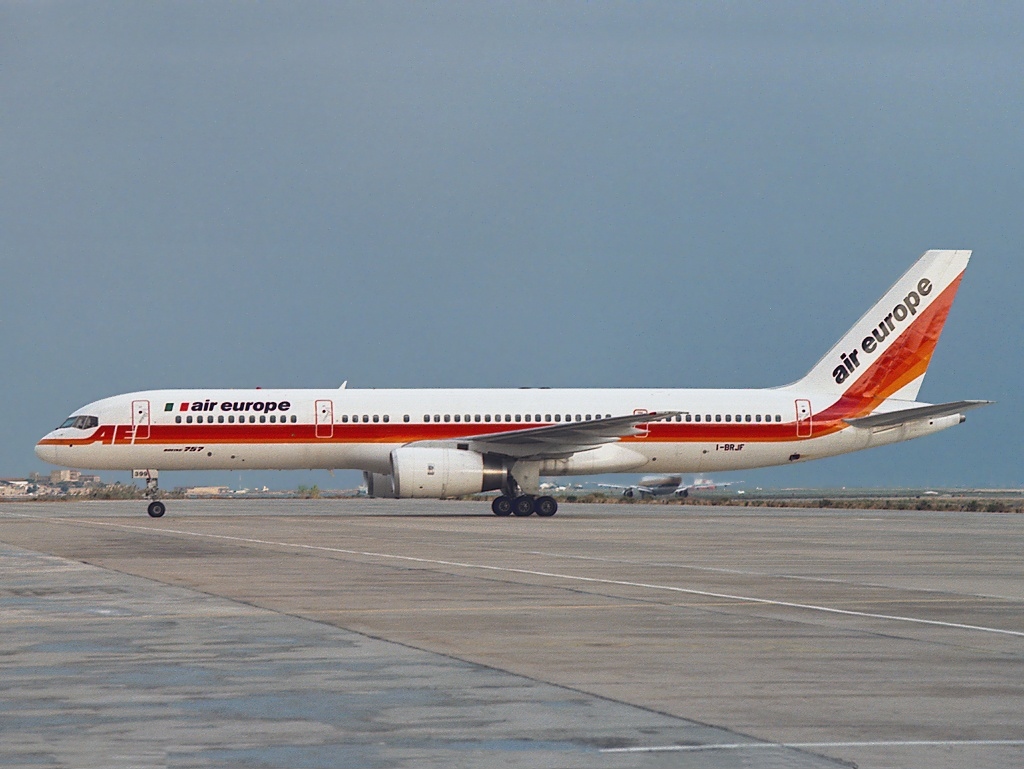
Air Europe’s expansion was not limited to its network. The Boeing 737 remained central to its short-haul operation, but Boeing 757s and larger 737 variants were added as the airline grew. The 757 was particularly useful for longer European routes and eventually for transatlantic charter flights.
From 1989, Air Europe became the first British charter airline to operate 757s on transatlantic charter services between Britain and Orlando. But the ambitions went much further.
Air Europe wanted to become a long-haul scheduled carrier as well as a European short-haul airline. In late 1989 it announced plans to become the launch customer for the Rolls-Royce Trent-powered McDonnell Douglas MD-11, ordering six aircraft with options for another twelve.
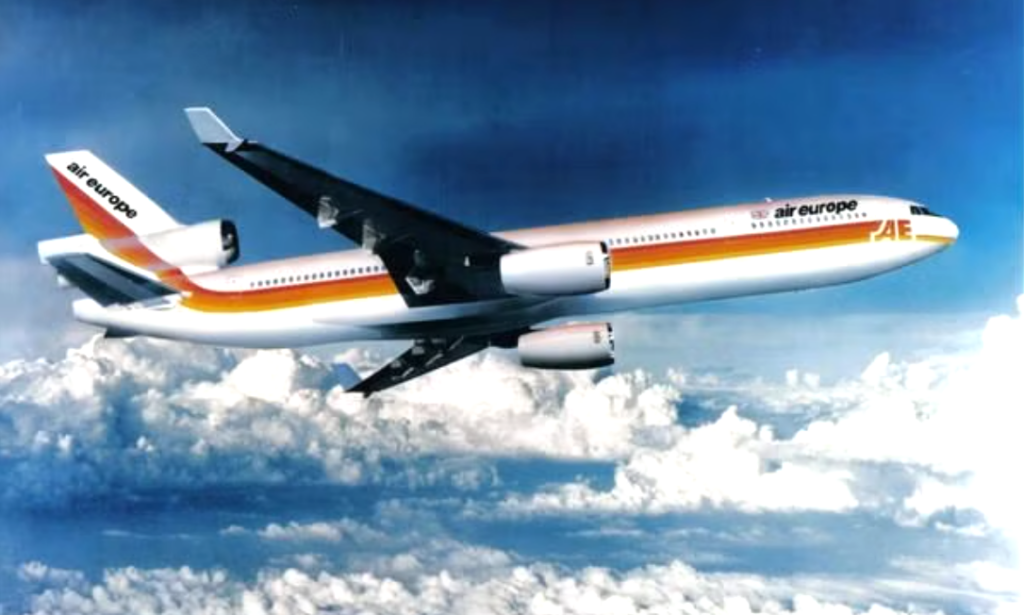
The proposed aircraft were intended for long-haul charter and scheduled operations, with routes from Gatwick to destinations including New York, the Caribbean, Australia and New Zealand under consideration. There were also substantial commitments for Boeing 757s, Boeing 737-400s and Fokker 100s.
In April 1990, the company signed an agreement with Airbus covering 40 A320-200s, with options for another 40 aircraft. On paper, Air Europe was preparing for a spectacular future. In reality, however, it was approaching the limits of its financial capacity.
The price of expansion
The fundamental problem was not a lack of ambition. It was the speed and scale of that ambition. ILG and Air Europe were heavily dependent on finance and aircraft leasing. The strategy worked while passenger demand remained strong and aircraft retained their value. But it left little room for a serious downturn.
By 1989, ILG was already under financial pressure. Air Europe was simultaneously attempting to operate a major charter business, expand its scheduled network, establish airlines across Europe and commit to a new generation of aircraft. The business was becoming increasingly dependent on continued growth and access to finance.
Then economic conditions deteriorated. Britain entered recession, while the international tourism market was hit by uncertainty surrounding the Gulf crisis and the approach of war. Fuel costs increased, and passenger demand weakened. The group’s expansion suddenly became a liability. The very network that had made Air Europe so impressive also made it expensive to maintain.
Why did Air Europe collapse?
Although Air Europe had grown into one of Britain’s largest independent airlines, its rapid expansion left the company exposed to changing economic conditions.
The airline’s parent company, International Leisure Group (ILG), had pursued an ambitious growth strategy that included fleet expansion, new scheduled services and investments in airline subsidiaries across Europe.
As the UK entered recession, borrowing costs rose and travel demand weakened during the Gulf crisis, placing increasing pressure on the group’s finances.
1991: The collapse of Air Europe
In early 1991, the strategy unravelled. On 8 March, ILG and its UK subsidiaries entered administration. Air Europe stopped flying immediately, and its aircraft were grounded.
The consequences were immediate. Aircraft were impounded, passengers were left stranded, and thousands of jobs disappeared. Almost 2,000 Air Europe employees were directly affected, while the wider ILG collapse resulted in around 4,000 job losses.
The failure was not simply the result of one event. The recession and Gulf crisis were major blows, but they exposed deeper structural weaknesses: rapid expansion, heavy financial commitments and a business model that relied upon continued access to finance.
Ironically, the international structure Air Europa and ILG had spent years building proved more durable than its British parent.
Air Europa in Spain survived. Spanish investors led by Juan José Hidalgo acquired control of the airline, allowing it to continue operating independently. NFD in Germany was also rescued, while the various pieces of the Airlines of Europe group went their separate ways. However, the original parent company, UK-based Air Europe, was gone.
A glimpse of the future
Air Europe’s life lasted less than twelve years, but its importance in European aviation history goes far beyond its relatively short existence.
It demonstrated that an airline could grow from the charter market into scheduled flying, develop a major hub operation and build a multinational network.
Its pan-European structure was particularly unusual for the period. Instead of simply flying from Britain to other countries, Air Europe established airline businesses within those countries, adapting its corporate structure to national ownership rules while maintaining common branding and commercial strategies.
In many respects, Air Europe was ahead of its time. The European airline industry that emerged after further liberalisation would increasingly feature multinational groups, airline subsidiaries, common brands and cross-border operations.
What later became normal was still experimental when Air Europe was attempting it in the late 1980s. But Air Europe’s story also contains a warning.
The same ambition that made the airline remarkable contributed to its downfall. It expanded its fleet, network and corporate structure at extraordinary speed, committing itself to a future that depended upon strong demand and plentiful finance.
When those conditions disappeared, the structure could not withstand the shock. On 8 March 1991, one of Britain’s most ambitious independent airlines ceased flying. Yet the idea behind it did not disappear.
Air Europe had shown what a truly European airline could look like before the political and commercial environment fully caught up with the concept.
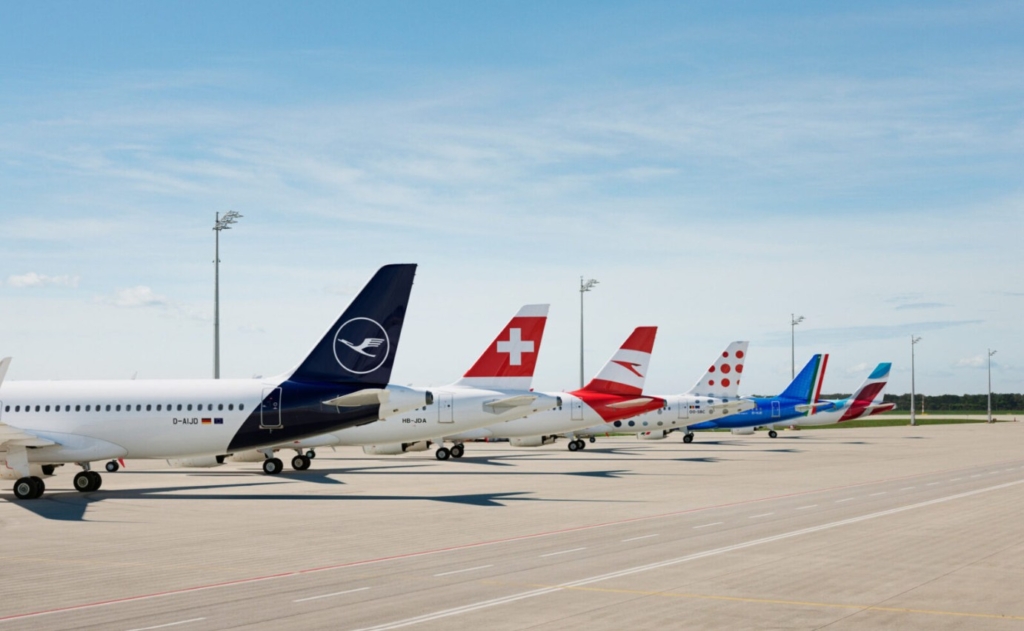
Its aircraft disappeared from Gatwick, but its experiment in cross-border aviation anticipated the multinational airline groups, such as International Airlines Group (IAG), Lufthansa Group, Air France-KLM, and in the low-cost sector, Ryanair, easyJet, and Wizz Air, which would later become one of the defining features of European aviation.
For a carrier born to fly British holidaymakers to the Mediterranean, this was quite an extraordinary legacy to leave behind.
Source: aerospaceglobalnews.com