




The Japanese government has approved a bill to lower the consumption tax on food items. The ruling party aims to pass it into law at the current Diet session with the help of opposition parties.
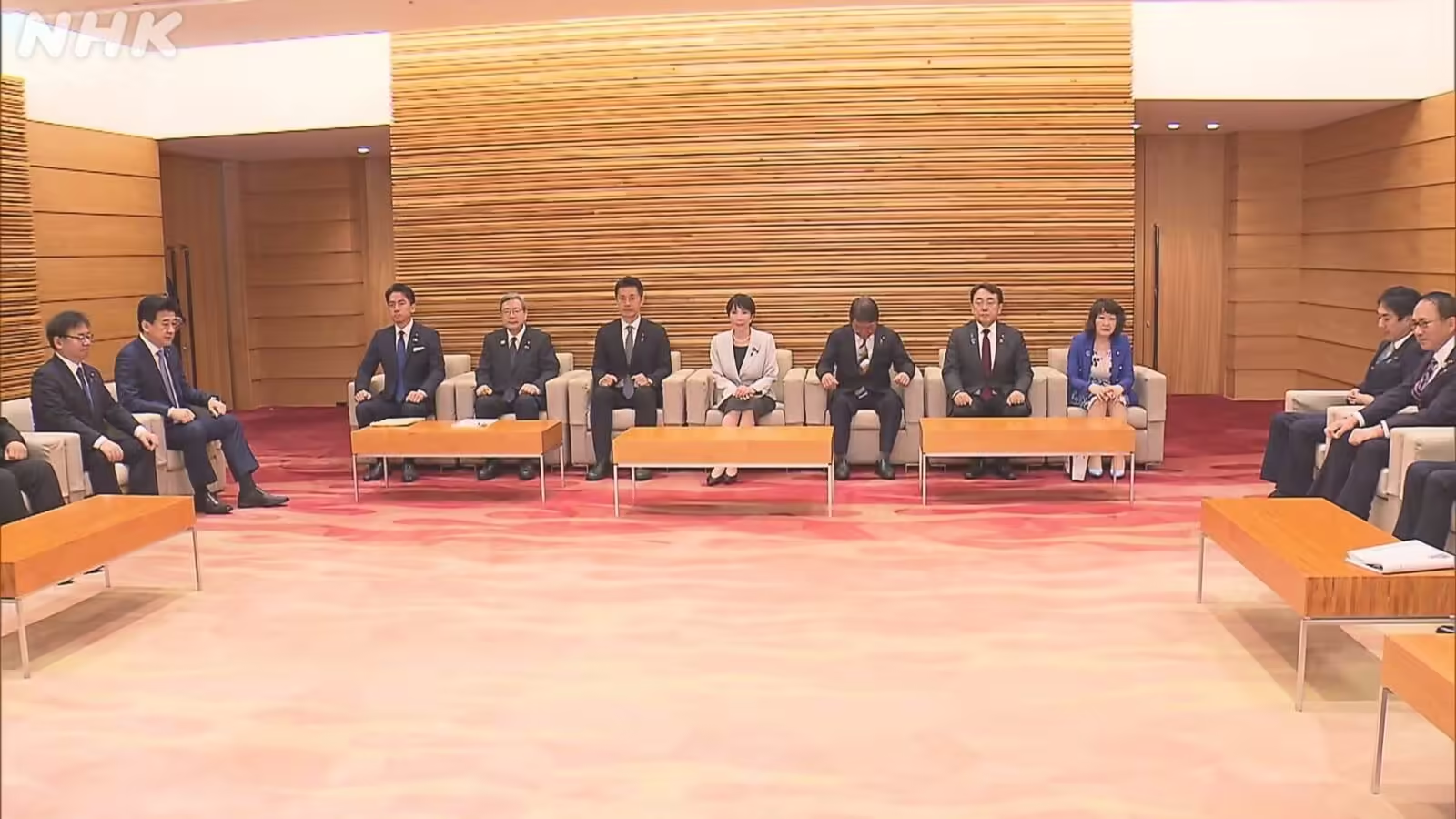
The bill was approved at a Cabinet meeting on Friday. It would lower the tax to 1 percent for two years from April 2027. The rate currently stands at 8 percent.
The legislation would also provide income-based support payments to ease financial burdens on workers.
Criteria for eligibility for the payments and specific amounts would be defined by a government ordinance. A task force to arrange the cash benefit is to be set up within the Cabinet.
The government submitted the bill to the Diet on Friday.
Prime Minister Takaichi Sanae noted that the lower consumption tax rate on food will basically be reflected in prices. She sees the savings per individual amounting to about 230 dollars.
Takaichi said, “Retail prices can change due to various factors, and it is difficult to provide a firm outlook. The burden on households is expected to be reduced by around 36,000 yen per person.”
The government says it will secure funding for the tax cut without relying on deficit-covering bonds. But this remains a major challenge.
It is said to require about 5 trillion yen, or roughly 31 billion dollars, a year to lower the tax rate on food to 1 percent and provide the accompanying financial assistance.
To obtain the funds, the government plans a review of subsidies and special taxation measures as well as non-tax incomes, expenditures and revenues. Details are to be worked out during budget compilation toward the end of the year. But it remains to be seen whether the government will be able to clarify the financial backing.
Source: www3.nhk.or.jp