



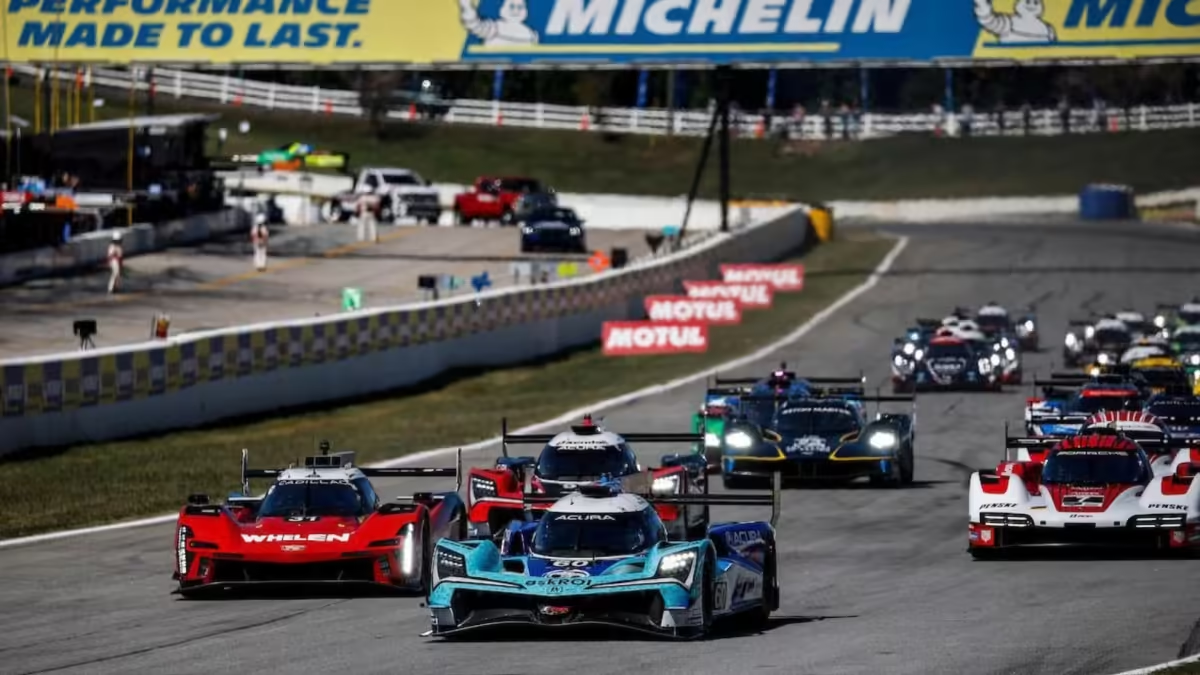

At Michelin Raceway Road Atlanta, the Motul Petit Le Mans puts some of the fastest and most technologically advanced racing machines in the United States through a 10-hour endurance test. But at the Brembo stand, another side of motorsport technology comes into focus: racing is not only about developing technology to win races. It can also serve as a laboratory for the cars people drive every day.
Braking systems are one of the clearest examples.
When watching a race, the attention naturally goes to acceleration, top speed and overtaking. But going fast also means knowing how to slow down — precisely, repeatedly and consistently.
During an endurance race such as Petit Le Mans, where cars compete for 10 hours, braking systems have to withstand enormous amounts of heat, stress and repeated use.
Endurance racing puts braking systems through hours of extreme heat, stress and repeated use, providing engineers with a demanding testing environment.
The racetrack becomes a giant testing laboratory.
Brembo has spent decades developing braking systems for motorsport, including Formula 1, the FIA World Endurance Championship and MotoGP. Many technologies developed or refined for racing have eventually made their way into production vehicles, bringing racing experience to performance and safety on the road.
A clear example is the monoblock brake caliper.
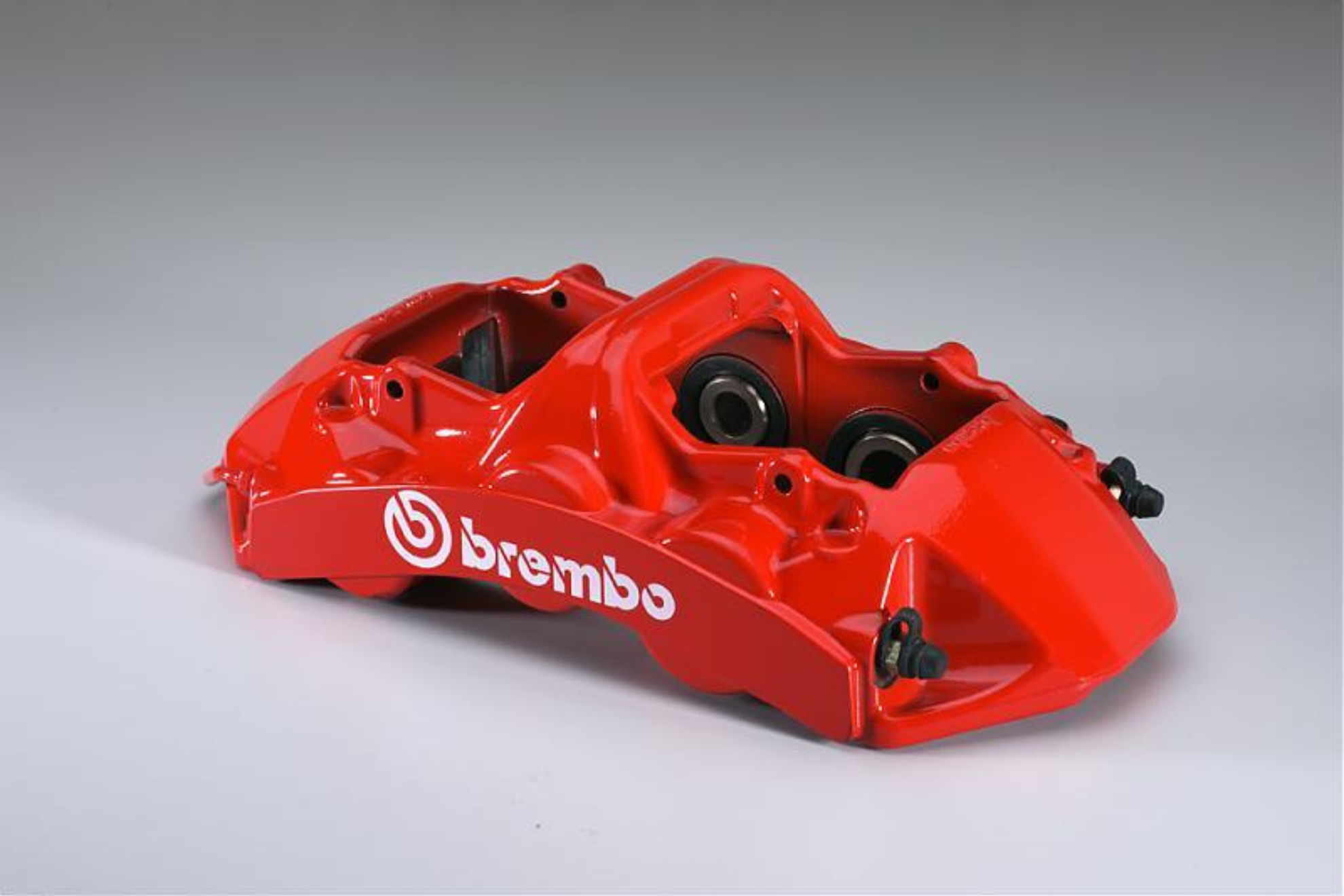
Brembo developed its first monoblock brake caliper in 1987 before the technology moved from motorsport into production cars.
Brembo developed its first monoblock caliper in 1987, with the technology making its Formula 1 debut the following year. Less than a decade later, it reached a production road car with the Porsche Boxster.
A solution created to meet the extreme demands of racing had made its way into a car that could leave a dealership and be driven on public roads.
The same philosophy can be seen in other braking technologies.
Carbon-based braking systems were originally developed to withstand the extreme conditions of motorsport. The challenge was then to adapt some of those characteristics for road cars, where brakes have to operate effectively at much lower temperatures and under very different conditions.
That development helped bring technologies such as carbon-ceramic brake discs to high-performance production vehicles.
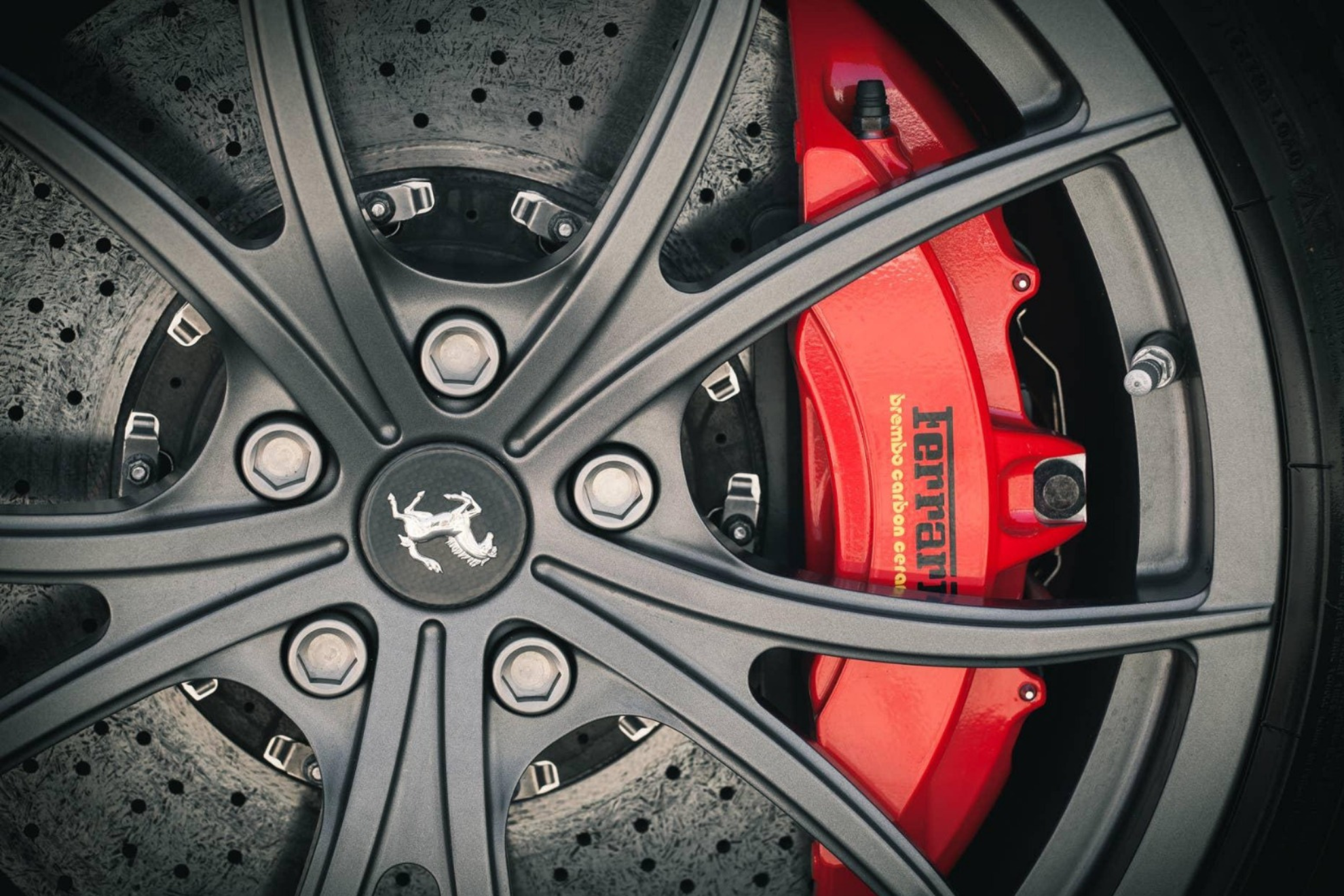
Carbon-ceramic brake discs are one example of racing-derived technology adapted for high-performance road cars.
And perhaps that is one of the most interesting things about an event like Petit Le Mans.
The technology surrounding these race cars can seem completely disconnected from everyday driving. The materials, demands and operating conditions are extreme. But the process behind them is relatively simple: develop, test, learn, improve — and, when possible, bring that knowledge to the vehicles people drive every day.
It is a philosophy the automotive industry has followed for decades.
Motorsport gives engineers an environment where components can be pushed far beyond the conditions they would normally experience on public roads. Every lap generates data. Every race can expose a weakness. Every improvement has to be ready for the next challenge.
In endurance racing, that philosophy becomes even more important.
Performance alone is not enough. Components must maintain their performance and reliability for hours. That is why championships such as IMSA and the FIA World Endurance Championship can also serve as testing grounds for new automotive technologies.
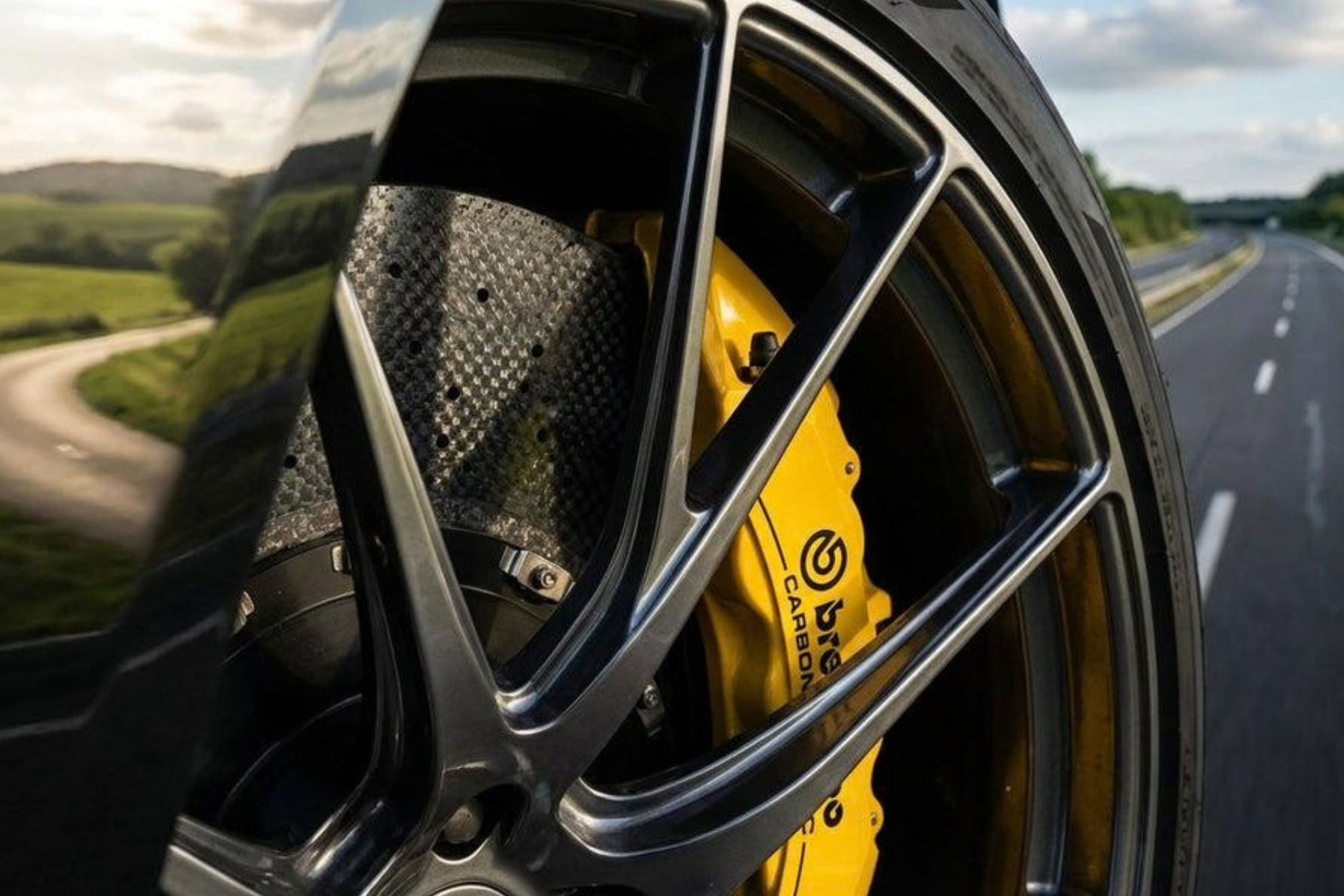
Brembo racing brake system
Watching a prototype race car fly through Road Atlanta, it is easy to think of it as a machine completely disconnected from the vehicles parked outside the circuit.
But there is a connection.
The next time a driver presses the brake pedal, the technology behind that action may have roots in decades of research and development that began in a very different environment: a racetrack, where engineers were looking for another tenth of a second.
That is one of the most fascinating aspects of motorsport.
The race ends. The technology continues.
Source: www.marca.com