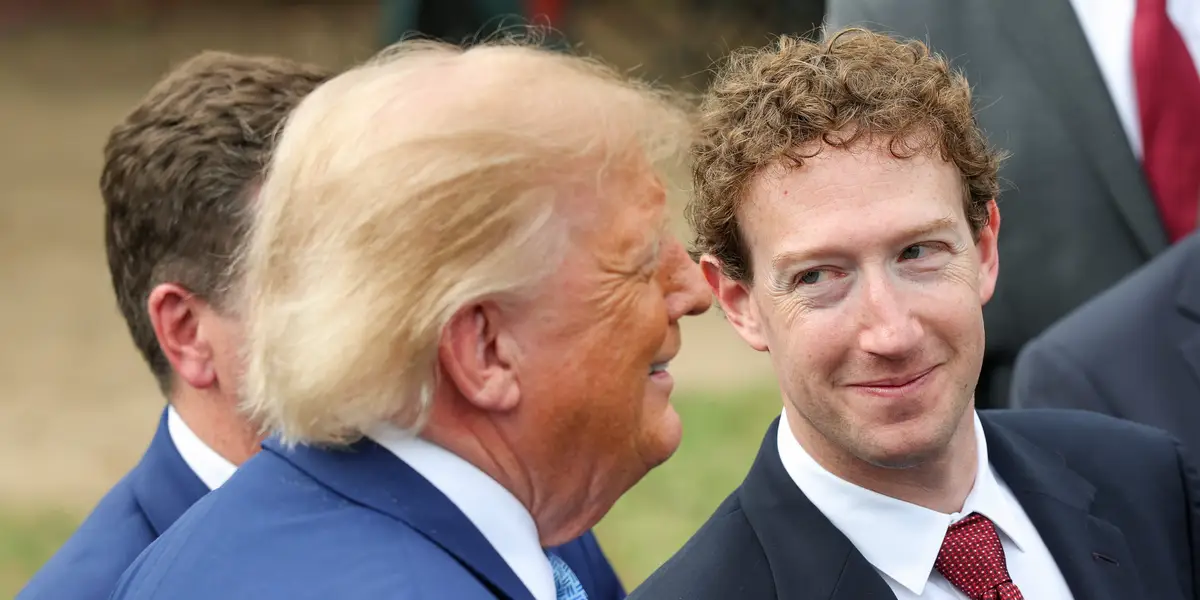





NPR’s Steve Inskeep asks former U.S. Ambassador to Ukraine John Herbst about President Trump’s embrace of Russia as envoy Steve Witkoff heads to Moscow after meeting Ukraine’s Volodymyr Zelenskyy.
Transcript
STEVE INSKEEP, HOST:
Let’s bring Ambassador John Herbst into the conversation. He served 31 years in the U.S. State Department and was ambassador to Ukraine in the George W. Bush administration. He’s now senior director of the Atlantic Council’s Eurasia Center. Ambassador, good morning.
JOHN HERBST: Good morning.
INSKEEP: We just heard Volodymyr Zelenskyy’s perspective saying, we’re not losing this war. We’re losing people, we’re losing time, but we’re not losing the war. I want to just go right to President Trump’s perspective, what he’s saying most recently. He says President Zelenskyy doesn’t want the war to end. Let’s listen to Trump’s claim.
(SOUNDBITE OF ARCHIVED RECORDING)
PRESIDENT DONALD TRUMP: Zelenskyy has to want to settle this war. And if he doesn’t, I think it’s going to be a very bad thing. Look, we have given tremendous amounts to Ukraine. We’ve got nothing back, other than high diesel.
INSKEEP: He also said Ukraine is weaker, smaller, fewer people, and so they should, quote, “make a deal” from that position of weakness, as Trump perceives it, giving up. Do you agree with that assessment?
HERBST: President Trump’s statement is factually incorrect in many ways. The war is a stalemate. It’s been a stalemate for over four years. I think it – actually, it’s been a stalemate over since the beginning back in 2014. The big invasion has not enabled Putin to achieve his aim of seizing most of the country. They haven’t even been able to seize the most important strategic depth in western Donbas, which is why they want the United States to persuade Ukraine to give them that strategically valuable land ’cause their forces were not able to take it.
And they’ve taken tremendous casualties. They’re losing 35, 40,000 soldiers a month, more than half of them dead. And, of course, the Ukrainian drone strikes in Russia have taken out roughly 40% of their refining capability. So the Russians are not winning. The only way Moscow could win this war is if Western aid ceased, both American and European.
INSKEEP: You just said that Russia wants to persuade the United States to help them take more territory. Looking at the news over the last week to 10 days, do you think that Vladimir Putin is making progress in persuading the United States or the U.S. president onto their side?
HERBST: You know, Trump’s policy has been inconsistent since he returned to the White House. He has a positive impulse, which he used to state frequently, he wanted to create an end to the war around the current lines held by the two forces and having Ukraine emerge sovereign and secure (inaudible). So that’s a positive impulse.
But then he has this peculiar fascination with Putin, and he doesn’t want to cross him. So his policy jumps back and forth between really hammering Ukraine and then sometimes putting some lesser form of pressure on the Kremlin.
INSKEEP: Well, I’m trying to figure out how the release of Stephen Hubbard fits into this, Russia’s effort to cultivate President Trump. I suppose there may have been negotiations behind the scenes that we don’t see. I suppose this could’ve been a humanitarian gesture. Or do you see the release of Stephen Hubbard right now as a friendly gesture toward the United States, which Russia may want to use to widen the gap between the United States and Ukraine?
HERBST: I’m sorry to say that this is exactly Putin’s intention, and sadly, President Trump plays along. And the news story I listened to before I got onto this interview helps them do that because they talked about merely the release of Hubbard. They didn’t talk about the American role in freeing a person we’ve wanted extradited to the United States, a guy named Mikhail Zvinchuk, who was arrested in Montenegro. He was released – I don’t know – eight or nine days ago because the U.S. insisted on it. So this is a straight-up trade deal where we trade the release of a bad guy for the release of an American citizen who’s not a bad guy. We’ve seen this play before, not just under Trump.
INSKEEP: So you’re telling me there’s another layer to this beyond the release today. This is the United States…
AUTUMN: Yes.
INSKEEP: …Doing a deal with Vladimir Putin.
HERBST: Yes. And then we saw this before. You know, when Witkoff went to Moscow the first time, at the beginning of the Trump administration and brought home an American, we released a notorious Russian arms dealer, whom we had captured – I don’t know – six, eight, 12 months before. So in trade, that’s perfect for Russia’s nasty foreign policy, we get an innocent American released. So that’s good. We want Americans to come home. But we pay a national security price for it. So it’s no wonderful gestures from Putin. It’s a cynical game.
INSKEEP: One other question then. How is Volodymyr Zelenskyy doing in this situation, mending fences with the United States, trying to get back on the same page with Trump or trying to get Trump back on the same page with him?
HERBST: Zelenskyy is handling this as best he can. He made a mistake for criticizing publicly the diesel deal, but ever since he’s been trying to fix things. And he’s helped by the fact that over 80% of the American people consider Putin a villain, and over 60% of the Congress – Republicans and Democrats – support a much stronger policy in aid of Ukraine. And we know that President Trump’s being raked over the coals, including by Republicans, for this weak turn of the last, you know, week and a half.
INSKEEP: Former U.S. ambassador to Ukraine, John Herbst. Thanks so much.
HERBST: Thank you. Bye-bye.
Copyright © 2026 NPR. All rights reserved. Visit our website terms of use and permissions pages at www.npr.org for further information.
Accuracy and availability of NPR transcripts may vary. Transcript text may be revised to correct errors or match updates to audio. Audio on npr.org may be edited after its original broadcast or publication. The authoritative record of NPR’s programming is the audio record.
Source: www.npr.org