




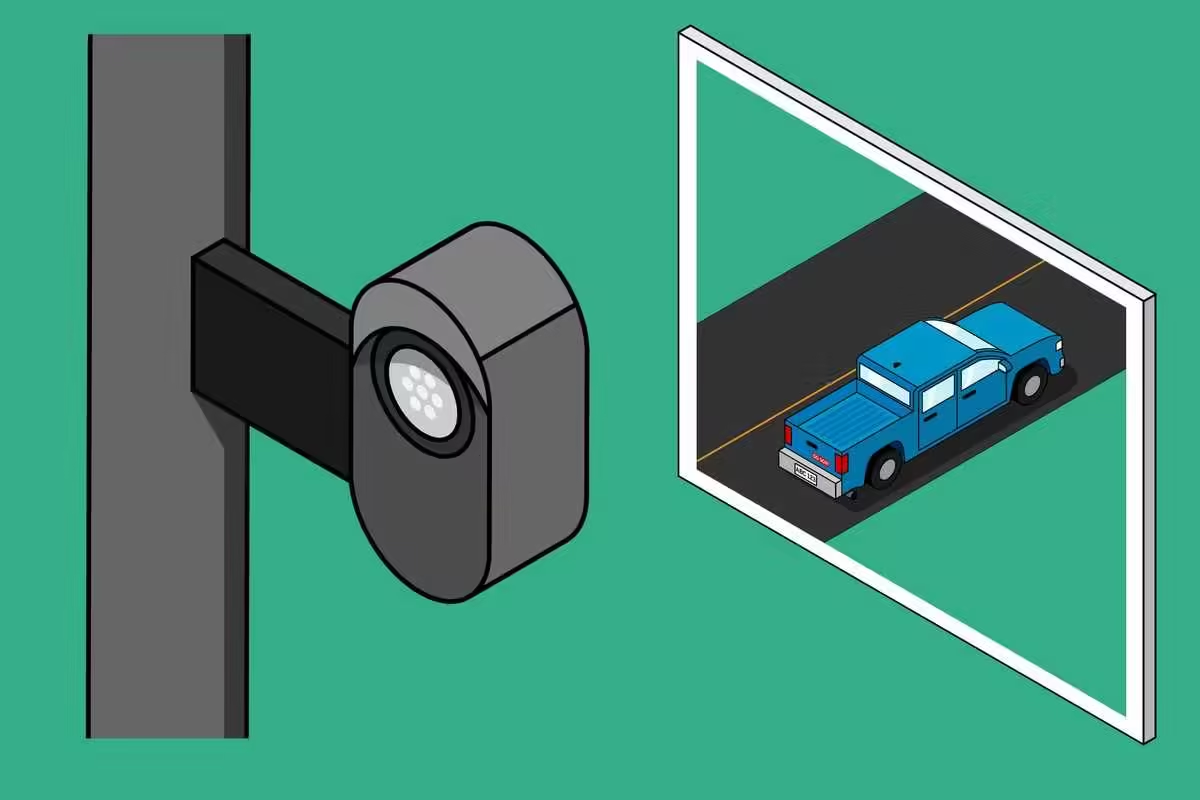

Across Massachusetts, small black cameras are photographing passing cars, capturing such details as the license plate, the color, and the roof rack. Police can search those records in seconds, sometimes from the other side of the country.
These automatic license plate readers are often referred to simply as Flock cameras after Flock Safety, an Atlanta-based manufacturer. But Motorola, Axon, and other companies sell them too.
While license plate readers have been around for more than a decade, the widespread integration of AI and a searchable nationwide database have spurred adoption in recent years by law enforcement and even private companies including Home Depot and Lowe’s. Among the manufacturers, Flock’s cameras are the most widely used.
The growth of license plate readers over time
The number of readers grew from 17 at the beginning of 2025 to over 1,200 through Sept. 24, 2026, according to crowd-sourced reports gathered by the website Deflock.org.
Police say the camera networks help them find missing people or vehicles involved in crimes quickly. For instance, officials touted the technology as instrumental in locating the Brown University shooter last year. But advocacy groups including the ACLU say they are tools of mass surveillance that can track anyone – regardless of whether they committed a crime – without a warrant and little oversight.
More than 100 communities in Massachusetts have contracted with Flock, per a Globe tally. Thirty-eight communities have moved to limit their use since last fall, according to the ACLU.
But how do these things actually work? We took a closer look at Flock’s system.
© 2026 Boston Globe Media Partners, LLC
Source: apps.bostonglobe.com