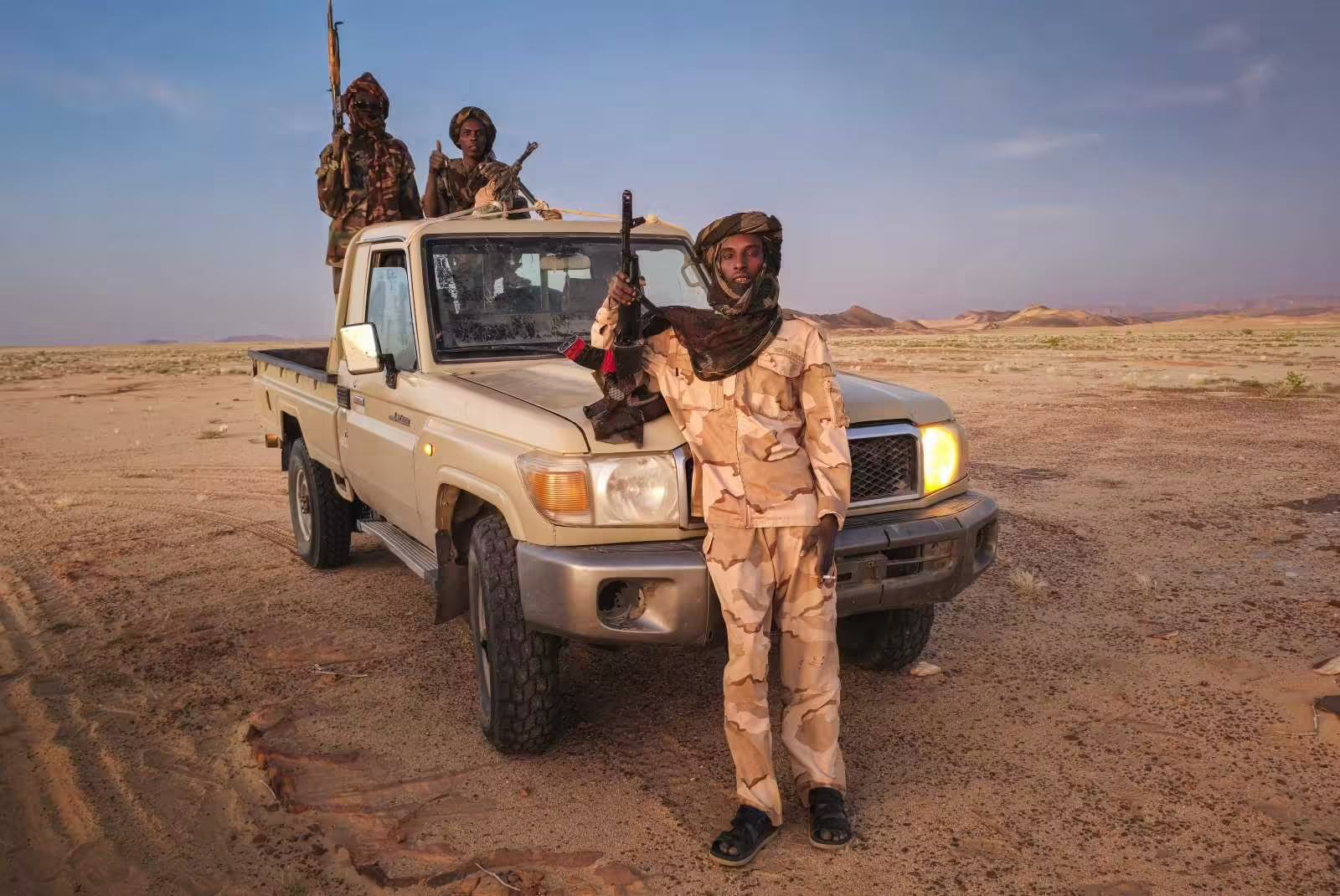

Terrorism also plays a significant role in sustaining the TCOs, which in many cases supply terrorist organisations not only with weapons but also with a wealth of information and the illegal fuel they urgently need to keep their operations on the ground running.
There are also cases in which weapons inadvertently fall into the hands of terrorists, although many of these go unrecorded; for example, when a government patrol unit in a remote area is forced to abandon its vehicles because it has run out of fuel or has to flee from attackers.
Cows for ammunition
In the affected areas – situated predominantly in the Sahel, the Horn of Africa and East Africa – criminal organisations frequently employ the tactic of using nomads to transport weapons to recipients. In such cases, the TCOs often successfully coerce or recruit people with limited ability to refuse – who are considered less likely to arouse suspicion – such as children, women and elderly people. The same approach is also used in coastal and lake regions, which are other hubs for the illicit arms trade. Here, fishermen are used to transport illicit weapons in their fishing nets.
It has also been observed that warlords, particularly in regions affected by ethnic conflicts, exchange ammunition and rifles for cows. The “Small Arms Survey” reported that 500 rounds of ammunition can be exchanged for a cow, which provides an incentive for cattle herders to become involved in the illegal arms trade.
The spillover effects from war zones also play a decisive role in the surge in the arms trade. Organised criminal groups exploit crises to a great extent. A notable example is the NATO-led military intervention in Libya during the Libyan Civil War, which had devastating knock-on effects, with heavily armed, hostile militias attacking weapons depots and seizing stocks of foreign weapons. According to reports, an alarmingly large proportion of these weapons found their way into many countries in the Sahel, a region notorious for having one of the highest levels of terrorist activity in the world.
Even though states here and elsewhere hold a monopoly on the use of force, in certain contexts they can only exercise it at great risk to their own populations, risking an escalation of conflicts that could lead to numerous civilian casualties. Agreements between the state and terrorist groups are therefore sometimes a comparatively viable solution. In the Sahel and the Horn of Africa in particular, states have often found themselves with no better alternative than this.
For example, illegal mining sites are widespread in many countries of the Sahel. These sites are controlled by militias and also serve as storage facilities for illegal weapons, as well as recruitment and training centres for terrorists. Essentially, this is a calculated strategy, as the militias are always keen to ensure a steady concentration of civilians at these sites. In such regions, it should also be noted that these very militias create jobs for civilians and – more crucially – provide social services which the states themselves find very difficult to deliver in such hostile regions.
As they feel neglected by their own government, vulnerable civilians then tend to pledge their allegiance – sometimes under coercion – to the militia groups rather than to their government and thus become accustomed to the militias’ system of governance. This is a worrying pattern in various militia-controlled regions, such as in Nigeria, Chad, Niger, Sudan and Somalia.
The right approach to disarmament campaigns
Disarmament campaigns have encountered numerous obstacles. Some governments want to enforce disarmament through military measures, for example, whilst civil society groups consider this dangerous. The forcible disarmament of groups in possession of illegal weapons carries the risk of significant collateral damage and civilian casualties – particularly in densely populated areas controlled by militias.
Source: www.dandc.eu