



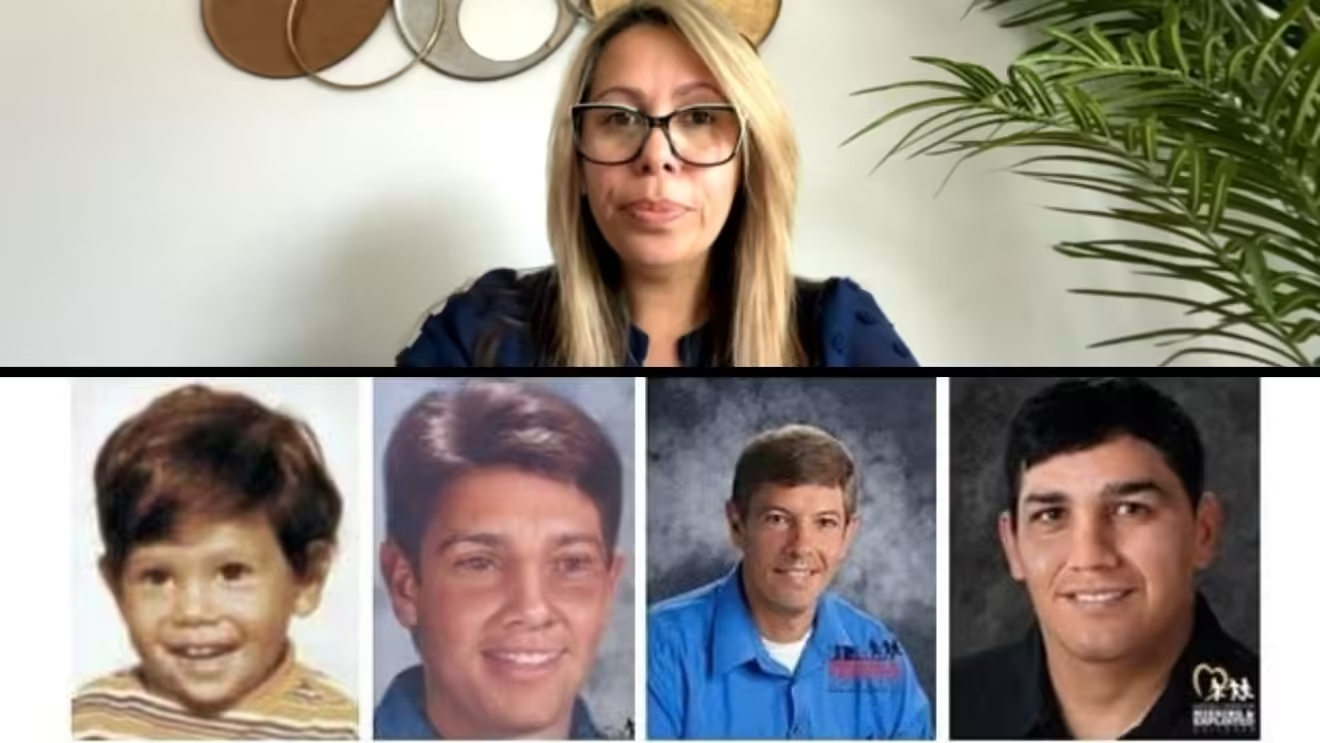

EL PASO, Texas (KFOX14/CBS4) — After a child organization released a digital image showing what a missing El Paso toddler from 1970 might look like 50 years later, KFOX14/CBS4 spoke with the family of the missing kid as they hope that technology could bring closure.
On Sept. 9, 1974, 20-month-old Joseph Hurtado was last seen playing outside his grandmother’s home at the 800 block of Elmwood Court in El Paso’s Upper Valley. According to the National Center for Missing & Exploited Children (NCMEC), Joseph’s mother was washing the family car in the driveway when she noticed Joseph was gone. At first, she believed Joseph had just gone back inside the home, but the family later realized he was missing and called the authorities.
On Monday, NCMEC released an image where forensic artists imagined what Joseph would look like now, 50 years later.
KFOX14/CBS4 reached out to the family and spoke with Marie Hurtado George, Joseph’s youngest sister, who shared more about what she knows of the day Joseph went missing and how DNA technology could bring her family some needed closure.
RELATED: New age-progression image released in 52-year-old El Paso missing child case
“It’s been very heartbreaking,” Marie said, talking about growing up knowing her brother had been kidnapped. “Just growing up my whole entire life. It’s being a huge impact on our family.”
Marie said she was born after Joseph disappeared and that what she knows comes from what her family has shared and what has circulated publicly.
Recounting the disappearance, as she has pieced it together from what she was told, Marie said it all started with “miscommunication” on who had the baby, as her mother was outside washing the car and her father was inside.
Marie said that by the time both parents realized neither of them had Joseph, the family believed he may have wandered next door to look at fish in a nearby pond– but he wasn’t there.
Next, the family searched the back area of the home– which is up against the Rio Grande– before calling authorities when they could not find him.
Marie said seeing an age-progression image of what Joseph might look like today was difficult.
“That one hit hard,” Marie said, crediting the NCMEC with working “really hard” with her and her brother to get the image right.
Marie said that even after five decades, the family’s commitment to finding Joseph has never stopped.
Marie understands that if Joseph is still alive, he could have another family and may not know his story, so she emphasized the importance of genetic genealogy and DNA testing.
“This is why I stress DNA,” Marie said. “If you think you just want to know about your family history, take that DNA test. I think that is the biggest tool that we have out there that could actually help us help millions of other people that are searching for their children.”
Marie said DNA and genealogy can also help families find answers even if a missing loved one is deceased, providing a path to closure.
RECOMMENDED: Alfonso Lopez, last living member of Bowie’s 1948-49 state champion Bears, buried
Sign up to receive the top interesting stories from in and around our community once daily in your inbox.
Source: kfoxtv.com