





Gov. Gavin Newsom signed legislation to make it simpler for Californians to install plug-in solar panels. Models that meet state standards are expected to be on sale in mid-2027.
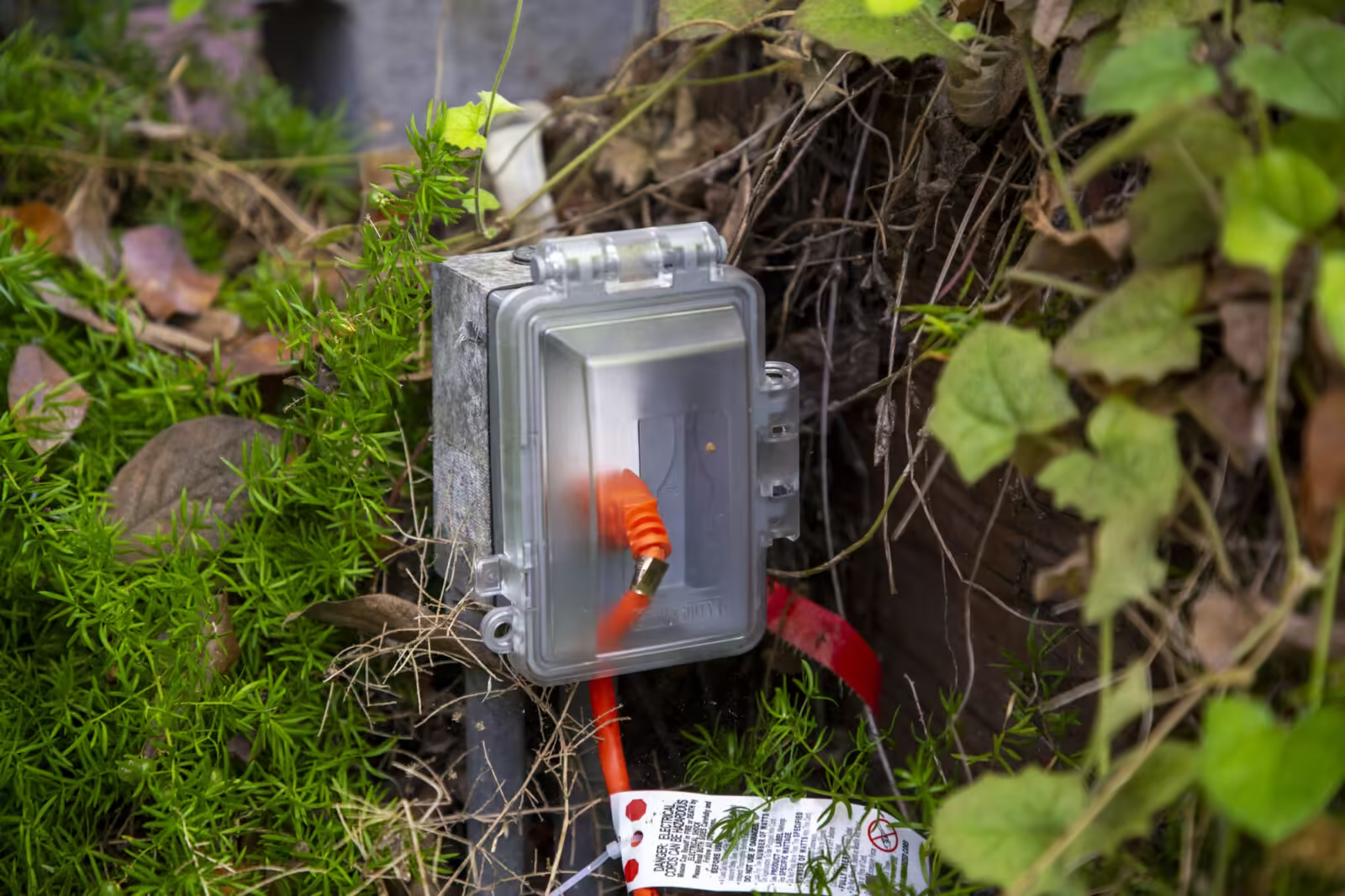
A cord connected to solar panels plugs into an outlet in Agnes Chan’s backyard in Berkeley, California, on Aug. 23, 2026. (Tam Vu for KQED)
This story is part of Flipping the SwitchKQED’s series about California’s transition to clean energy and what it means for you. What works? What doesn’t? And how much does it cost?
Gov. Gavin Newsom signed a bill legalizing balcony, or “plug-in,” solar Wednesday.
The device is a twist on rooftop solar: smaller, portable, and relatively inexpensive.
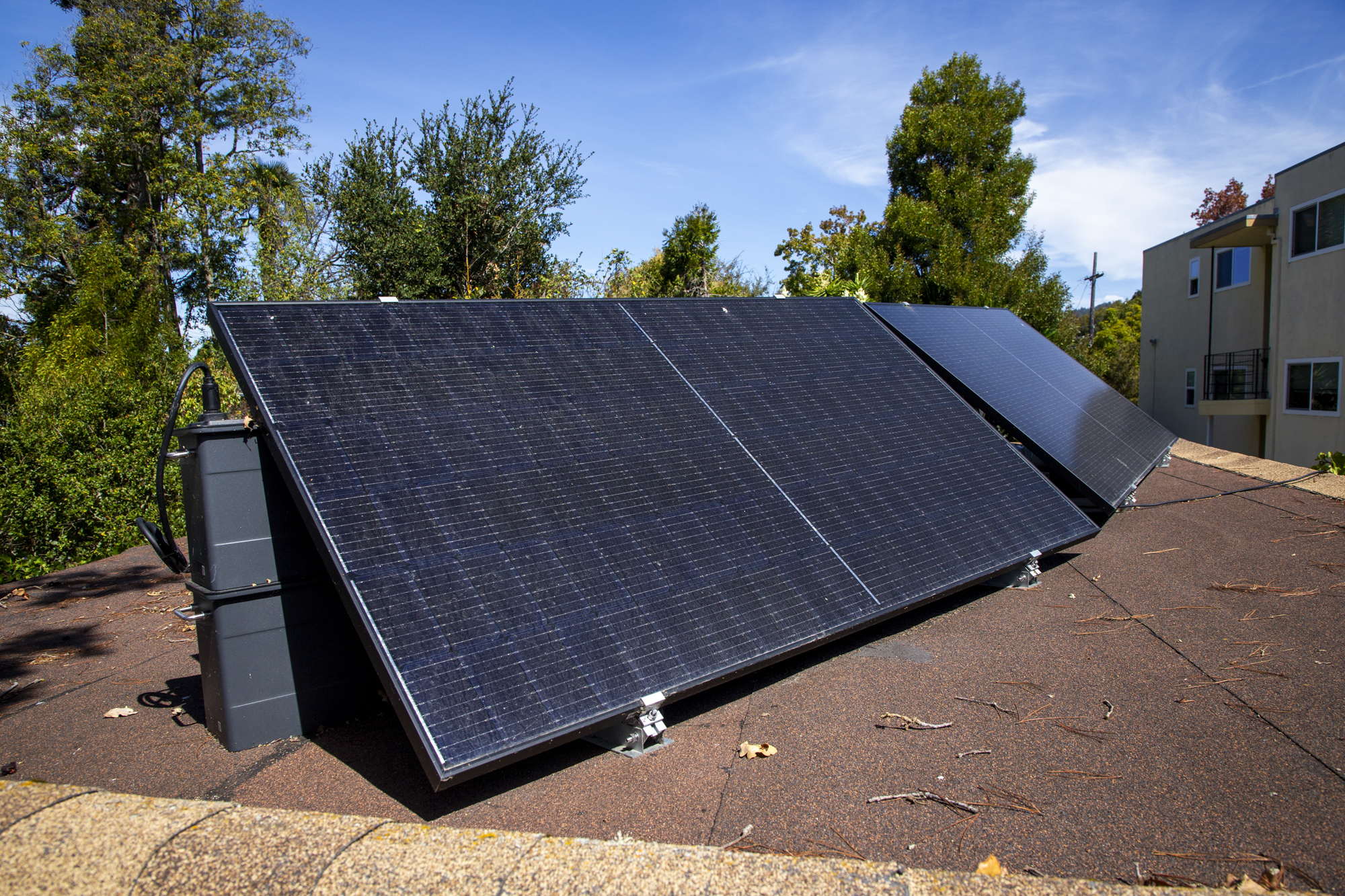
Balcony solar kits consist of just a few panels, an inverter that converts solar energy into the kind used in a home, and cables. In places where the technology is popular, like Germany, it can be plugged into a standard wall outlet.
The new law comes as Californians struggle to pay outsized electricity bills, which have risen substantially in recent years. Plug-in devices open the solar market to renters, people with unsuitable roofs, and those without the money to invest in a rooftop system.
“These small, easy-to-use solar panels will give everyone, including renters, the relief they desperately need on our outrageous energy bills,” said state Senator Scott Wiener (D – San Francisco) in a press release. Wiener authored the legislation.
The bill received overwhelming bipartisan support from state lawmakers before landing on Newsom’s desk.
Panels can hang from a balcony, out a window, or be tented in the backyard. Existing models range from $300 to $2200depending on size.
One reason the technology is substantially less expensive than rooftop solar is that it cuts out the costs of installation. Customers themselves set it up, which some have said is straightforward and others have found more challenging than advertised.
California’s law comes with a wrinkle, however. Plug-in solar panels must be certified by an outside safety organization. Since the technology is new in the U.S., there is just one existing certification offered by Underwriters Laboratories. Depending on how manufacturers innovate and roll out products, some may require an electrician’s help to install, while others may be truly “plug and play.”
Electrical experts and other advocates of California’s new law are still calling its passage a massive win, and expect the safety certification to evolve and eventually allow the plug-in panels to connect to a standard wall outlet.
“We are celebrating,” said Cora Stryker, co-founder of plug-in solar advocacy group Bright Saver. “The market is sending a clear signal to manufacturers that they need to develop a California system.”
The new law will exempt plug-in panels from the typical way rooftop solar must be registered with utilities. Instead of paying upwards of a hundred dollars and waiting days to weeks, the new registration process will be free, straightforward, and immediate.
A handful of states have passed similar legislation within the past 18 months. Utah was the first, with a law passed in March 2025.
Proponents of the technology say it can meet up to 20% of a home’s electricity needs and save as much as $500 annually for a small apartment.
The new law outlines several device requirements. The balcony solar systems must not generate more than 1,200 watts per home — enough energy to power a window air-conditioning unit — and offset a customer’s onsite electricity use. They must be certified by an outside safety organization and have a feature that would prevent electricity from feeding back into the grid if there’s a power outage.
Plug-in solar products currently on the market do not yet meet the outlined requirements, and customers therefore must still register the available systems as though they are rooftop solar. The sale of non-compliant systems will become illegal in 2030.
Groups that sponsored the bill said there are a few companies already developing systems meeting the specific California standards, and they expect these models to hit the market in the spring.
The legislation goes into effect in 2027, and sunsets Jan. 1, 2030, “making it a fight that continues,” said Stryker.

From KQED’s Climate desk, “Flipping the Switch” documents California’s transition to clean energy and what it means for you. What works? What doesn’t? How much does it cost? Help us find these answers and more by donating today.

Source: www.kqed.org

