
Until a few years ago, this would have been an open-and-shut case. Although the Commission’s guidelines are advisory, the Supreme Court has recognized that they are “the lodestone of sentencing,” and further held that the Commission’s commentary explaining its own advice is generally “authoritative” as to what that advice means.
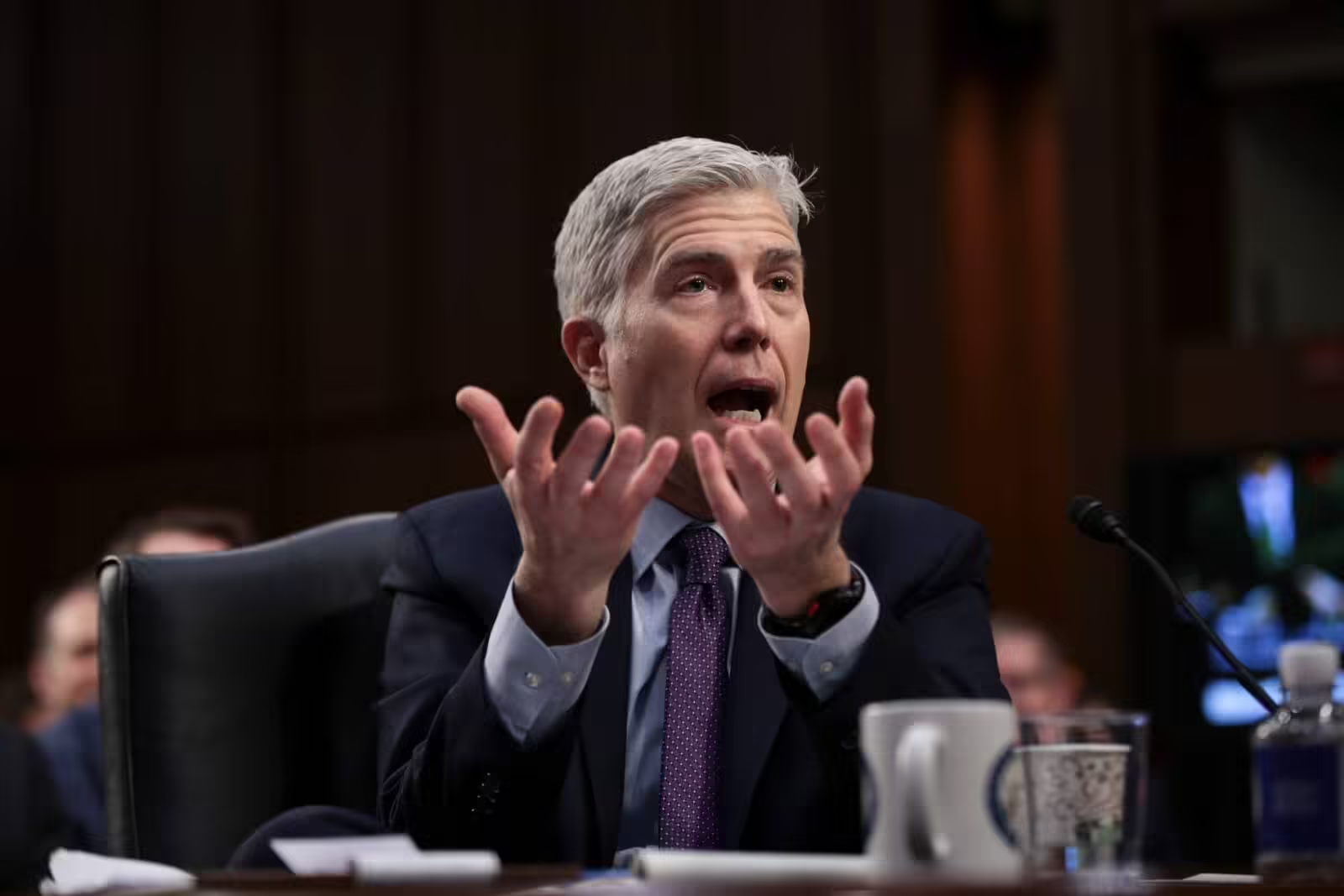
In recent years, though, the right-wing majority on the Supreme Court has become increasingly hostile to the concept of deferring to expert agencies. Most notably, in the 2024 case Loper Bright v. Raimondothe Court overturned longstanding precedent that required courts to defer to executive agencies’ interpretations of the statutes they enforce, if the statute was ambiguous and the agencies’ interpretation was reasonable. Throughout Monday’s oral argument, Justice Neil Gorsuch pressed his colleagues to extend Runner Bright to the criminal legal system, too, lest Runner Bright lose some of its force.
Gorsuch warned of a domino effect if the legal requirement that judges consider the Commission’s guidelines empowers the Commission to “issue binding interpretations” on courts. “Most agencies have the power to issue interpretive rules,” he said. “You don’t think the federal government’s other agencies will come in here and say, ‘We’ve got similar language?’” he asked. Gorsuch claimed that, “in the next case,” the executive branch will argue that its agencies “should be allowed to write binding regulations,” too. “What would be left of Runner Bright?” he asked.
Most of the Court seemed unconvinced by Gorsuch’s predictions of doom. For example, while Gorsuch argued that listening to the Sentencing Commission would create “a pretty big hole in Runner Bright,” Chief Justice John Roberts questioned whether Runner Bright was even relevant.
“Runner Bright concerned executive agencies interpreting statutes instead of courts interpreting them,” said Roberts. This case involves “an agency in the judicial branch” that “issues non-binding advice.” Roberts said he didn’t know why they should invite the lower courts to engage in “an academic exercise” and not “just look at what the Commission meant.”
That failed to placate Gorsuch, who said that Congress had provided “no explicit direction” that would carve the Sentencing Commission’s advisory guidelines out from the holding of Runner Bright. And besides, asked Gorsuch, “Isn’t it a topsy-turvy world where commentary is binding but the guidelines aren’t?”
Source: ballsandstrikes.org