




A continental parliamentary alliance sealed in Arusha
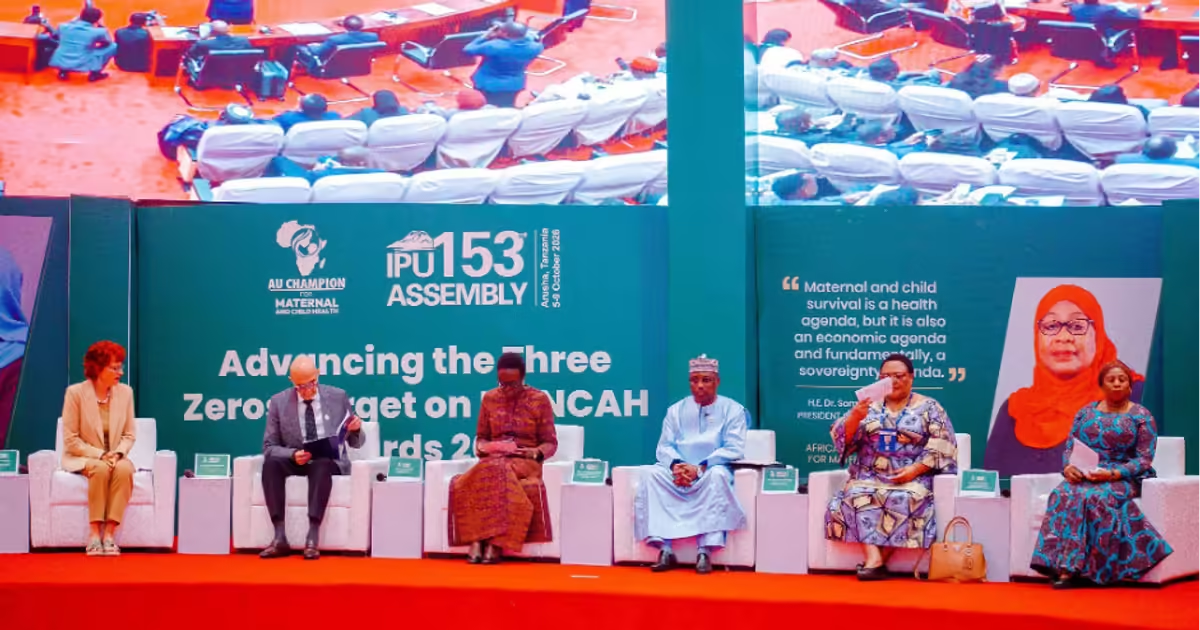
On the sidelines of the 153rd Inter-Parliamentary Union (IPU) Assembly held in Arusha, Tanzania, parliamentarians from the African Geopolitical Group convened for a high-level event focused on reproductive, maternal, newborn, child, and adolescent health (RMNCAH).
In line with the initiative led by Dr. Samia Suluhu Hassan, President of the United Republic of Tanzania and African Union Champion for Maternal and Child Health, African legislators hosted leadership from Africa CDC, the African Union Commission, and the IPU to align continental political and legislative action.
To mark this mobilization, IPU leadership, notably its President, Hon. Dr. Tulia Ackson, alongside regional parliamentary networks, commended the AU Champion’s leadership and endorsed the Arusha Parliamentary Action Note.
During this session, lawmakers endorsed the continental 2026–2030 Roadmap structured around the “Three Zeros”: Zero Home Delivery without skilled care, Zero Preventable Maternal and Newborn Deaths, and Zero Unvaccinated Children. According to the meeting’s outcomes, parliamentarians affirmed their commitment to utilizing budgetary mechanisms, parliamentary oversight, and legislative updates at national levels.
All participating delegations agreed to designate national focal points and establish a joint action register to review concrete progress within the next 180 days.
Financing and implementation deficits persist across the continent
The intensification of this political commitment takes place against a backdrop of severe health vulnerabilities across Africa. According to Africa CDC’s September 2026 report, African Union Member States accounted for an estimated 178,600 maternal deaths in 2023, representing nearly 69% of the global total, and approximately 1.18 million newborn deaths annually.
As underscored by the continental report, a substantial gap remains between policy adoption and actual delivery. Obstetric hemorrhage remains the leading documented cause of maternal death in 18 of the 25 reporting countries, while prematurity and intrapartum asphyxia heavily affect newborns.
This critical situation is partly driven by a structural lack of follow-up, out of 34 evaluated countries, only 14 documented tangible progress based on recommendations from previous maternal and perinatal death reviews.
During prior continental reviews, disparities in national allocations were already undermining frontline service readiness, with only half of Member States allocating identifiable funding to reproductive health.
Unfunded policies and regional disparities: two parallel realities
The continent continues to face significant financing hurdles. Only 28 of the 55 AU Member States maintain a budget line explicitly dedicated to sexual and reproductive health. At the current rate of reduction, the average maternal mortality ratio across Member States would still stand at approximately 330 deaths per 100,000 live births in 2030, nearly five times the Sustainable Development Goal (SDG) target.
By taking a firm stance in Arusha, parliamentarians are signaling that access to emergency obstetric care and immunization coverage are not mere declarations of intent, but binding imperatives requiring direct accountability. The initiative makes clear that insufficient actual disbursements and a failure to enforce clinical audit recommendations directly impact the survival of the most vulnerable populations.
This push against inaction is not happening in isolation. Technical bodies such as Africa CDC and ECSA-HC are deploying structured monitoring mechanisms, including presidential scorecards, to directly hold ministerial commitments accountable to measurable health outcomes on the ground.
Source: africa.businessinsider.com