



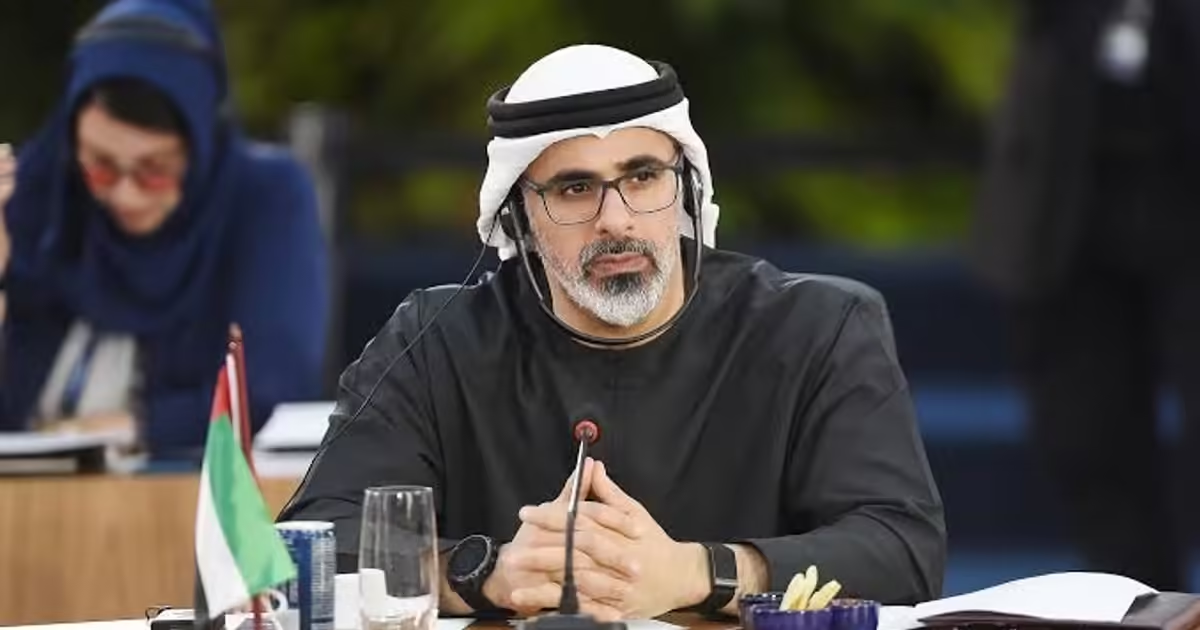

Sheikh Khaled chairs L’imad Holding, the Abu Dhabi investment vehicle that took control of assets previously managed by ADQ, including a portfolio valued at about $263 billion. Global sovereign wealth specialists estimate that the combined entity now oversees around $300 billion in assets.
The infrastructure push accelerated after the Iran war began in February, as Abu Dhabi sought to strengthen and secure critical infrastructure and reduce vulnerabilities in regional trade routes.
Bloomberg reported that Sheikh Khaled, L’imad Chief Executive Officer Jassem Bu Ataba Al Zaabi and other senior Abu Dhabi officials discussed the issue with Wall Street executives, including BlackRock CEO Larry Fink, according to people familiar with the discussions.
By May, L’imad had reached an agreement with BlackRock’s Global Infrastructure Partners, Singapore’s Temasek Holdings and Abu Dhabi National Oil Co. to jointly target up to $30 billion in infrastructure investments covering energy, transportation, logistics and water.
L’imad is now moving deeper into the ports sector. The investment vehicle is seeking to take Abu Dhabi Ports Group private in a deal valuing the company at almost $9 billion, a move that would give the ports and logistics business greater flexibility to pursue acquisitions and long-term infrastructure investments.
Africa is becoming part of the trade strategy
The move comes as Abu Dhabi and the wider UAE seek to build alternative trade routes following disruption around the Strait of Hormuz.
The focus on ports is particularly significant for Abu Dhabi because of the role of AD Ports Group, the emirate’s ports, logistics and trade infrastructure company. AD Ports operates a network spanning ports, economic zones, logistics and maritime services across dozens of markets globally.
Dubai-based DP World, another major UAE ports and logistics operator, has built a substantial African footprint through investments in ports, terminals, logistics parks and trade corridors.
AD Ports has a presence in nearly 50 markets globally, while DP World and Abu Dhabi Ports have established port and logistics operations across Africa, including in Egypt, Algeria, Tanzania, Senegal, Guinea, Mozambique, South Africa and the Democratic Republic of Congo.
In Nigeria, DP World has just signed agreements with Ogun State to develop the Gateway Deep Sea Port and a 10,000-hectare special economic zone in a project expected to attract more than $7 billion in initial investment. The port, planned for Ogun Waterside, will feature a four-kilometre berth and an 18-metre draft, creating a new maritime gateway connecting Nigeria’s industrial base with markets across Africa and the world
The UAE has also been developing its wider Africa trade corridor through investments in ports, logistics, infrastructure and supply chains.
In April, DP World launched a Brazil-Africa logistics corridor connecting Brazil’s Port of Santos with its operations in Angola and Mozambique, supported by its network in South Africa.
This gives Abu Dhabi and Dubai-linked logistics groups growing control over the infrastructure connecting African producers and consumers with markets in Asia, the Middle East and Latin America.
The strategy is also aligned with the UAE’s push to reduce dependence on the Strait of Hormuz by expanding alternative ports, rail links and economic corridors.
For Africa, the expansion could mean more investment in ports and logistics infrastructure, while giving Gulf-based companies a larger role in determining how goods move between African markets and the rest of the world.
Source: africa.businessinsider.com