




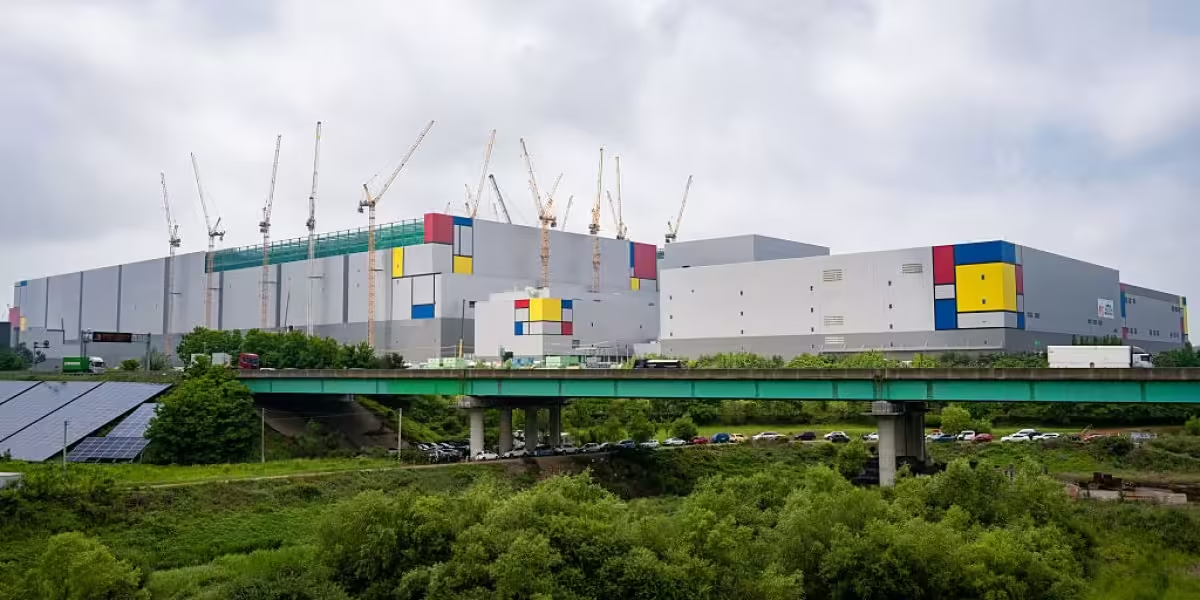

In front of the fourth fab, I meet Choi Hye-rin, a 35-year-old safety officer, as she wipes her forehead with a handkerchief. At dawn, she boarded one of the shuttle buses that ferry workers in from Songtan, an older, scrappier district. She oversees the safety of a crew responsible for building cable ducts. She writes reports, inspects equipment, and checks the chemicals the workers handle. She’s one of hundreds of women working on site, many employed as spotters who walk ahead of heavy equipment.
Safety is a big deal here. After lunch, construction picks right back up. Excavators move past rust-red steel structures rising high under tower cranes. Banners that hang from the highest girders read, “Even if the work runs late, don’t rush.” A giant LED scoreboard announces the winners of a contest for writing a poem about safety. Helmets stickered with a pledge, “I will not work if it’s not safe,” perch atop lockers. The finished fabs glisten from across the street.
Along with the cautionary messages, there’s a sense of urgency in the air. Samsung predicts that demand for memory chips will continue to surge through 2028. And for years the company watched its domestic rival SK Hynix pull ahead in the global market for the high-bandwidth models that power Nvidia’s AI accelerators. (Meanwhile, the Taiwanese chipmaker TSMC has dominated the foundry business, manufacturing chips that other companies design.) The Pyeongtaek build-out is Samsung’s attempt to reclaim its lead on memory chips.
Although the heat can be brutal and the work zones are crowded, Hye-rin has no plans to leave. “The rate here is higher than other construction sites, and the work is relatively easy,” she says. She gets paid 140,000 won ($97) a day and expects the boom to keep her busy for some time: “You just keep coming back.”
Source: www.technologyreview.com

