



1976
Urban Trees
“How can trees survive in an urban environment? The human artifacts we call cities first appeared less than 10,000 years ago. The ancestors of today’s trees are some 20,000 times older than the oldest cities. As trees have been exposed to more than 100 million years of selective pressure to adapt to natural environments, it borders on the biologically miraculous that any tree can occupy an environmental niche as hostile as a city street.
On supporting science journalism
If you’re enjoying this article, consider supporting our award-winning journalism by subscribing. By purchasing a subscription you are helping to ensure the future of impactful stories about the discoveries and ideas shaping our world today.
“The fact that urban trees manage to survive is certainly not the result of rapid evolutionary adaptations. Neither the 200 years that have seen the rise of the industrial metropolis nor the 100 centuries of coexistence between trees and cities of any kind is a period long enough to have let selective pressures sort out the genes needed to give rise to a city-proof tree. It is man’s intervention, not nature’s, that has kept trees in the city.”
1926
Life on Mars Update
“Within the last few years new and powerful methods of observation have been applied to Mars. A series of impor-tant investigations speaks strongly in favor of the theory of Martian conditions developed by visual observers. The determinations of temperature make it practically certain that the polar caps are really composed of frozen water. The spectroscopic observations confirm this, and the presence of oxygen makes it appear more likely than not that vegetation exists on the planet.
“If vegetable life exists on the planet, as seems fairly probable, animal life may exist. The latter could not do so otherwise. But we appear to be far from having any unquestioned evidence that it does.”
As of the summer of 2026, there is no evidence of vegetation or animal life on Mars.
Classifying the Arthropod
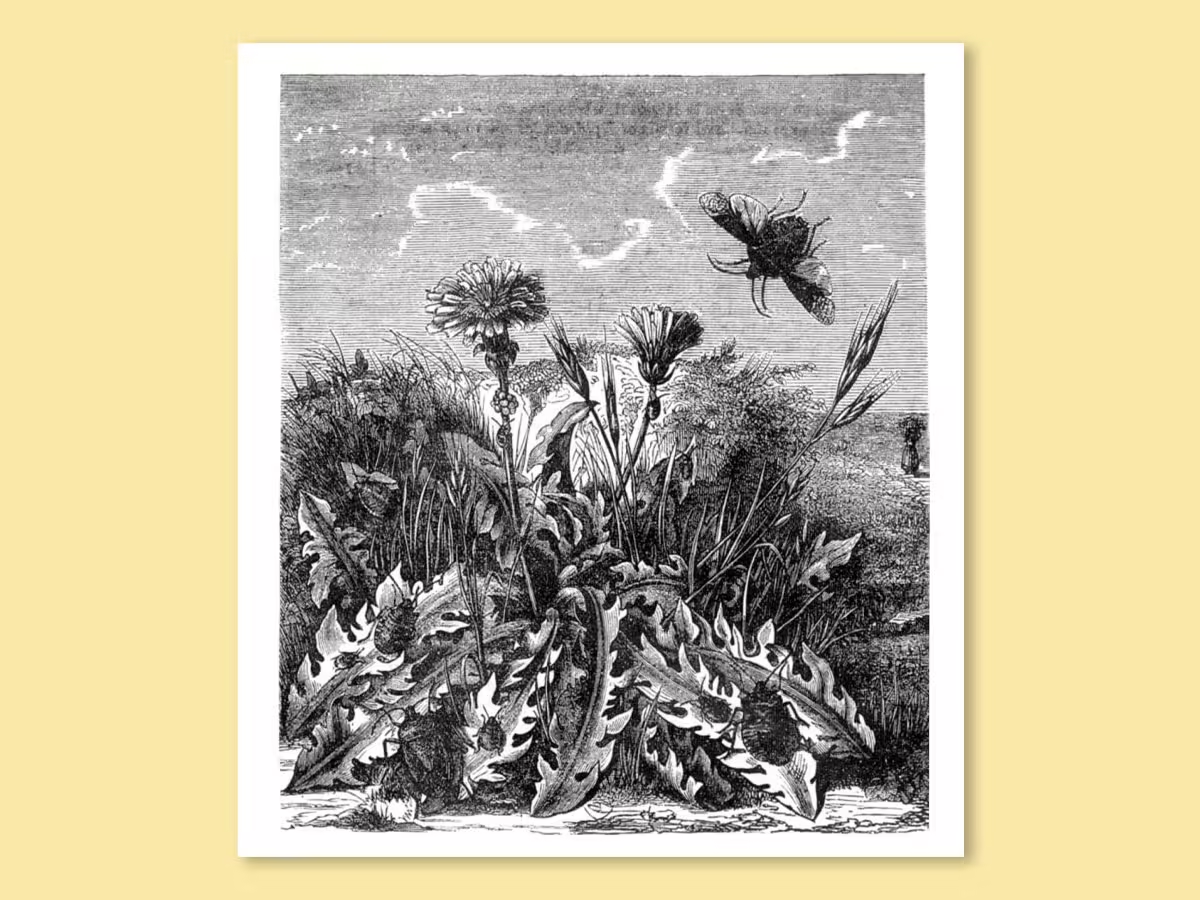
“It would be an aid to nature study if the term ‘arthropod’ were as commonly used, as familiarly accepted and as well understood as the words ‘insect’ or ‘spider,’ ‘reptile’ or ‘bird.’ The arthropod group includes animals that are without a backbone or any bones at all, strictly speaking, their bodies being encased in a ringed, exterior tegument and having legs and, sometimes, wings. In this great division is included the crabs, lobsters and shrimps as one class, the spiders, mites and scorpions as another, the millepedes and centipedes as the least numerous group and the insects as the greatest.”
1876
Artificial Butter
“For some time, there has been a prevalent impression that if the manufacture of artificial butter has not died out, at least no product of this description is now industrially made which has any standing in the market. The facts, however, are altogether against any such conclusion, for quite recently no less than 50 artificial butter factories were counted in this city, and large quantities of artificial butter are sold to the customer as genuine butter.
“There is a duplicity in this business which is reprehensible. But if people cannot distinguish the artificial from the natural product and if the former is more healthful, it would be difficult to prove any damages save to the moral sense to all of the community.”
Twinkling Stars
“The scintillation of stars, and its close connection with changes of weather, has much interested many scientists, and recently spectroscopic researchers have found a connection between scintillation and various meteorological elements. Their chief results are as follows: The intensity of scintillation increases invariably with the occurrence or approach of rainy weather and with the increase of tension of vapor in the air on one side, as well as the increase of pressure and decrease of temperature on the other.
“Thus, a continued investigation of scintillation would be of great service, not only for the prevision of weather but also for the general study of meteorology.”
Subscribe to Support Independent Journalism
Great science journalism requires human expertise, time, effort and creativity. And it costs money. That’s why I and the journalists here at Scientific American hope you’ll join our community.
When you subscribe, you are supporting staff and freelance journalists who are passionate about telling science stories that are true, important and compelling. Our editors and reporters are often experts in their fields, which means they understand the nuances of big discoveries and can untangle the breakthroughs from the hype. With a subscription, you are also supporting rigorous fact-checking to ensure the words we publish are precise and accurate. And you’re supporting original illustrations, graphics and photos that bring you closer to an advanced laboratory, an ice sheet in Antarctica or a space mission in orbit. You’re helping us craft other types of high-quality journalism as well: Our newsletters are carefully written, edited and curated by staffers you have or will come to know and love. Our Science Quickly podcast is based on original reporting, collaboration with editors and scientists and exacting production.
Subscriptions keep this engine running so we can continue to deliver thoughtful, rigorous and independent science journalism to you. In an era of viral misinformation, this work is crucial. If you value what we do, I hope you’ll consider joining us as a subscriber
Source: www.scientificamerican.com