



As the mandate of the United Nations Interim Force in Lebanonor UNIFIL, nears its end, uncertainty over the future of southern Lebanon is growing. Lebanese Prime Minister Nawaf Salam has warned of the need to “avert the vacuum that UNIFIL’s withdrawal could create, were it to take place without agreement on a new international force to replace it.”
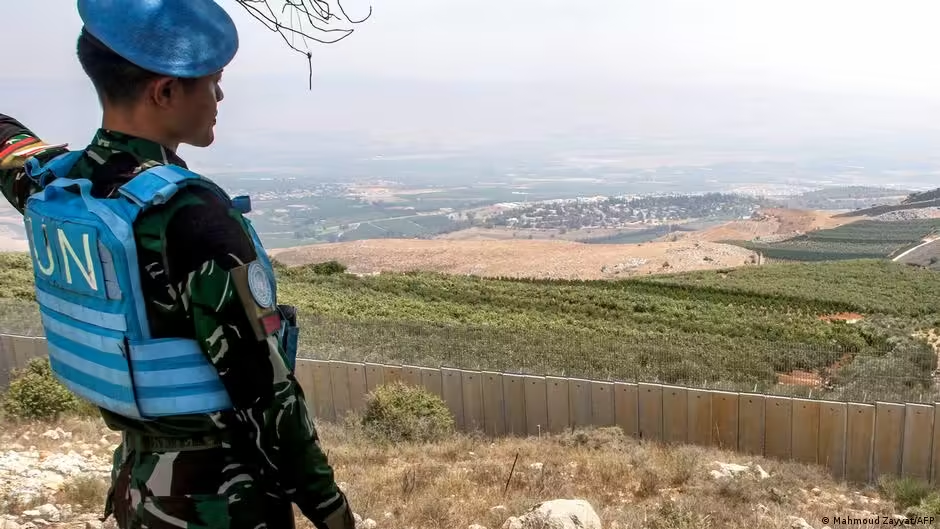
The Lebanese government has also been pushing for a last-minute extension of UNIFIL’s mandate, but so far without success. It is most likely that the 7,565 peacekeepers from 46 countries will begin withdrawing from the UN-patrolled so-called Blue Line zone on December 31, 2026.
The Blue Line, which stretches for 120 kilometers (75 miles), is a UN-identified line of withdrawal between Israel and Lebanon, not an internationally agreed border. It was established in 2000. However, as early as in 1978, multinational UNIFIL troops were deployed to this region to monitor the area after Israel invaded Lebanon in response to attacks by Palestinian armed groups.
After the 2006 Israel-Hezbollah war, the mandate was expanded to support the Lebanese army in implementing UN Security Council Resolution 1701. The resolution calls for an area between the Blue Line and the Litani River to be free of armed personnel, assets and weapons other than those belonging to the Lebanese government and UNIFIL. It also calls for the withdrawal of Israeli forces from southern Lebanon.
However, following cross-border attacks by Hezbollah in October 2023 and the ensuing war in 2024, Israel has been occupying large swaths of Lebanese territory in a self-declared security zone called the Yellow Line, which is located north of the Blue Line.
Of the more than 1.2 million people displaced in Lebanon during the renewed conflict in 2026around 329,000 remained internally displaced as of September 29, according to the International Organization for Migration. Israel has also caused extensive destruction to homes and key infrastructure in southern Lebanon, saying it needs to protect its citizens in northern Israel from attacks launched from the area.
Hezbollah — which is designated as a terrorist organization by several countries, including the United States and Germany, while the European Union designates its armed wing as a terrorist organization — continues to reject disarmament, citing the need to defend itself for as long as Israeli forces remain in Lebanon.
Hezbollah is also closely linked to Iranand in case of renewed conflict between Iran and Israel, it’s likely that Hezbollah would open a second front in Israel’s north in support of Iran.
“The situation in southern Lebanon remains tense,” Kandice Ardiel, UNIFIL’s spokesperson, told DW. “We are seeing continued Israeli military operations, including overflights of Lebanese airspace by jets, helicopters and drones, airstrikesartillery strikes and mortar fire.”
“Until our mandate ends on December 31, we continue to monitor and report what is happening, and we are liaising between the parties on a daily basis to ensure safe movements of civilians, humanitarian aid, and peacekeeping patrols,” she said, adding that the drawdown and withdrawal would then take place in stages.
The end of the mandate also means the end of the mission for thousands of UNIFIL troops in southern Lebanon. “People have built careers, friendships, skills and a sense of purpose together,” Ardiel said. “Endings are never easy, especially when there is a sense that the work we do is still needed.”
Beirut’s lack of authority, money compounds disarmament dilemma
The upcoming withdrawal of UNIFIL also highlights two major dilemmas for Lebanon’s government.
“Beirut is concerned that violations of any agreements, whether on the Israeli or the Hezbollah side, can’t be tracked in the absence of an international military force,” Paul Shaya, a Washington-based Middle East researcher and adjunct professor at George Washington University, told DW.
Furthermore, after years of political deadlock, the COVID-19 pandemic, soaring inflation and economic crises, the Beirut port blast in 2020 and the destruction caused by the 2024 war between Israel and Hezbollah, Lebanon’s economic lifeline depends on international funding. However, a large share of the much-needed investment from the United States and Gulf states is tied to Hezbollah’s disarmament.
“Ultimately, it is going to be dependent on President Joseph Aoun and Prime Minister Nawaf Salam to secure sufficient funding and resources to support the Lebanese military,” said Shaya.
Until that happens, Aoun and Salam have very limited options for disarming Hezbollah, said David Wood, Lebanon researcher at the International Crisis Group. “They have opened direct talks with Israel to bring about an end to the disastrous conflict, but that process includes neither Hezbollah nor its backer Iran — both of which oppose the group’s disarmament,” he said.
In Wood’s view, Beirut has few bargaining chips in negotiations with Israel because it has been unable to secure Hezbollah’s compliance. He is also worried that Lebanon’s leaders have little leverage to force Hezbollah to surrender its weaponsas this could trigger a deadly domestic conflict in the country. In the past, Hezbollah has openly warned that trying to seize its weapons by force would lead to war.
Despite Israel’s destruction of many Hezbollah tunnels and weapons-storage facilities in Hezbollah-dominated areas in southern Lebanon and parts of Beirut, the limitation or disruption of supply routes due to the wider Iran wasas well as the fall of their ally, Syrian President Bashar Assadobservers say Hezbollah remains better equipped than the Lebanese armed forces.
Could the new EU mission replace UNIFIL in Lebanon?
On October 12, European Union foreign ministers agreed to establish a European Union Support Mission in Lebanon, or EUSM Lebanon, with an initial three-year mandate.
“It has a civilian and military pillar,” EU foreign policy chief Kaja Kallas said, adding that “this is highly welcomed by the local authorities.”
According to the European Council, the mission is to contribute to peace and security in Lebanon by strengthening the capabilities of the Lebanese armed forces and internal security forces, including in border security in accordance with the UN Security Council Resolution 1701.
However, the mission is not intended to replace UNIFIL. Rather than deploying peacekeepers to patrol southern Lebanon, it is set to initially operate north of the Litani River.
Several existing UNIFIL contributors, including Italy, France, Spain, Ireland, Germany, Austria, Finland and Polandalready expressed interest in contributing personnel and resources to the new EUSM Lebanon mission.
For the government in Beirut, this is a positive signal, noted Shaya. He added that Lebanese society also strongly supports the Lebanese military, “which many see as the only institution in the country that can uphold Lebanon’s sovereignty and represent the entire country.”
Source: www.dw.com