




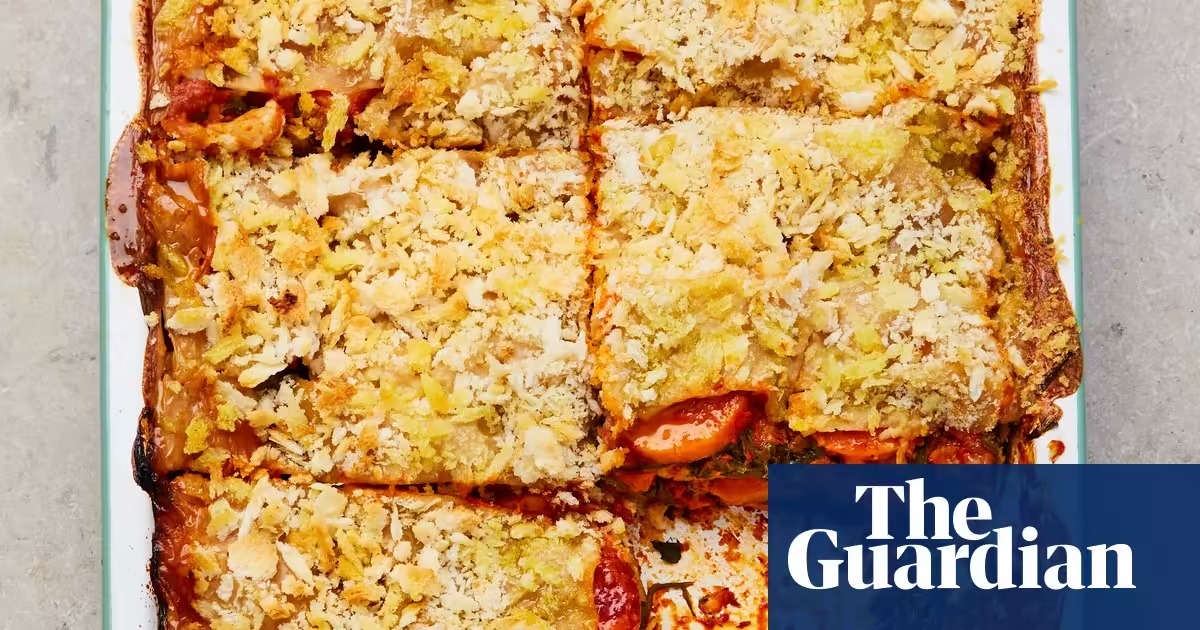

As I have mentioned before, we live directly above a takeaway pizzeria and diner (a canteen-like spot that translates as “hot table”). My desk is by the window, so the writing and editing of my next book (a collection of regional recipes that is only two years late) has been accompanied by the smell of whatever is cooking in their kitchen downstairs, before being arranged, in big roasting trays, behind a glass counter. Occasionally, I have to shut the window, but mostly the steady stream of pizza, baked pasta, braised meat, meatballs, roast potatoes and green vegetables shining with olive oil inspires me. And that is the inspiration for this newsletter: ideas for easygoing dishes that are best served straight from their rectangular roasting tins.
As I write this, it is almost lunchtime, so, driven by my own hunger, I would like the first serving from a roasting tray to be Angela Hartnett’s macaroni cheese: al dente pasta mixed with béchamel and various cheeses, then baked until golden brown and bubbling at the edges. Just as welcome would be a plate of baked pasta inspired by one of my friend Cinzia’s dishes: meze maniche, rigatoni, penne or macaroni with a rich tomato sauce, basil, lots of mozzarella and pecorino. Or a slice of Meera Sodha’s vegan sweet potato, miso and wholemeal lasagnewhich, she promises, takes 15 minutes to put together and uses good, flavourful, ready-made ingredients such as miso, sun-dried tomato paste and passata.
Moving from short tubes and sheets of pasta to gnocchi, Rukmini Iyer, author of the hugely successful Roasting Tin serieshas a great (and great-value) recipe for creamy baked gnocchi with tomatoes, mozzarella and basil. I have a similar recipe, known in Italy as Sorrento style gnocchi, which begins on the stovetop (where the gnocchi is boiled and the sauce made) and is then transferred to a roasting tin. Mozzarella and parmesan are added, and the cooking is finished in the oven. The dish is also known as Sorrento style stringy gnocchi – filanti means “stringy”, after the way the mozzarella melts into long strings and pulls into a game of cat’s cradle as you eat, a reminder to enjoy it while the gnocchi is still hot.
Farther along the counter, I would hope to see a big tray of braised chicken, the meat visibly tender, the sauce thick enough to be called gravy. In Rome, this way of cooking chicken or rabbit is generally known as to the hunteror hunters’ style, because this was how the hunters themselves, or their wives (or whoever else was in the kitchen) cooked what they had shot; the name persists even when the hunting involves buying the meat at the butcher or supermarket. Or maybe it is simply a term concocted by city trattorias to evoke the countryside? Either way, alla cacciatora is a good way to cook and eat chicken. I have written several cacciatora recipes over the years, including one for chicken with rosemary, tomatoes and olives. Another version is Thomasina Miers’ falling-apart chicken cacciatore, with tomatoes, peppers, and fenneland coriander seeds rubbed into the chicken skin (though she says to leave them out if you’re a stickler for authenticity). Yotam Ottolenghi, meanwhile, gives a recipe for very slow-braised chicken with celeriac and lemon. Next to the chicken, there must be a tray of roast potatoes, each chunk golden and roughly the size of a domino.
The next tray along should contain meatballs. Felicity Cloake has suggestions for perfect onesas does Thomasina Miers, notably in her recipe for giant pork meatballs in tomato sauce. Alternatively, borrow either meatball recipe, then poach them in Dara Klein’s rich tomato sauce. Another option is Andy Baraghani’s kuftehor Iranian meatballsa different kind of meatball altogether, being tennis ball-sized and made with lamb, pork or turkey mince, herbs, rice and turmeric, or Tom Hunt’s brilliant stale bread turned into vegetarian “meatballs”. Next to those meatballs, there must be a tray of greens – spinach, chard, peas – that have been boiled then cooked again, briefly, with olive oil, garlic and a bit of chilli.
My week in food
Say cheese | Having enjoyed her writing and podcasts for two decades now, I was happy to receive a copy of Jenny Linford’s The Cheese Lover’s Guide: A Flavour-Focused Approach to Cheese. It is an approachable book with a large scope, and it’s also immensely detailed, intelligent and full of Jenny’s expertise. Her short but bright essays explore the origins and principles of cheesemaking, the global cheese scene today and the language of cheese, followed by a useful and enlightening guide (with pictures) to 100 iconic cheeses from around the world.
Nice ice | Two days in London was not nearly enough. I did, however, fit in a visit to Jacob Kenedy’s Gelupo in Soho for a cup of fig cremolato with double cream. Jacob describes cremolato as the more luxurious cousin of granita, but I think it sits more at the crossroads of sorbet, granita and a sweetened crush of semi-frozen fruit. Gelupo’s version is every bit as good as Mario De Angelis’s at The House of Cremolato in Romewhich is sublime.
after newsletter promotion
Holy smoke! | At Beppe and his cheesesa Roman cheese and wine shop, they offer a butter tasting that includes three varieties: dairy butter, smoked dairy butter and butter produced from cows grazing while on holiday in the mountains. All of them are made by the Giovale family in Piedmont, and they are all great, but it’s the smoked butter – rich, toasted, tarry and like caramel-hickory – that has stayed with me and introduced me to a whole world of smoked butter, for spreading on toast or stirring through pasta. In the UK, Curing Rebels’ own English butterslowly smoked over a two-day process, sounds divine.
Source: www.theguardian.com